Suitcase space feels like a law of physics right up until you watch a seasoned packer work — the same bag, somehow, swallows twice as much and closes without a knee on the lid. The difference isn’t a magic bag or superhuman restraint. It’s technique, and technique is learnable. A few of the tricks below save inches; one of them saves entire shelves’ worth of room.
Roll the Soft, Fold the Structured
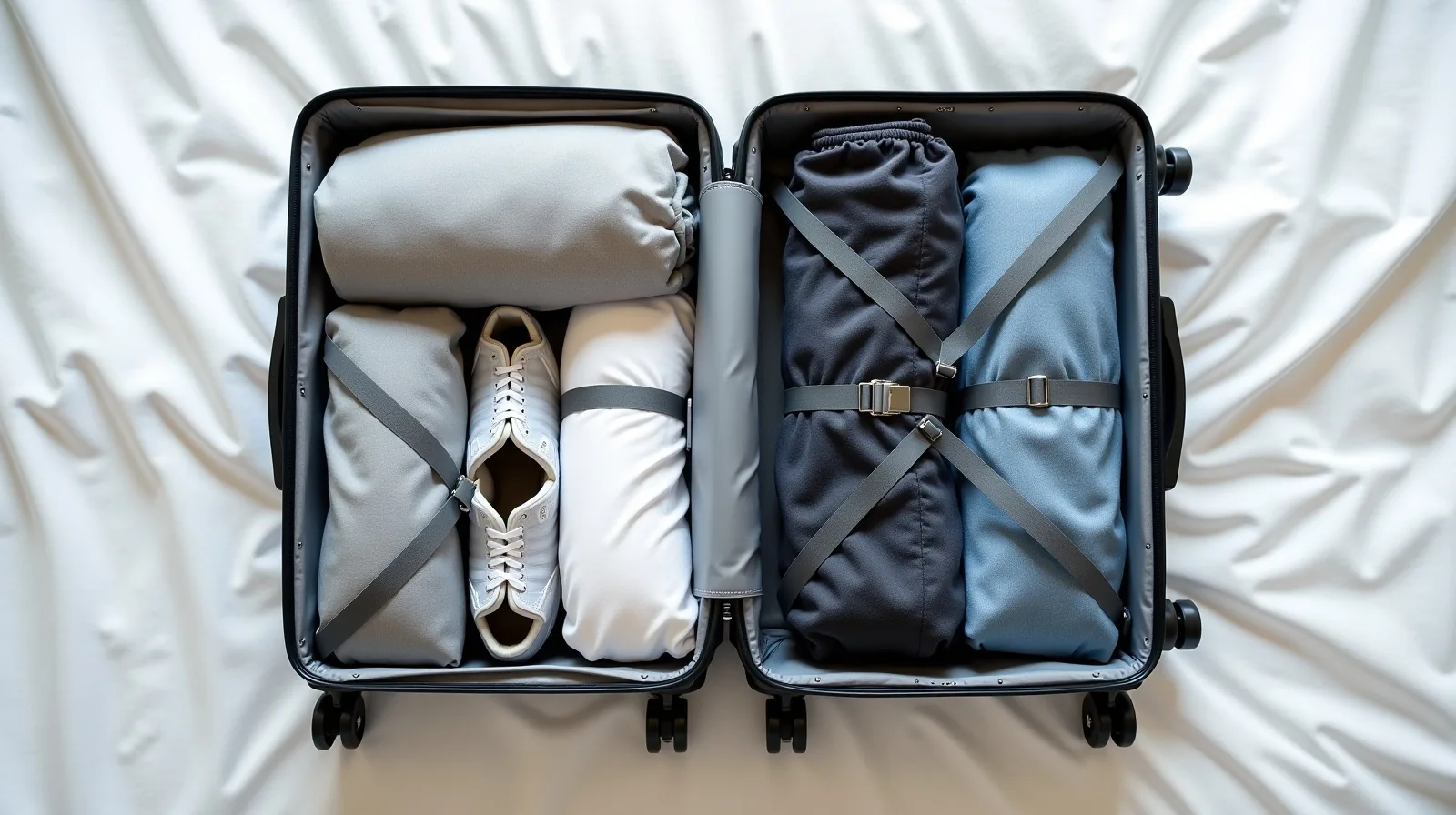
Rolling is the internet’s favorite packing tip for a reason: t-shirts, knits, pajamas, athletic wear, and underwear compress into tight cylinders that slot into corners a folded stack can’t reach, and soft fabrics come out no more wrinkled than they went in. But rolling isn’t a religion. Structured pieces — blazers, collared shirts, anything crisp — do better folded flat in a single layer at the top of the case, where they ride as if they were still on the shelf. The working rule: roll anything you’d toss in a gym bag, fold anything you’d hang.
Then Work the Dead Space
A packed suitcase is full of air pretending to be luggage. Evict it:
- Cube the rolls. Packing cubes keep rolled clothes compressed and sorted by type — and unpacking becomes moving three cubes into a drawer.
- Stuff the shoes. Socks, chargers, and coiled belts ride inside shoes; shoes go heel-to-toe along the wheel edge, where the case is strongest.
- Wear the bulk. The heaviest shoes and thickest layer travel on your body, not in the bag. This one move can free a third of a carry-on.
- Line the edges. Belts uncoiled around the perimeter, flat items slid along the walls, small soft things pressed into corners.
- Shrink the toiletries. Decant into small refillable bottles — full-size containers are the densest waste of space in most bags.
The Biggest Space Saver Is a Shorter List
Every technique above combined saves less room than simply packing fewer things — and fewer doesn’t have to mean doing without. Build a small capsule instead: pick one color family so every top works with every bottom, count outfits rather than items, and plan to re-wear the way you do at home (nobody at your destination is auditing whether the jeans repeated). For most trips, a week’s worth of mix-and-match clothing covers two weeks with a mid-trip wash. Lay out everything you want to bring, then put a third of it back — almost always the third you never miss.
Leave a Gap on Purpose
A suitcase packed to 100 percent on departure is a problem scheduled for the trip home, when everything is less neatly folded and somehow larger, and any souvenir becomes a crisis. Pack to about 80 percent and treat the slack as a feature: room for the return chaos, for the market find, for the laundry bag that keeps worn clothes from mingling with clean ones. A flat packable tote zipped into the lining is the cheapest insurance in travel — it weighs nothing until the day it saves you.