
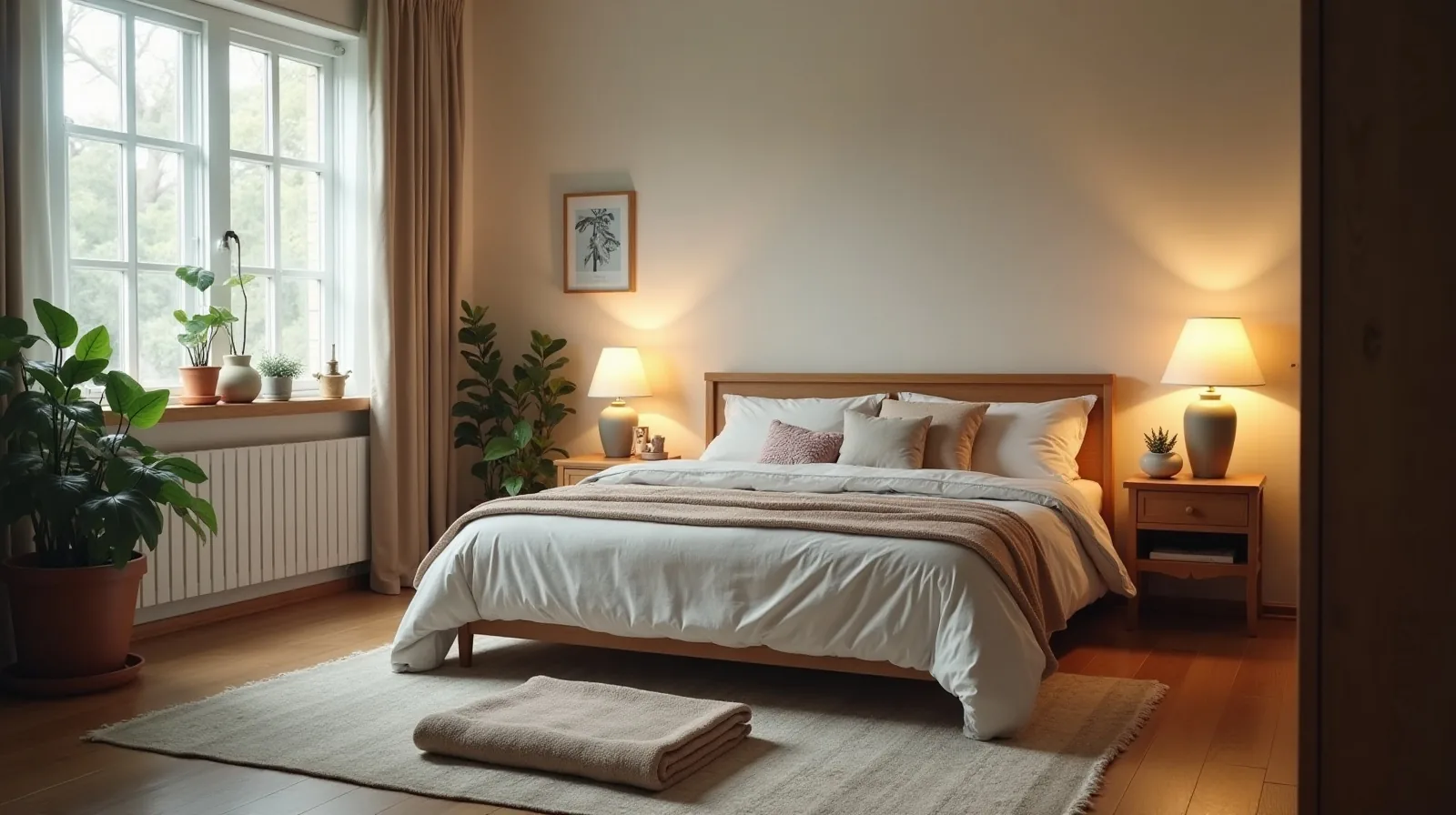
Most evenings end with a hard cut: bright screen, busy head, lights off, and then the ceiling. The body never gets a signal that the day is actually over — and a short stretch on the bedroom floor is one of the simplest signals there is. This isn’t about flexibility goals or a workout squeezed in before sleep; it’s ten unhurried minutes of gentle movement that tell your shoulders, hips, and lower back they can stop bracing now. No equipment and no athletic history required — just a rug and a little floor space at the end of the bed.
Why Gentle Beats Deep at Night
An evening stretch has a different job than a training session, and that changes the rules. You’re not chasing range of motion; you’re downshifting — so everything stays in the mild-tension zone: comfortable positions, long easy holds, no bouncing, and nothing that makes you grit your teeth, because straining is stimulating when the whole point is the opposite. Slow breathing carries most of the load here. Long, unforced exhales nudge the nervous system toward its rest state, which is why the stretch you can breathe through calmly does more for your evening than the deeper one you have to fight.
A Simple Routine to Try
Move slowly through these on a rug or mat, holding each for about thirty seconds to a minute; the whole circuit takes roughly ten minutes:
- Child’s pose. Knees wide, arms stretched forward, forehead resting down. Let your back round and your breath slow.
- Knees to chest. On your back, hug both knees in and rock gently side to side — a light massage for the lower back.
- Figure-four. Still on your back, cross one ankle over the opposite knee and draw the legs toward you to reach the hips. Switch sides.
- Reclined twist. Drop both knees to one side, arms wide, and let gravity do the twisting. Breathe, then switch.
- Slow neck and shoulder rolls. Seated, circle the shoulders back and ease the head from side to side — the neighborhood where desk tension lives.
- Legs up the wall. The finisher: lie back with your legs resting up the wall for a few quiet minutes and let everything go slack.
Make It a Cue, Not a Chore
The routine works best when it’s boring — same moves, same order, same spot on the rug, right before lights out. Repetition is what turns stretching into a cue the body recognizes: after a couple of weeks, settling into the first pose starts the wind-down on its own, the way brushing your teeth already does. Keep the setting soft to match — a lamp instead of the overhead light, comfortable clothes, and the phone left charging in another room so the calm you just built isn’t spent on one last scroll. On nights when ten minutes feels like too much, do three. The streak matters more than the length.
Honest Expectations (and When to Check First)
A word of calibration: stretching is not a sleep cure, and research on evening stretching tends to show modest, gradual benefits rather than anything dramatic. What a routine like this reliably does is replace a stimulating pre-bed habit with a calming one and ease the muscle tension that makes lying down less comfortable — worthwhile, just not magic. Two caveats belong here. If you’re pregnant, recovering from an injury or surgery, or managing back, joint, or balance issues, check with your doctor or a physical therapist before starting even a gentle routine like this one — and anything that causes sharp or radiating pain is a stop sign, not something to push through. And if sleep itself stays difficult night after night despite good habits, that’s a conversation for your doctor, not more stretching.