
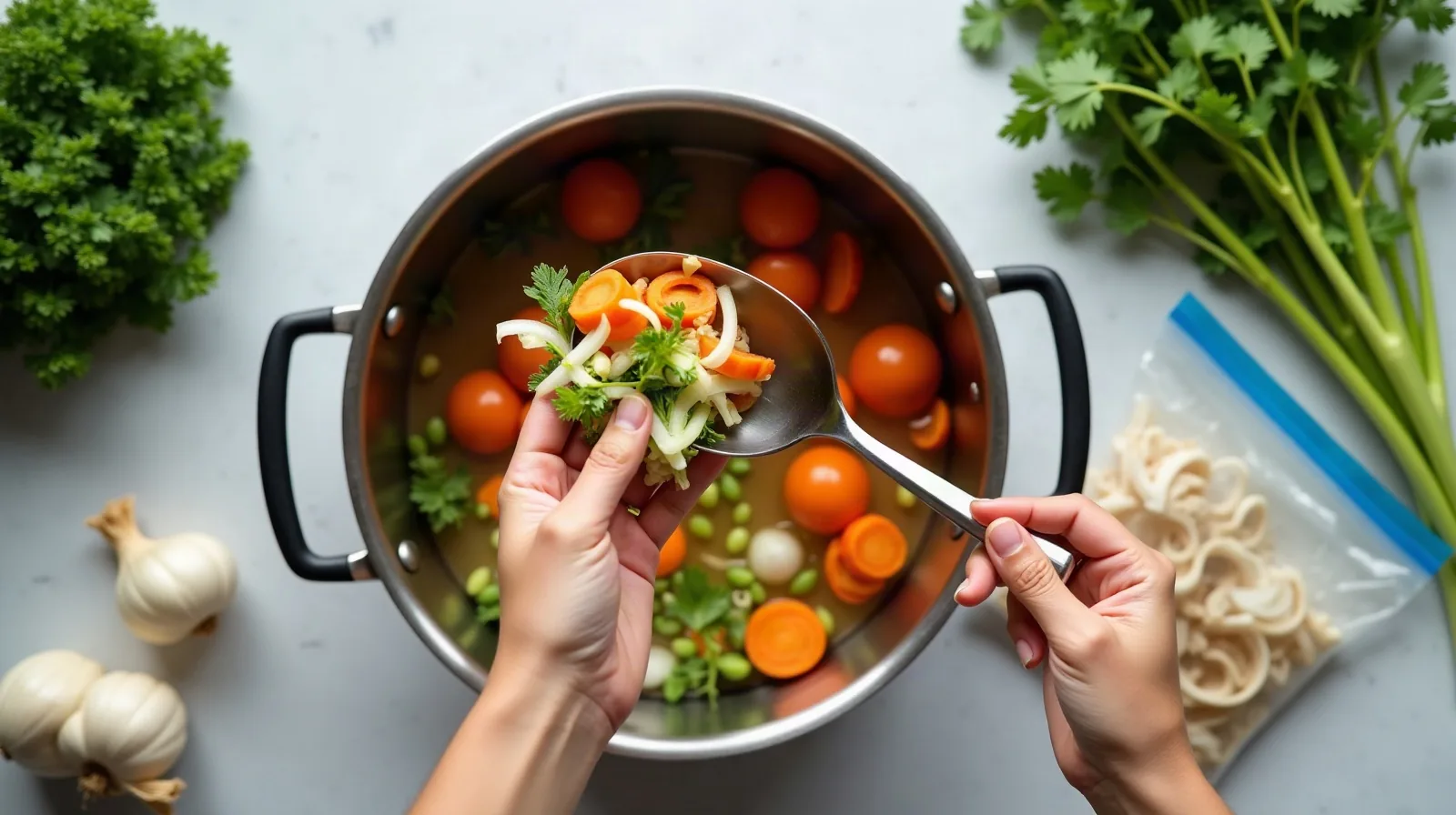
Every time an onion gets trimmed or a carrot gets peeled, a small pile of perfectly good flavor heads for the trash. Those ends and peels hold plenty of the same savory, sweet compounds that make a store-bought carton taste like something, and a pot of water is all it takes to pull them out. Homemade stock costs almost nothing, tastes fresher than the boxed kind, and turns rice, soups, and pan sauces from fine into genuinely good.
Start a Scrap Bag in the Freezer
The easiest way to make stock is to stop deciding when to make it. Keep a large zip freezer bag or container in the freezer and drop clean trimmings into it as you cook: onion ends and skins, carrot peels and tops, celery ends and leaves, mushroom stems, parsley stems, and garlic skins. Once the bag is full, the stock is ready to start. There is no shopping list and no planning, only a habit of scraping the cutting board into the bag instead of the bin.
What Goes In, and What Stays Out
Stock rewards mild, sweet, and savory scraps, and it turns bitter or muddy with the wrong ones. A quick guide keeps the pot balanced.
- Good additions — onion, leek, and shallot trimmings, carrot and celery ends, mushroom stems, herb stems, and garlic skins.
- Use sparingly — tomato ends and a few peppercorns add depth, but too much makes the pot sharp.
- Keep out — cabbage-family scraps like broccoli stems and cabbage cores turn sulfurous, beet trimmings turn everything pink, and anything moldy, slimy, or spoiled never belongs in the pot.
- Skip the starch — potato peels cloud the liquid and leave it gluey.
- Wash first — a quick rinse keeps grit and soil out of the finished stock.
Simmer Gently, Then Strain
Tip the frozen scraps straight into a large pot, add a bay leaf and a few peppercorns if there are any on hand, and cover with cold water by about an inch. Bring it up slowly until small bubbles break the surface, then lower the heat so it barely simmers. A hard boil clouds the liquid and pushes the flavor toward bitter, so gentle is the goal. About an hour is usually enough for vegetable scraps; longer starts to pull out harsher flavors rather than better ones. Salt lightly or not at all, since the stock will be seasoned later in whatever dish it ends up in.
When the liquid tastes rich and rounded, set a strainer over a large bowl and pour the pot through it. Press the solids gently, then compost or discard them. They have given up everything worth keeping.
Cool It Quickly and Store It Right
Hot stock sitting on the counter is a common way for a good batch to go wrong, since warm liquid gives bacteria room to grow. Food safety guidance generally recommends cooling cooked food promptly and refrigerating it within about two hours. A shallow container or a pot set in a sink of cold water speeds this up. Once it is cool, refrigerate the stock and plan to use it within three or four days, or freeze it for several months in labeled portions. Ice cube trays are handy for small amounts to stir into sauces, while one- and two-cup containers suit soups and rice. Always reheat stock to a full simmer before using it, and toss anything that smells or looks off.