Travel breaks a fitness routine in the least dramatic way possible. Nothing goes wrong. The schedule fills up, the hotel gym turns out to be two treadmills and a broken cable machine, the day starts in one time zone and ends in another, and by the fourth night the routine has quietly stopped existing. The fix is rarely a stricter plan. It is a smaller one: a version of exercise that survives a delayed flight, a room the size of a parking space, and a day that belongs mostly to other people.
Lower the Bar Before You Pack
The routine that works at home assumes a schedule you control. Travel removes that assumption, so the standard has to move with it. Aim for maintenance rather than progress. Strength and endurance hold up well across a week or two of lighter training, so a trip is a poor place to chase gains and a good place to keep the habit warm. Set the minimum low enough that it feels almost silly — ten minutes, one circuit, a walk after dinner — and treat anything beyond it as extra. The point is that the first week back feels like continuing, not restarting.
Walking Does More Than It Gets Credit For
On most trips the easiest exercise is the one already built into the day. Walking the mile between the hotel and dinner, taking the stairs in a building with a slow elevator, pacing a terminal instead of sitting at the gate: those choices stack up quickly, and they double as the best way to see a place. Pace matters more than distance when time is short. Walking also solves two travel problems at once, since it moves the body and gets your eyes on daylight, which helps a scrambled sleep schedule settle.
A Hotel-Room Circuit That Needs Nothing
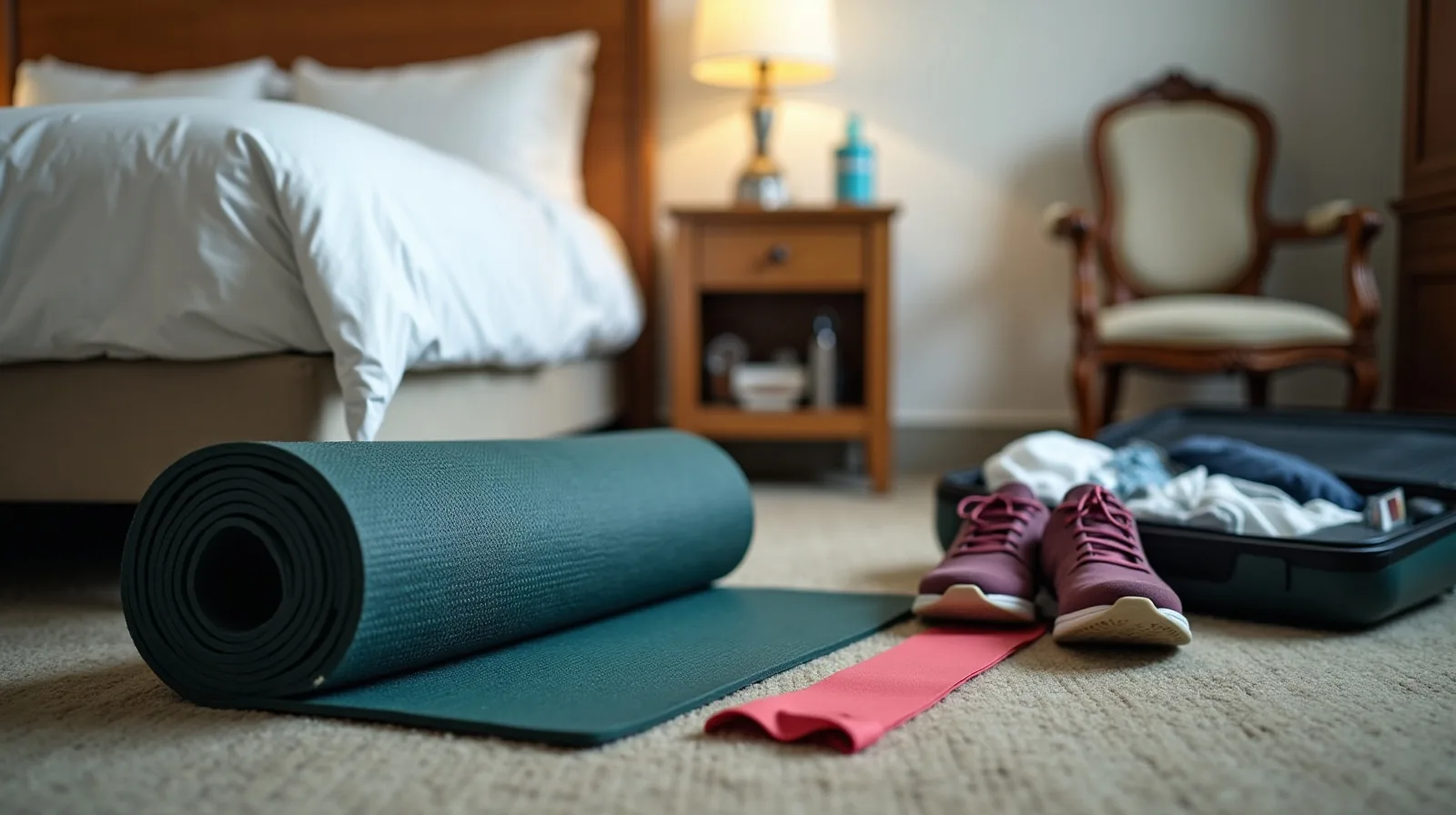
Rooms are small, floors are shared, and neighbors are close, so this circuit stays quiet and fits in the strip of carpet between the bed and the wall. Run it once on a thin day, three times for a real session, resting a minute between rounds. Keep every movement slow enough to feel controlled; control is where the work comes from when there is no weight to add.
- Bodyweight squats. Ten to fifteen, heels down, knees tracking over the toes. Lowering slowly makes them harder without making them louder.
- Elevated push-ups. Hands on the desk, the dresser, or the bed frame. A higher surface makes the movement easier, so pick the height that lets you finish with clean form.
- Split squats. Eight per leg, back foot on the floor or resting on the bed. Good for legs that have been folded into a seat all day.
- Hip bridges. Fifteen on the carpet with a pause at the top, which wakes up the muscles a long day of sitting shuts down.
- Plank or dead bug. Thirty to forty-five seconds, ribs down, breathing steadily rather than holding your breath.
- A quiet finisher. One minute of marching with high knees, twice, for the heart rate the rest of the circuit never reaches.
Pack Gear You Will Actually Use
Gear earns its space by removing an excuse that weighs more than it does. A single looped resistance band takes up no room and covers the rows, presses, and lateral work that bodyweight alone misses. One pair of shoes that handles both a long walk and a short run covers nearly everything else. A jump rope packs small but sounds enormous on a hotel floor. Folding mats and travel dumbbells mostly make the bag heavier without making the workout more likely.
Flights, Long Days, and the First Morning
Long travel days respond well to bookends. Something short before leaving for the airport makes hours of sitting feel less punishing, and standing up every hour or two on a long flight matters for circulation as much as comfort. On arrival, a walk outdoors is the most useful item on the list, since it loosens a stiff body and nudges the internal clock toward local time. Anyone managing an injury, a heart condition, or anything that makes long stretches of sitting risky should check with a doctor before a long-haul trip.