Small homes come with a cruel-sounding math problem: less square footage means every stray mug and jacket is instantly visible, so the place tips into “messy” faster than a big house ever could. But the same math works in your favor. A small space can be genuinely clean in minutes — not a deep-cleaned showroom, but honestly, comfortably clean — if you stop treating cleaning as an event and start running it as a system. No marathon Saturday required; in fact, the whole point is never needing one again.
The Small-Space Advantage
In an apartment or small house, no single cleaning job is big. The bathroom is one fixture of each kind; the kitchen is a few feet of counter; the whole floor might be one vacuum pass. What makes small spaces feel endless is switching costs — hunting for supplies, deciding where to start, drifting between half-done rooms. Kill the deciding and the fetching, and the actual cleaning turns out to be startlingly quick. That’s what the three systems below do: they decide where, when, and with what in advance, so all that’s left is a few minutes of doing.
Three Systems That Run on Minutes
- The ten-minute reset. Once a day, set a timer for ten minutes and return the visible surfaces to baseline: dishes to the sink or washer, items back to their rooms, counters wiped, cushions squared. When the timer sounds, you stop — even mid-task. In a small space, this alone keeps “messy” from ever compounding.
- The zone-a-day rotation. Split the home into five or six zones — bathroom, kitchen, bedroom, living area, floors, entry — and give each one weekday about fifteen focused minutes. Every zone gets real attention weekly, and no day ever carries the whole house.
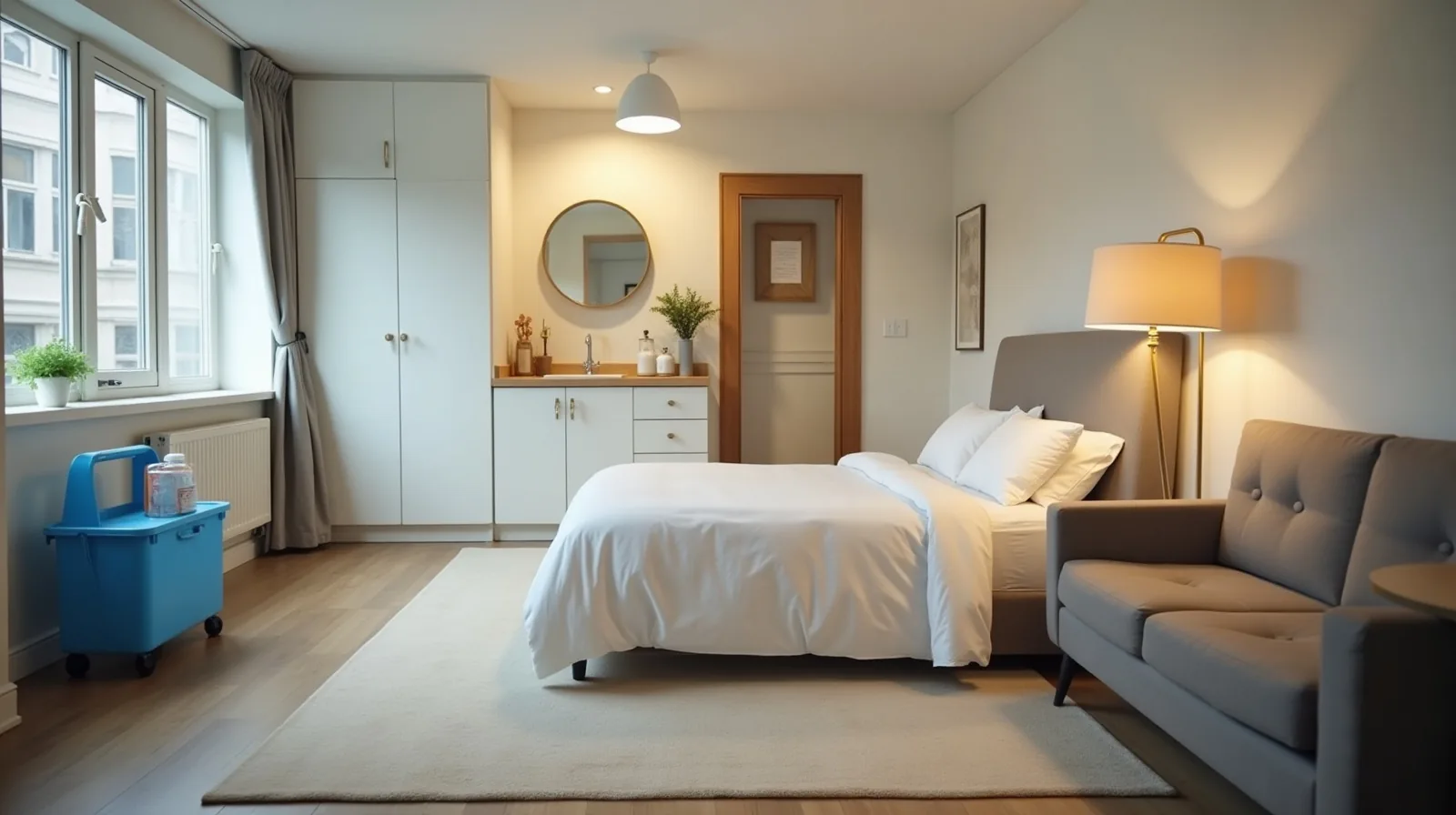
- The caddy method. Keep every supply you use — all-purpose spray, glass cleaner, cloths, a scrub sponge — in one carryable caddy. The zone comes to the caddy, not the other way around; the five minutes usually lost to gathering and re-shelving supplies simply disappear.
- The exit sweep. Never leave a room empty-handed. The mug goes with you to the kitchen; the laundry rides along to the bedroom. It’s cleaning that costs zero extra minutes because you were walking anyway.
Why the Timer Is the Whole Trick
The timer isn’t a productivity gimmick — it’s the reason the system survives. Open-ended cleaning invites perfectionism, and perfectionism is why people procrastinate: if wiping the counter might turn into reorganizing the cabinet, the brain votes to skip the whole thing. A hard ten- or fifteen-minute cap makes the job small enough to start on a tired Tuesday, and stopping on time is what proves tomorrow will also only cost ten minutes. Done-enough daily beats perfect-eventually, every single week.
Making It Automatic
Systems stick when they’re anchored to things that already happen. Run the ten-minute reset while dinner is in the oven, or right after the table is cleared, so it borrows an existing cue instead of relying on memory. Let the washing machine be a timer too — a wash cycle is almost exactly one zone’s worth of cleaning. Keep the caddy visible, not buried under the sink, and settle for a kept-up home rather than a spotless one. In a small space, the modest version of clean — maintained daily in minutes — looks better than the ambitious version ever manages to.