Feeding four people breakfast is cooking. Feeding ten is logistics — and the stovetop is where the logistics fall apart. A skillet holds four pancakes or six strips of bacon at a time, so somebody is always standing there flipping while everyone else eats, and the cook finally sits down to a cold plate and an emptying table. The better move for houseguests, holiday weekends, and big family mornings is to shift the whole meal into the oven. Two or three rimmed sheet pans turn a crowd breakfast into a mostly hands-off job: everything cooks in quantity, everything lands hot at the same time, and you get to drink your coffee while it happens.
Why the Oven Wins When the Table Is Full
The stovetop makes you a short-order cook; the oven makes you a manager. One rimmed sheet pan holds a dozen eggs, a full pound of bacon laid flat, or an entire batch of pancake batter — and the oven doesn’t mind holding three pans at once. Better still, oven food doesn’t need tending. There’s no flipping window to miss, no splatter to dodge, and no moment where the eggs demand your eyes while the potatoes burn behind you. You set timers, you rotate pans once, and you spend the rest of the time setting the table, refilling juice, or actually talking to the people you invited.
The Big-Batch Lineup
Almost every breakfast standard has a sheet-pan version, and most are easier than the original:
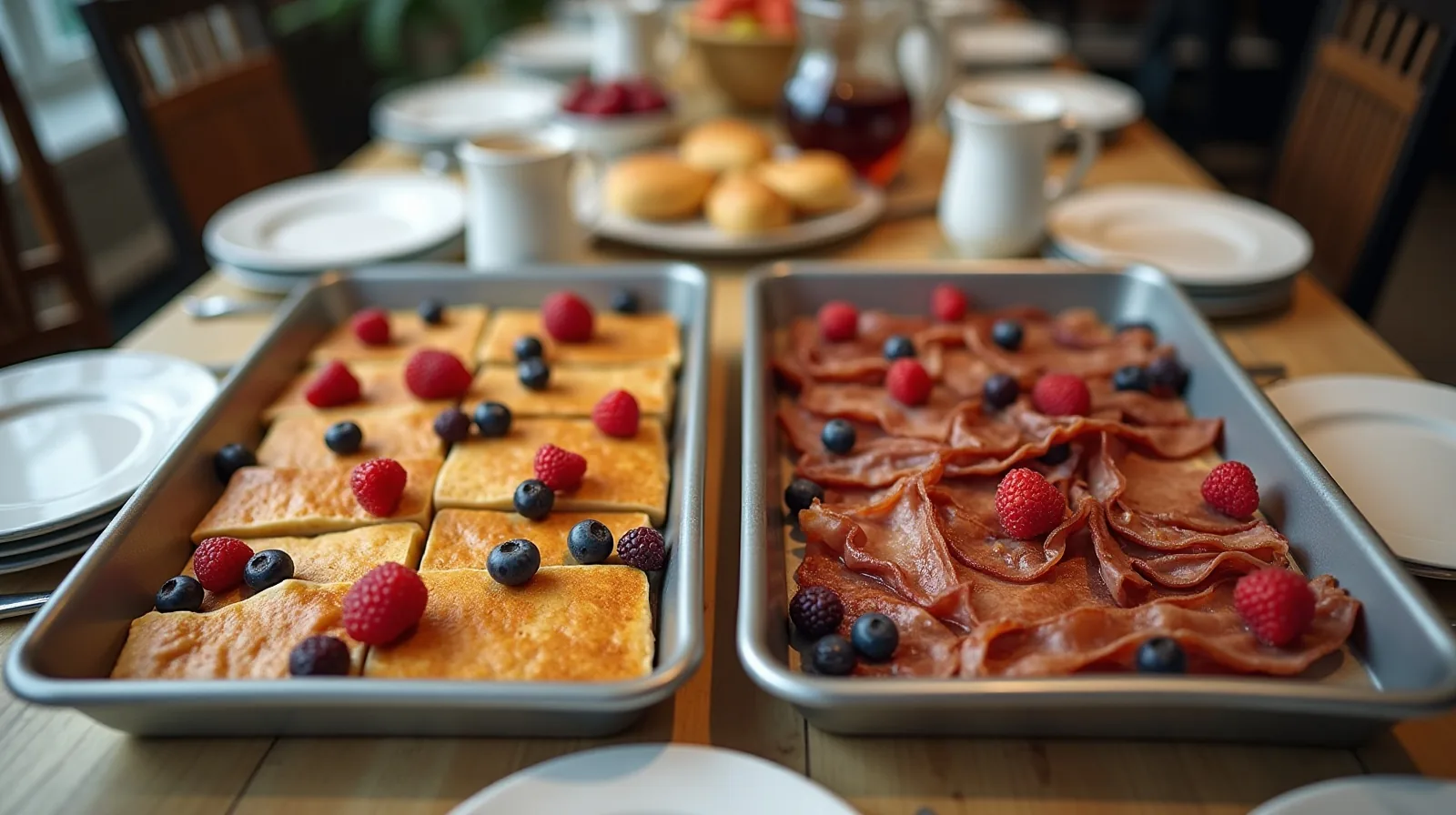
- Sheet-pan pancakes. Pour one batch of batter onto a greased, parchment-lined pan and bake until golden. No flipping, no batches — just cut squares and stack them. Scatter berries over one half and chocolate chips over the other to please everyone at once.
- Oven bacon and sausage. Laid flat on a rimmed pan, bacon cooks evenly, stays flat, and renders without spattering the stove. Sausages roast alongside with a turn or two.
- Baked eggs in a vegetable hash. Roast peppers, onions, and potatoes first, then crack eggs into little wells and return the pan to the oven just until the whites set.
- Sheet-pan French toast. Soak thick slices, arrange them in a single layer, and bake with one midway flip — a dozen slices at a time instead of three.
- Breakfast potatoes. Cut small, spread with room to breathe, and roasted hot, they come out crisper than most skillet versions — and they hold well while everything else finishes.
Work Backwards From the Moment You Sit Down
The choreography feels like a trick but is really just arithmetic. Pick your serving time and count backwards: potatoes are the long pole at forty-ish minutes, bacon and sausage land in the twenty-something range, pancakes and French toast in the teens, and eggs go in last because they’re the fastest and least forgiving. Conveniently, most of it is happy at roughly the same moderately hot oven, so the pans can share. Stagger the start times, swap racks once for even browning, and let the potatoes and meat rest on the counter if they finish early — they forgive; eggs don’t.
Serve It From the Pan
Here’s the crowd-feeding payoff: don’t plate anything. Set the hot pan on a trivet in the middle of the table, hand somebody a spatula, and let the meal run family-style — reaching, passing, seconds without a line forming at the stove. A small toppings station (syrup, hot sauce, cut fruit, yogurt) lets every eater customize without any special orders reaching the kitchen. And when it’s over, cleanup is a couple of pans and their parchment, not a sink full of skillets. The cook eats hot, at the table, with everyone else — which was the whole point of the big breakfast in the first place.