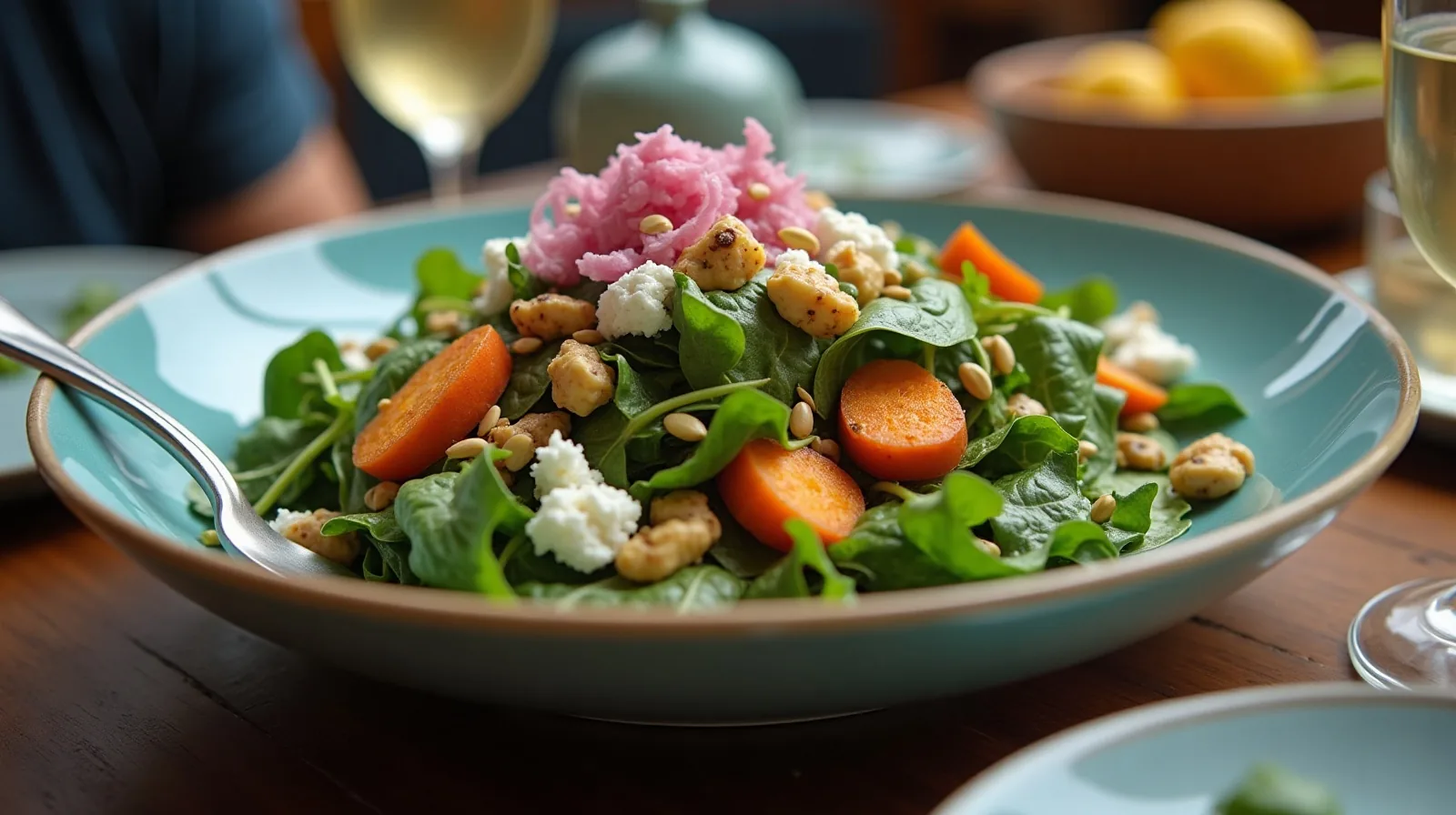
Everyone has ordered a salad out and wondered: why can’t mine taste like this? The gap isn’t exotic ingredients or restaurant magic — it’s that most home salads are built like obligations. A pile of bare leaves, a few pale vegetables, dressing poured straight from the bottle over the top. Restaurant kitchens treat salad like real cooking: they season it, dress it properly, and build it for texture. Do the same at home and salad stops being the thing you eat before the food.
Why Homemade Salads Disappoint
Three missing things doom most bowls: salt, fat, and texture. Lettuce is mostly water, and unseasoned, it tastes like it. Fat — a proper dressing, some cheese, avocado, toasted nuts — is what carries flavor and keeps you full past mid-afternoon; a fat-free salad is a salad you’re hungry after. And a bowl where every bite is the same soft crunch gets boring by the fourth forkful. That’s also why the handful of chips on the side so often outshines the salad itself: the chips brought the salt and the crunch. Fix those three and even a modest set of ingredients starts tasting deliberate.
The Five-Part Build
Skip recipes and use a formula — one thing from each column, whatever the fridge offers:
- A seasoned base. Any greens — or shaved cabbage, which stays crisp for days. Salt them lightly, like the vegetable they are.
- Something hearty. Roasted vegetables, a cooked grain, beans, chopped chicken, a boiled egg — the part that makes it a meal instead of a garnish.
- Real crunch. Toasted nuts or seeds, croutons crisped from stale bread, crushed crackers over the top.
- Something salty or creamy. Crumbled cheese, olives, avocado — small amounts, big payoff.
- Something bright. Quick-pickled onions, a handful of fresh herbs, citrus segments — the spark that keeps forkfuls interesting to the bottom of the bowl.
The Dressing Is the Whole Game
Bottled dressing is where cravings go to die. The homemade version takes ninety seconds and a jar: three parts oil to one part acid — vinegar or citrus juice — plus a small spoonful of mustard to bind it, a little honey, salt, and pepper. Shake hard until it turns creamy. Then dress like it matters: pour some into the bowl, toss until every leaf is barely glossy, and add more only if needed. Tossing the bowl instead of topping it is the single biggest difference between homemade salads and the ones you crave — dressing on top coats three bites; dressing tossed through seasons all of them.
Make Craving It the Default
The salad you crave is the one that’s nearly assembled already. Once a week, roast a tray of vegetables, cook a pot of grain, toast a jar of nuts, and shake up a jar of dressing — four components, maybe forty minutes, mostly unattended. For the rest of the week, a genuinely good salad is a five-minute assembly instead of a project. Store everything in clear containers at eye level in the fridge — a salad you can see is a salad you’ll actually make — and rotate the bright element and the acid in the dressing so the same components keep tasting like different meals.