A windowsill full of crispy stems doesn’t mean you were born without the plant gene. Houseplants mostly die of two very fixable things: too much water and the wrong spot — and the first is far more common than the second. Most struggling plants are being loved to death, watered on a guilty schedule their roots never asked for. The good news is that keeping plants alive isn’t a talent. It’s a small set of habits, and none of them takes more than a minute.
Water on Cue, Not on a Schedule
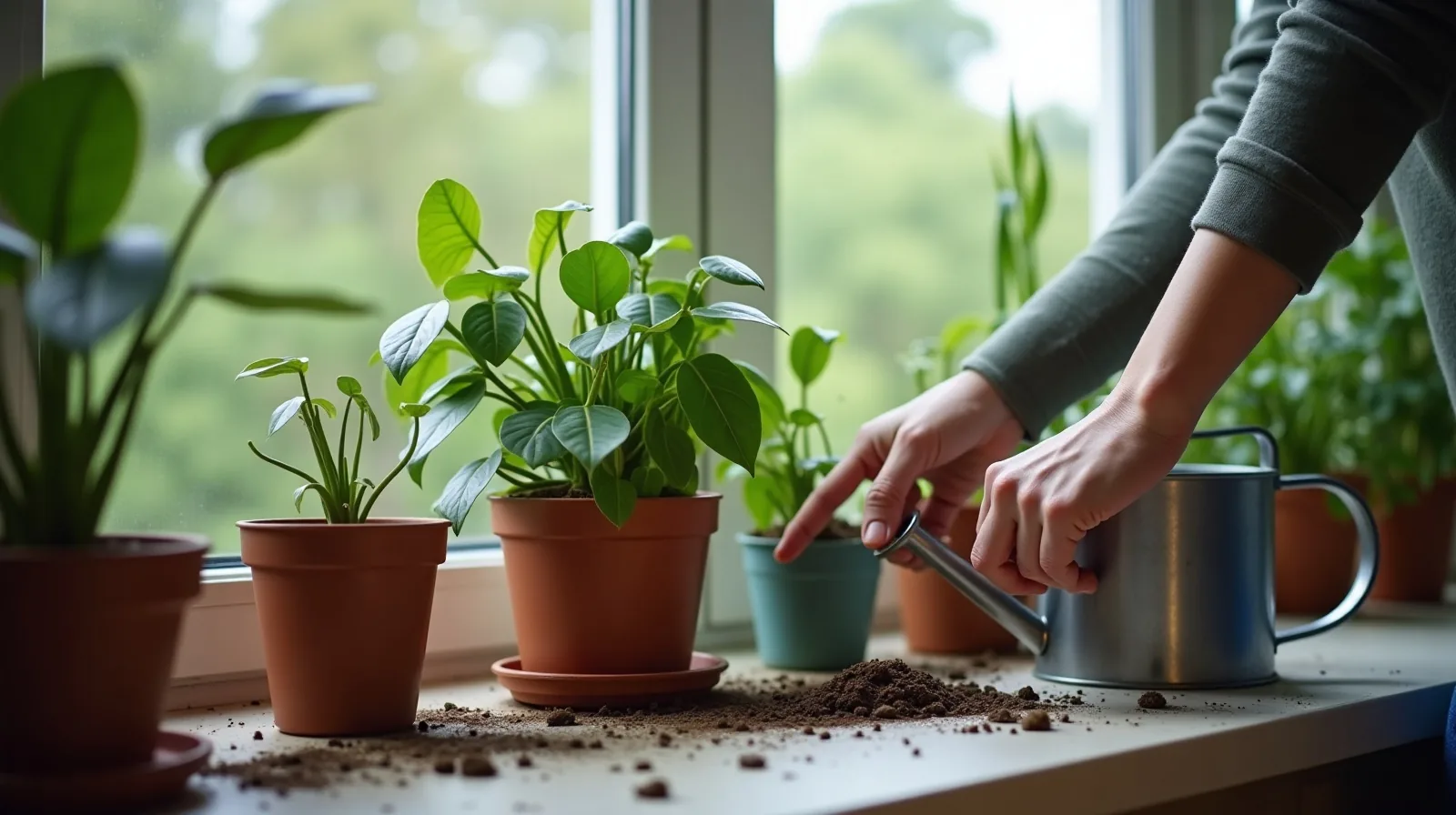
The single best houseplant hack costs nothing: before any watering can tips, push a finger a knuckle or two deep into the soil. Damp down there? Walk away — the plant is fine. Dry? Water thoroughly, until it runs from the drainage holes, then empty the saucer so the roots aren’t left standing in a puddle. That’s the whole system. Roots need air as much as water, and soil that never dries out suffocates them — which is why overwatering kills far more houseplants than forgetting ever has. A calendar can remind you to check; it should never be what decides to pour.
Light Is the Meal — Water Is Just the Drink
A plant in the wrong light is on a slow diet no watering routine can fix. Light falls off fast indoors — a spot a few feet back from a window receives a fraction of what the sill does — so a “bright” room can still be dim where the plant actually sits. Match the plant to the place: most popular houseplants want bright, indirect light near an east- or west-facing window, while the true low-light survivors tolerate darker corners without exactly loving them. Watch the plant’s body language — long, stretched, leaning growth means it’s hunting for more light — and give the pot a quarter turn each week so it grows even instead of lopsided.
The Small Habits That Do the Heavy Lifting
Beyond water and light, a handful of low-effort hacks covers nearly everything else:
- Start with survivors. Pothos, snake plants, and ZZ plants forgive missed waterings and mediocre light — build confidence on them before adopting anything fussy.
- Insist on drainage holes. No hole, no chance. Keep the plant in its plastic nursery pot and drop that into the pretty pot as a sleeve.
- Dust the leaves. A monthly wipe with a damp cloth clears the film that quietly blocks light — a plant can be starving behind its own dust.
- Group plants together. Clustered pots share humidity and turn plant care into one stop instead of a scavenger hunt around the house.
- Pick a weekly check-in day. Same day each week: finger test everything, water only what asks, pull off a dead leaf or two. Five minutes covers the whole collection.
Read the Leaves Before You Panic
Plants announce their problems; they just do it slowly. Yellowing, soft leaves — especially low on the plant — usually point to too much water. Crispy brown edges suggest underwatering, dry air, or too much direct sun. A plant that drops leaves right after moving to a new spot is often just adjusting — give it a couple of weeks before intervening. And one sad leaf is not an emergency; plants retire old leaves as routine housekeeping. Repotting has its own honest cue: when roots circle the soil surface or poke out of the drainage holes, or water races straight through without soaking in, move up one pot size — not three.