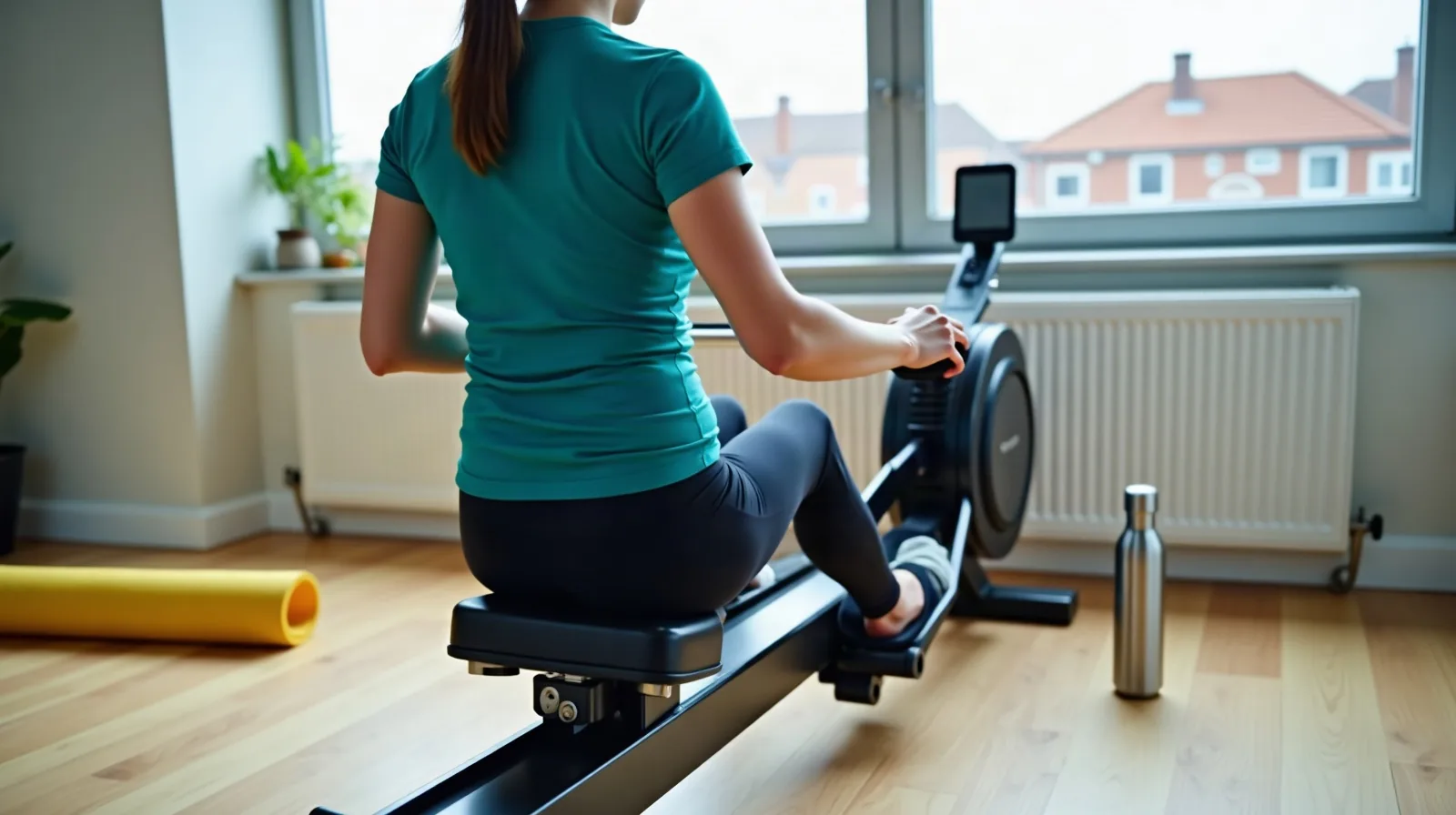
A rowing machine looks simple: sit down, grab the handle, pull. Yet many beginners spend their first sessions yanking with the arms and end up with a sore lower back. Rowing is mostly a leg exercise, and once the order of the stroke clicks, it becomes one of the most efficient full-body cardio workouts you can do in a gym or a spare room.
Why Rowing Earns Its Place
Each stroke works the legs, hips, back and arms in one smooth chain, while the seated position keeps impact low. That combination makes the rower a popular pick for people who want steady cardio without the pounding of running. Public health guidelines generally point toward regular moderate activity across the week plus some muscle-strengthening work, and rowing can contribute to both.
It is still demanding exercise, especially for the back and the heart. If you have a back problem, a heart or lung condition, a recent injury, or have been inactive for a long stretch, check with your doctor or a qualified professional before adding rowing to your routine.
The Four Parts of a Stroke
Coaches break the stroke into four positions, and the order matters far more than the power. At the catch, you sit tall near the front of the rail with shins close to vertical, arms straight and shoulders relaxed. The drive starts with the legs: push the footplate away while the arms stay long and the back holds its forward angle.
Only when the legs are nearly straight does the body swing back slightly past upright, and only then do the arms draw the handle to the lower ribs. That is the finish. The recovery reverses the sequence: arms extend first, the body tips forward from the hips, and the knees bend last as the seat slides back to the catch.
A handy phrase sums it up: legs, body, arms on the way out; arms, body, legs on the way back. The most common beginner error is bending the knees before the hands have passed them, which forces the handle up and over the knees and breaks the rhythm.
Set Up Before You Pull
A couple of minutes of setup heads off most early discomfort:
- Strap the feet snugly. The strap should cross the widest part of the foot, so you can push through the whole sole without sliding.
- Keep the damper low to middle. A high setting feels heavier, not more effective, and mostly makes each stroke slower and harder on the back.
- Hold the handle loosely. A relaxed hook grip with flat wrists stops the forearms from tiring before anything else.
- Keep the elbows low. At the finish, the elbows travel back past the body, not up and out to the sides.
- Row at an unhurried rate. Somewhere around 20 to 24 strokes per minute leaves time to feel each phase.
Aim for a recovery that takes roughly twice as long as the drive. Push firmly, return slowly — that rhythm is where most of the smoothness comes from.
A First Workout and How to Build On It
Start with three to five minutes of easy rowing to warm up. Alternate one minute of focused, steady strokes with one minute of very light paddling for ten to twelve minutes. Finish with a few minutes of easy rowing and a gentle stretch for the hamstrings and hips. That is a complete first session.
Two or three sessions a week is plenty at the start. Each week, add a couple of minutes or swap one easy minute for a steady one, rather than jumping straight into long continuous rows. A sore lower back afterward usually points to reaching or leaning too far, so shorten the stroke, slow the rate and let the legs lead. Sharp or lingering pain is a cue to stop and get it checked.