A hot cooked chicken from the store counter is one of the few shortcuts that does not feel like one. It costs less than most cuts of raw poultry, it is already seasoned, and it arrives at the moment when cooking a whole bird is the last thing anyone wants to start. The mistake is treating it as a single dinner. Handled properly, one bird yields a pile of meat for several nights, a container of stock from the bones, and a week that requires far less thinking at six o’clock.
Break It Down While It Is Still Warm
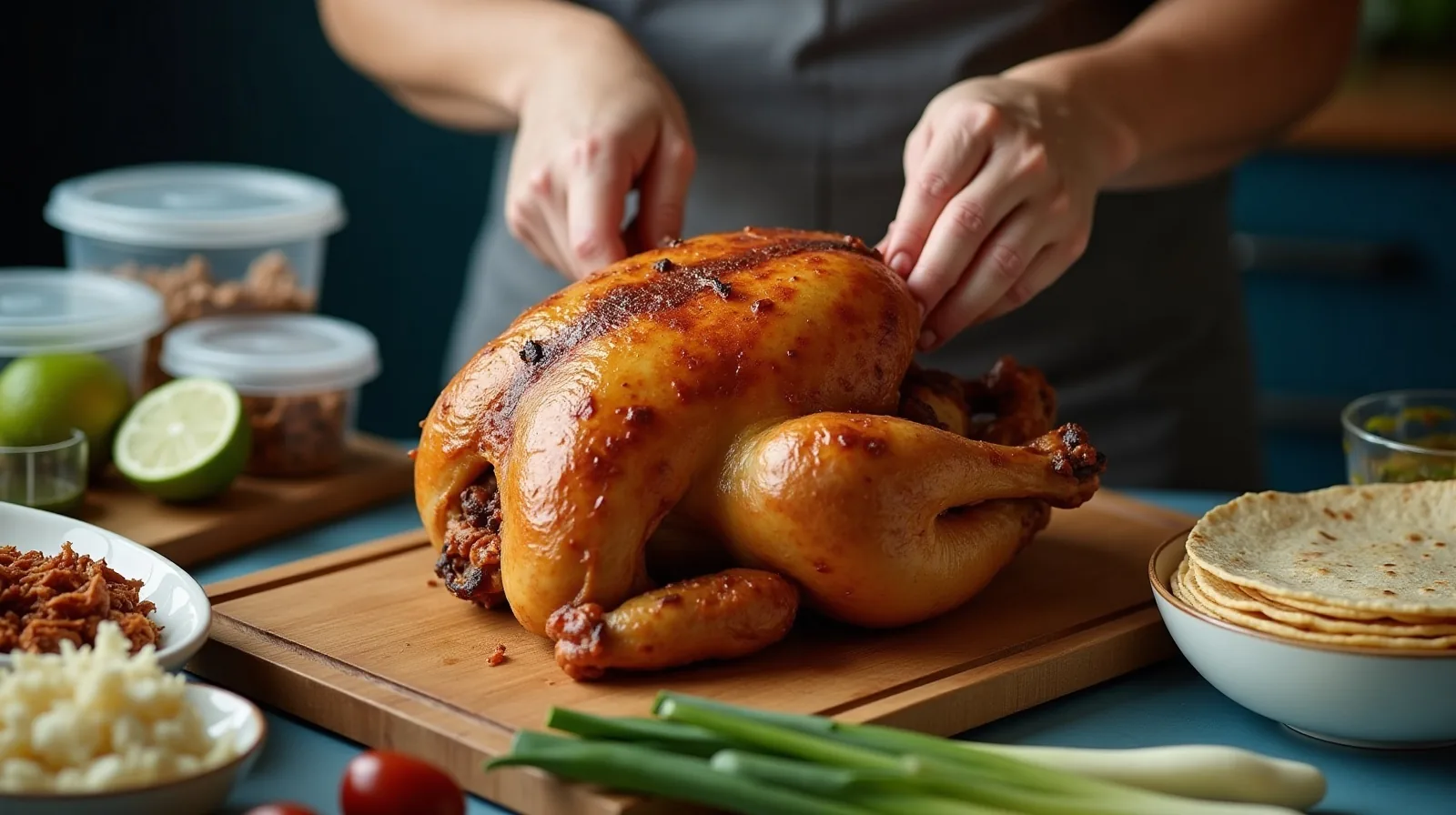
Do the work the moment the bird gets home, because warm meat pulls away cleanly and cold meat fights back. Set the chicken on a board with a rimmed tray underneath to catch the juices, and take the legs and wings off first by bending each joint until it pops and cutting through the gap. Slice the breasts off the frame in two pieces, then pull the rest of the meat off with your fingers; the small pieces under the back are the best on the bird. Shred what you will use for salads and wraps, keep some in larger chunks for anything roasted or fried, and pour the collected juices over the shredded meat so it does not dry out. Everything else — frame, wing tips, skin, any bones from dinner — goes into a bag for stock.
Five Dinners From One Bird
A typical bird gives roughly three to four cups of meat, which is enough for the week if the dinners are built around other ingredients rather than piling the chicken high:
- Tortilla night. Shredded meat warmed in a pan with cumin, garlic, and a squeeze of lime, folded into tortillas with shredded cabbage and a spoonful of sour cream.
- A real chicken soup. Sweat onion, carrot, and celery, add stock and noodles or rice, and drop the meat in at the very end so it stays tender.
- Big salad with something warm. Chunks of chicken over greens with roasted sweet potato, toasted nuts, and a sharp mustard dressing that can handle the richness.
- Fried rice or noodles. Day-old rice, a hot pan, frozen peas and corn, a scrambled egg, soy sauce, and chopped chicken added in the last minute.
- Skillet pot pie. Onions and frozen vegetables in a quick roux made with stock and milk, chicken folded through, topped with pastry or biscuit dough and baked until the top browns.
The Carcass Is the Sixth Meal
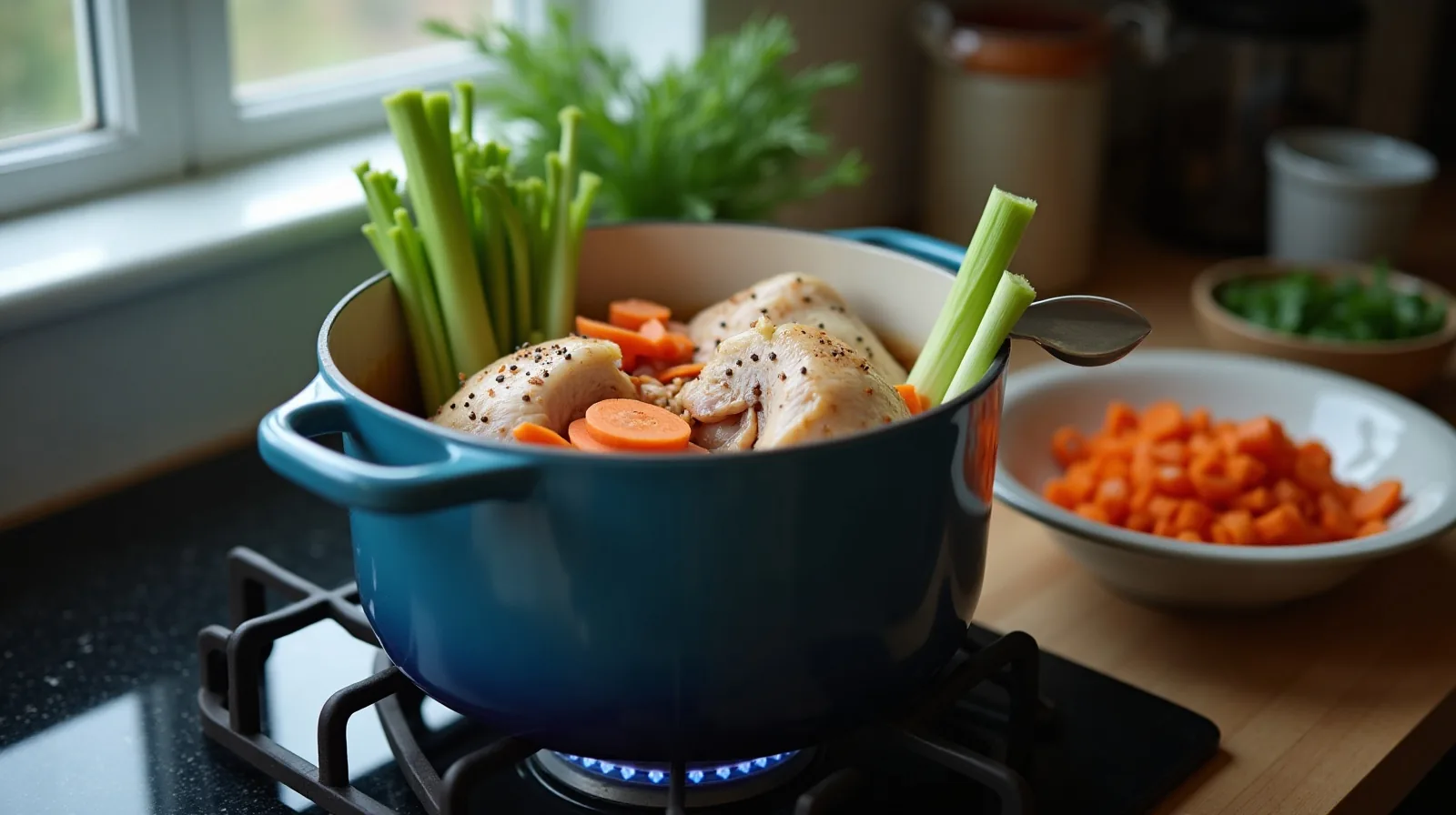
Stock is the part most people skip and the part that quietly upgrades everything else. Put the frame and bones in a pot with an onion halved through the skin, a couple of carrots and celery ribs snapped in half, a bay leaf, and a few peppercorns. Cover with cold water by an inch or two, bring it barely to a simmer, and leave it alone for two to three hours — a hard boil turns stock cloudy and greasy. Strain it, cool it quickly in a shallow container, and lift the fat off once it has chilled. Freeze it flat in bags or in a muffin tin for small portions. Cooked bones give a lighter stock than raw ones, so season it at the point of use rather than in the pot.
Keeping It Safe and Making It Last
Timing is the part worth being strict about. Food safety guidance generally points toward getting cooked poultry into the fridge within about two hours of buying it, and using refrigerated cooked chicken within roughly three to four days, so anything beyond midweek should go in the freezer on day one. Store the meat in shallow containers rather than one deep pile, since it cools faster and reheats more evenly. Reheat gently with a splash of stock or water to keep it from turning stringy, and label the freezer bags with the date, because unlabeled chicken becomes mystery chicken in about a fortnight.