
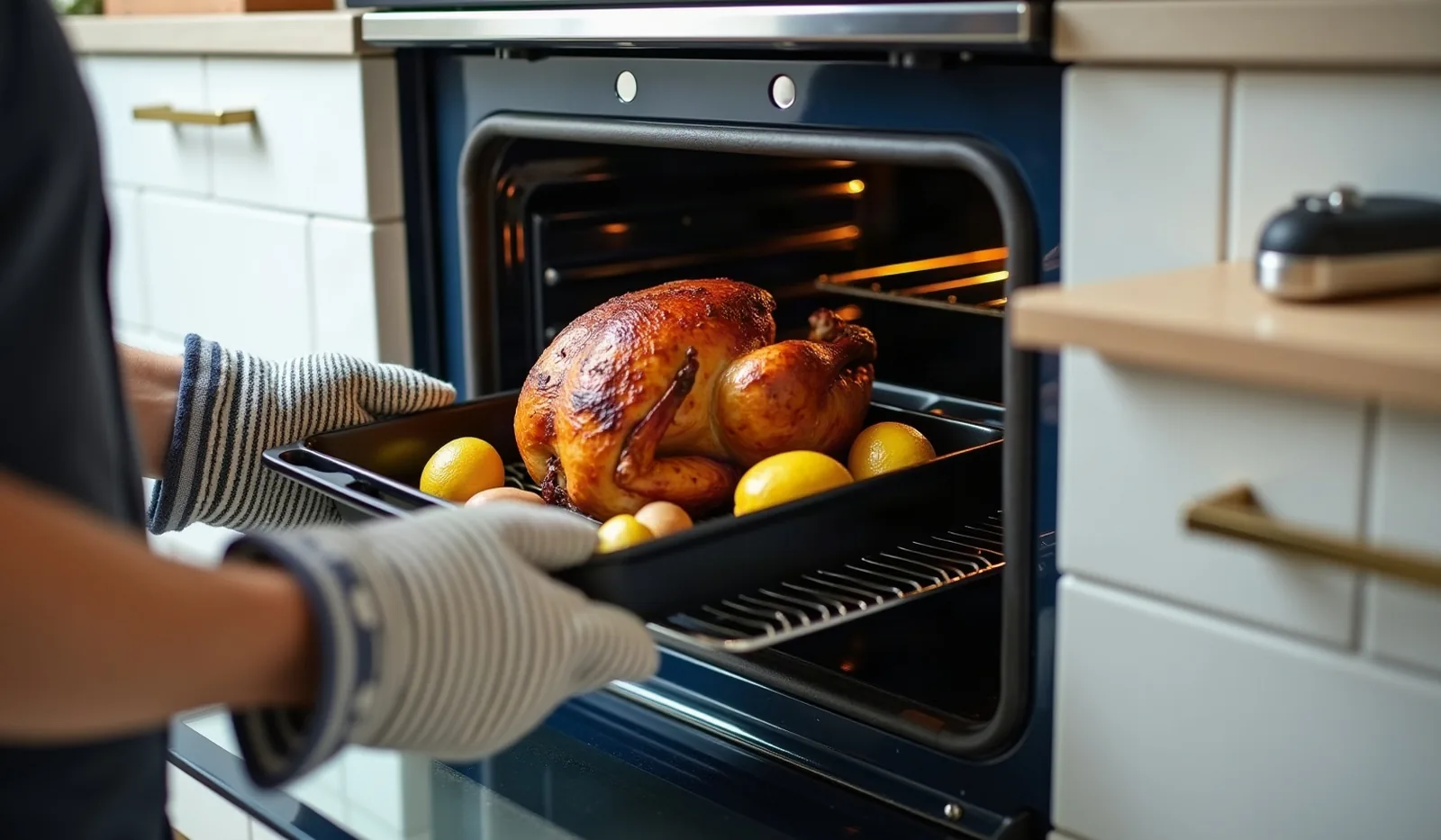
A whole roasted chicken looks like a weekend project, but it is one of the most forgiving dinners a beginner can make. One bird, a pan and an oven give you a crisp-skinned dinner tonight and enough meat for sandwiches, soup and salads later in the week. The method rests on four ideas: dry skin, early salt, steady heat and a thermometer.
Start With Dry Skin and Early Salt
Crisp skin needs a dry surface. Take the chicken out of its packaging, pat it thoroughly with paper towels inside and out, and skip rinsing it, since splashing raw poultry juices around the sink spreads bacteria without making the bird any cleaner. Wash your hands, the board and anything the raw chicken touched with hot soapy water afterward.
Then salt generously. A rule of thumb many cooks use is about a teaspoon of fine salt per pound of chicken, scattered over the skin and a little inside the cavity. If time allows, do this a few hours ahead, or even the night before, and leave the bird uncovered on a plate in the refrigerator. The salt seasons the meat deeply and the cold, dry air tightens the skin for browning.
Roast Hot on a Rack of Vegetables
Let the chicken sit out for about thirty minutes while the oven heats to somewhere around 425°F (220°C). A hot oven renders fat and browns skin before the breast has time to dry out. Rub a little oil or softened butter over the skin, add pepper and any dried herbs, and tuck a halved lemon or a few garlic cloves into the cavity if you like.
Set the bird breast-side up in a roasting pan or ovenproof skillet. Thick slices of onion, carrot and a few small potatoes underneath work as a built-in rack, lifting the chicken so air circulates while the vegetables soak up the drippings. A 4-pound chicken usually needs roughly an hour to an hour and fifteen minutes, but the clock is only a guess. The thermometer decides.
Know When It Is Done
Food safety guidance generally calls for poultry to reach 165°F (74°C) at its thickest point. Slide an instant-read or probe thermometer into the meatiest part of the thigh without touching bone, then check the breast as well. Juices that run clear and legs that wiggle loosely are good signs, but color alone is not a reliable test.
These small habits help a first roast go smoothly:
- Start with a thawed bird — a frozen center cooks unevenly, so thaw it in the refrigerator for a day or two.
- Tie or tuck the legs — a loop of kitchen string keeps the shape even.
- Do not crowd the pan — vegetables steam if packed too tightly.
- Tent with foil — if the skin browns too fast, cover loosely.
- Keep leftovers safe — refrigerate within two hours and use within three to four days.
Rest, Carve and Use Every Scrap
Move the chicken to a cutting board and let it rest for 15 to 20 minutes. The juices settle back into the meat instead of flooding the board, and the temperature climbs a few more degrees while it waits. Spoon the pan juices into a small cup and skim off the fat for a quick sauce over the vegetables.
To carve, slice through the skin between leg and body, bend the leg back until the joint pops, and cut it free. Remove each breast in one piece along the breastbone, then slice across the grain. Save the carcass, bones and any leftover scraps in the freezer to simmer into broth later, so a single bird stretches across several meals.