Roasted vegetables can taste like a completely different food from their steamed or boiled cousins: sweet, nutty, crisp at the edges, and tender in the middle. Yet a lot of home-roasted trays come out pale, soft, and a little soggy. The gap between the two has little to do with the recipe. It comes down to heat, moisture, and space, and all three are easy to control.
Heat Does the Heavy Lifting
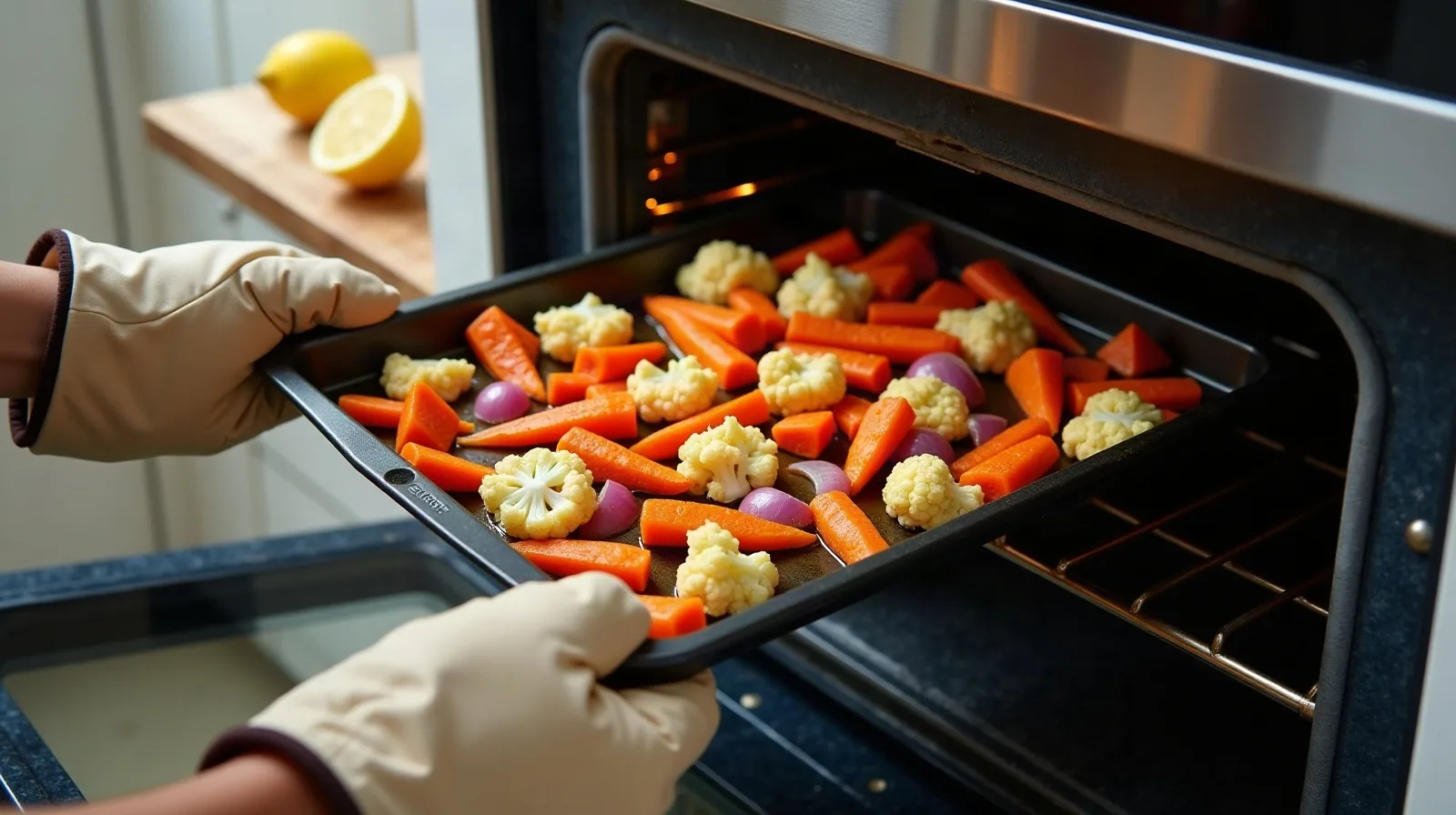
That deep golden color is browning, the same set of reactions that crisps a crust and sears a steak. Browning needs a hot, dry surface, which is why a gentle oven turns vegetables limp instead of caramelized. Most vegetables do well somewhere in the range of 425 to 450 degrees Fahrenheit, with the oven fully preheated before the tray goes in. A dark, heavy sheet pan helps, too, since it holds and transfers heat better than a thin, shiny one. For an extra head start, slide the empty pan into the oven while it preheats and add the vegetables to the hot metal so they begin to sizzle right away.
Cut Evenly, Dry Well, Oil Lightly
Three small prep habits make the biggest difference. First, cut pieces to a similar size so they finish together; chunks about an inch across suit most vegetables. Second, dry everything after washing, because clinging water turns to steam in the oven and blocks browning. Pat pieces with a clean towel or let them air-dry for a few minutes.
Third, use just enough oil to coat. Toss the vegetables in a large bowl rather than on the pan, so every surface gets a thin, even film. Too little oil leaves dry, leathery edges, while too much leaves them greasy. Add salt at the same time, along with pepper or a spice that can handle high heat, such as smoked paprika or cumin. Save garlic, fresh herbs, and anything delicate for the last few minutes, since they scorch and turn bitter long before the vegetables are done.
Give Everything Room
Crowding is the most common reason roasted vegetables go soggy. Vegetables hold a lot of water, and as they heat, that water escapes as steam. On a roomy pan the steam drifts away and the surfaces brown. On a packed pan it gets trapped between pieces, so everything simmers in its own moisture instead. Spread the vegetables in a single layer with a little space around each piece, and use two pans rather than one overloaded one. Swapping the pans between racks halfway through helps both cook evenly, and a quick stir or flip once or twice encourages browning on more than one side.
Match the Timing to the Vegetable
Dense vegetables need longer than tender ones, so a mixed tray works best when the pieces are staged. Roughly speaking, vegetables fall into a few groups, and each group tends to follow a familiar pattern.
- Roots and squash — carrots, potatoes, beets, and winter squash often need 30 to 45 minutes and reward the full heat.
- Cruciferous vegetables — broccoli, cauliflower, and Brussels sprouts typically brown in 20 to 30 minutes, with the cut sides turned down at first.
- Quick-cooking vegetables — zucchini, peppers, onions, and asparagus are often ready in 15 to 25 minutes, so add them partway through a mixed tray.
- Doneness check — a fork should slide in easily, and the edges should look deeply golden rather than merely warm.
Finish with something bright, such as a squeeze of citrus, a splash of vinegar, or a spoonful of yogurt sauce, to balance the sweetness. Leftovers keep well in the refrigerator for a few days and make an easy base for grain bowls, omelets, and sandwiches. Anyone following a medically directed eating plan should check with a doctor or registered dietitian before making big changes to how they eat.