
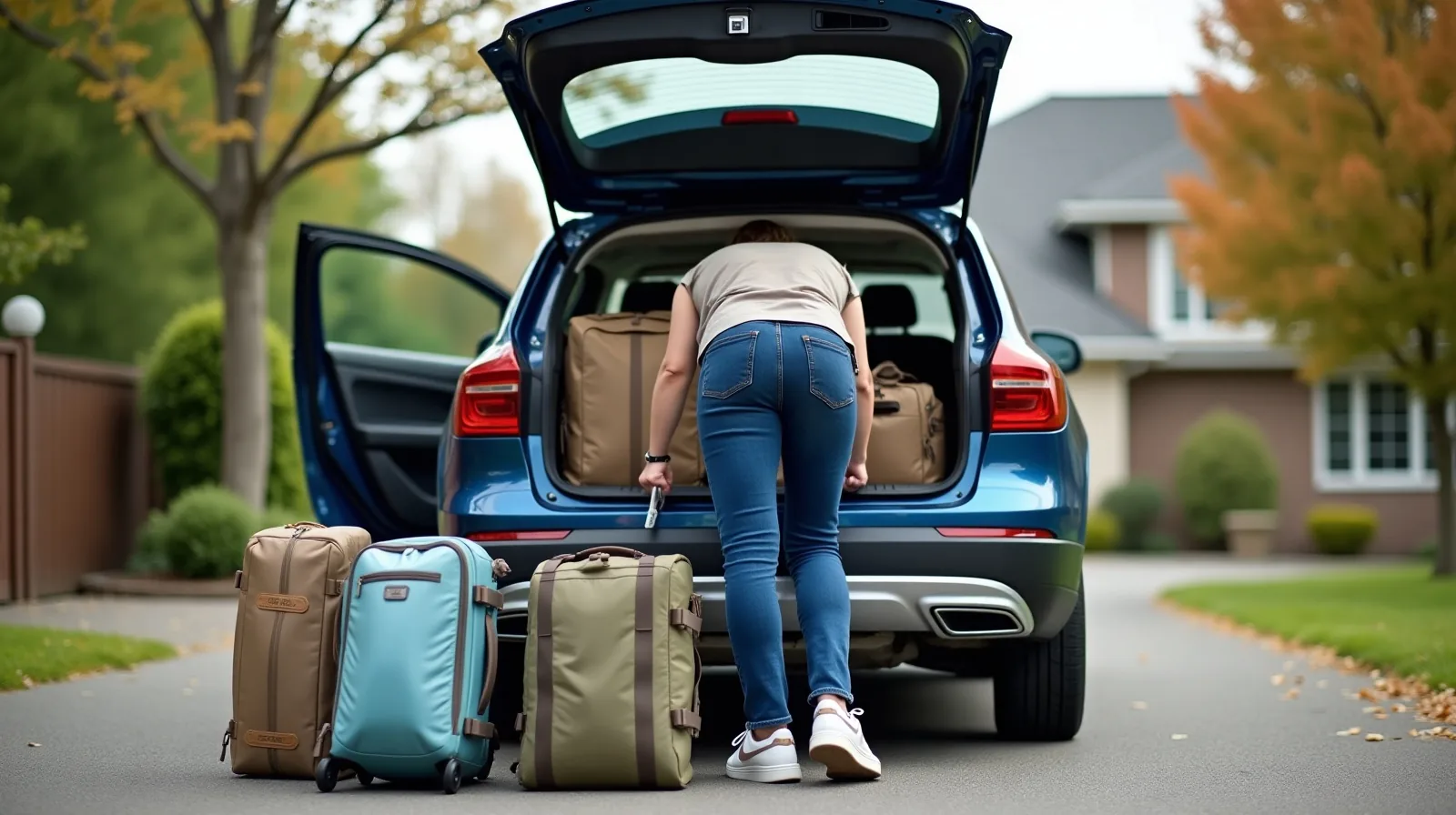
The suitcase gets all the attention. Swimsuits, chargers, outfits for dinners that haven’t been booked yet — all packed days ahead. The car, meanwhile, gets loaded the morning of, which is how thoroughly organized people end up at mile 200 with no jumper cables, no pain reliever, and a phone cable that doesn’t reach the back seat. This isn’t a planning guide — routes, stops, and drive-time math are their own subject. It’s a checklist of the things people only remember once they need them, sorted by where each one should live in the car.
The Trunk: The Trouble Kit
Everything in this layer feels unnecessary right up until the moment it’s the only thing that matters. Before anything goes in, check the spare tire’s pressure — a flat spare is the classic discovery made on a highway shoulder — and confirm the jack and wrench are actually in the car. Then load the small kit that handles most roadside trouble:
- Jumper cables or a portable jump starter. The most-borrowed item in any parking lot, and the worst one to need at a remote trailhead.
- A real first-aid kit. Bandages, antiseptic, tweezers, pain relievers, motion-sickness tablets — plus everyone’s personal medications with a day or two extra.
- Water and a blanket. A few big bottles and one warm layer turn a breakdown wait from miserable into merely boring.
- A flashlight. The phone’s light works fine until the phone is the thing that’s dead.
- A tire pressure gauge. Small and cheap, and the difference between guessing and knowing at every air pump along the way.
The Cabin: The Comfort Layer
These are the items whose absence you feel hourly rather than catastrophically. A trash bag hanging within reach keeps the footwells civilized — bring several, because they fill faster than seems possible. A roll of paper towels and a pack of wipes handle spills, sticky hands, and mystery smears. Sunscreen belongs up front, because side-window sun on a long drive is real sun. A charging cable long enough to reach the back seat prevents the quietest argument in family travel, a phone mount keeps navigation off a lap, and snacks that don’t melt — nuts, pretzels, firm fruit — beat anything chocolate after the first warm hour. Toss in a spare pair of sunglasses; one pair always disappears.
The Glovebox: The Paper Layer
Phones die, overheat, and lose signal exactly when it counts, which is why this layer is deliberately old-fashioned. A paper map of the route — a road atlas or a printed strip map, backing up the offline maps you downloaded — costs almost nothing and works in canyons and dead zones. Small bills and a handful of coins cover cash-only tolls, farm stands, and small-town parking meters that have never met a card. Confirm the registration and insurance cards in the glovebox are the current ones, and write your roadside-assistance number on an index card — that’s the one call you don’t want depending on a dying battery and one bar of signal.
The Five-Minute Night-Before Sweep
The forgetting happens because none of this has a natural packing moment — suitcases do, cars don’t. So give it one. The night before you leave, walk the three layers in order: trunk (cables, first-aid kit, water, blanket, flashlight, spare checked), cabin (trash bags, towels, long cable, mount, snacks, sunscreen), glovebox (map, small bills, current documents, that index card). Five minutes, done with a driveway light on, and the drive itself is finally as well-packed as the suitcase — which is exactly what lets you enjoy the parts of the trip you actually planned.