The day a nap disappears is rarely a clean break. A child stops falling asleep but still falls apart by five o’clock, and the adult who used to get ninety minutes of quiet now gets none. Losing the nap does not have to mean losing the hour. Plenty of families keep the slot and change what happens inside it: a stretch of time alone in a room, with a small set of things to do and a clear rule about staying put.
Why the Hour Is Worth Defending
A dropped nap usually leaves a gap rather than extra energy. Young children still need a midday break from noise, decisions, and other people, and quiet time gives them one without the battle of forcing sleep that isn’t coming. It also protects something adults genuinely need: an hour to work, cook, or simply sit down. Expect to trade some length for peace, though. Forty-five minutes that go smoothly beats ninety that end in tears every afternoon.
Set the Room So It Runs Without You
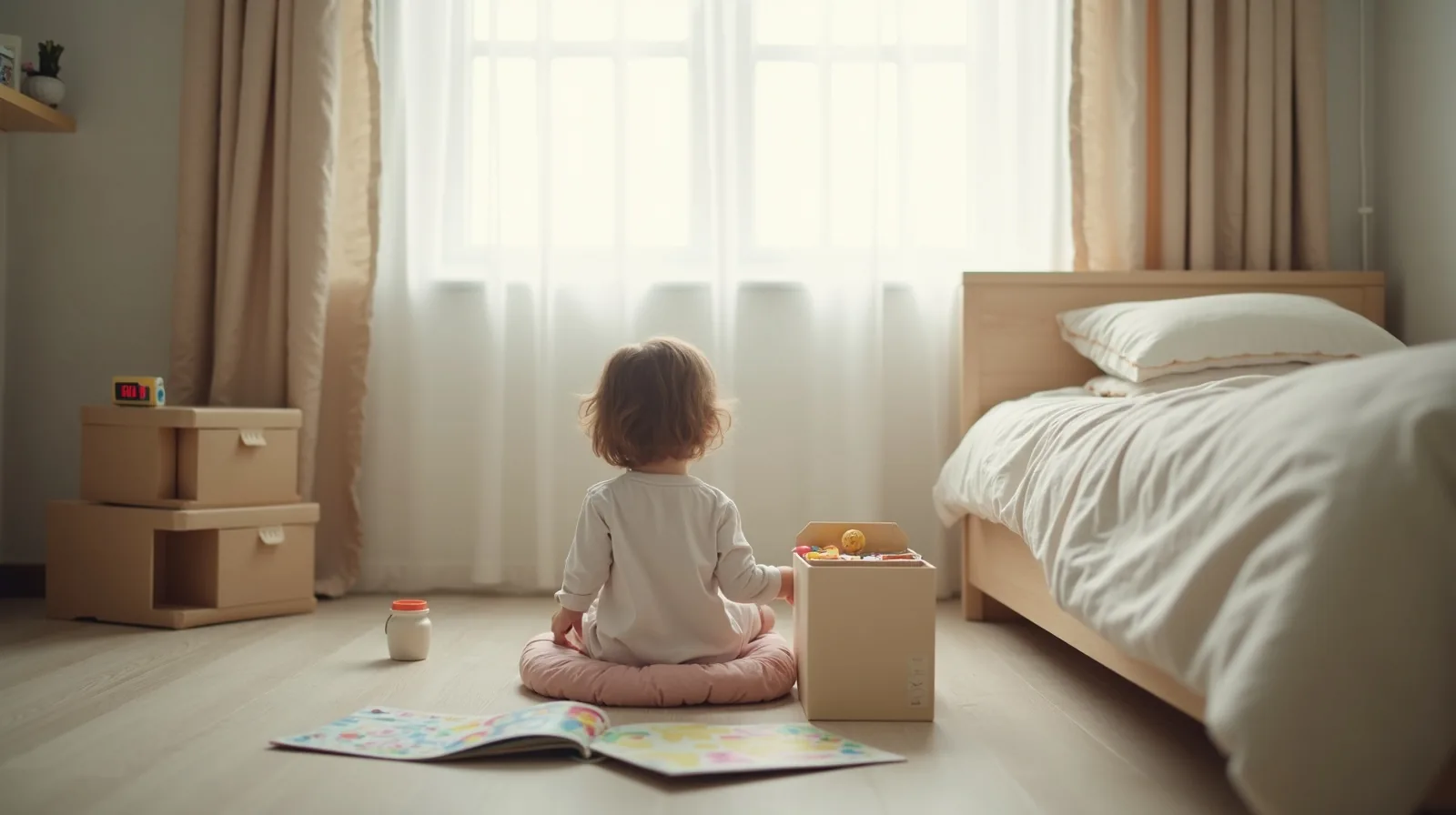
Quiet time works best when the environment does the reminding. Keep it in the same place at the same hour, right after lunch, so it becomes the shape of the day rather than a negotiation. Close the blinds partway, put on the same soft music or white noise every time, and make the space boring in a good way — the fewer bright, noisy, or complicated toys within reach, the better. A timer the child can see matters more than almost anything else, because it answers the question they would otherwise ask you six times. A visual timer, a clock with a colored marker, or a playlist that ends on cue all work, as long as the ending is theirs to see rather than yours to announce.
The Rotating Box
- Build four or five boxes, not one. Each holds a small set of quiet activities. One box comes out per day, then goes away, which keeps everything inside feeling new for far longer than an open shelf ever will.
- Keep them genuinely quiet. Picture books, sticker pads, magnetic tiles, chunky puzzles, lacing cards, felt or fabric play, a small dollhouse. Nothing with sound, nothing with small pieces that will scatter under furniture.
- Include one open-ended thing. Blocks, play dough on a tray, or blank paper and crayons stretch across a whole hour in a way a single puzzle cannot.
- Add an audio option. A story recording gives a child something to do lying down, and it is often the bridge for kids who still fall asleep two days out of seven.
- Refresh, don’t rebuild. Swap two or three items between boxes every few weeks. Ten minutes resets the novelty without buying anything.
Teaching a Child to Stay Put Pleasantly
Staying in a room alone is a skill, and like most skills it is learned in small increments. Start far shorter than your goal, at ten or fifteen minutes, and add a few minutes every couple of days once the short version goes well. Explain the rule plainly and only once: you stay in your room until the timer finishes, you can play quietly or rest, and you do not have to sleep. Handle the exits calmly. Walk them back with as little conversation as possible, since a long discussion is exactly the reward that makes leaving worth trying again. Head off the standard reasons in advance by putting a cup of water, a book, and a stuffed animal in the room first.
When It Falls Apart
Some afternoons will simply not work, and a child in genuine distress is not learning anything useful from being left there. Cut it short, try again tomorrow, and look for the pattern rather than reacting to the day. When quiet time collapses repeatedly, the causes are usually ordinary: the timing has drifted too late, lunch was too small, the boxes have gone stale, or the child is in a stretch of change and needs a shorter version for a while. Adjust one thing at a time, and give any change a full week.