
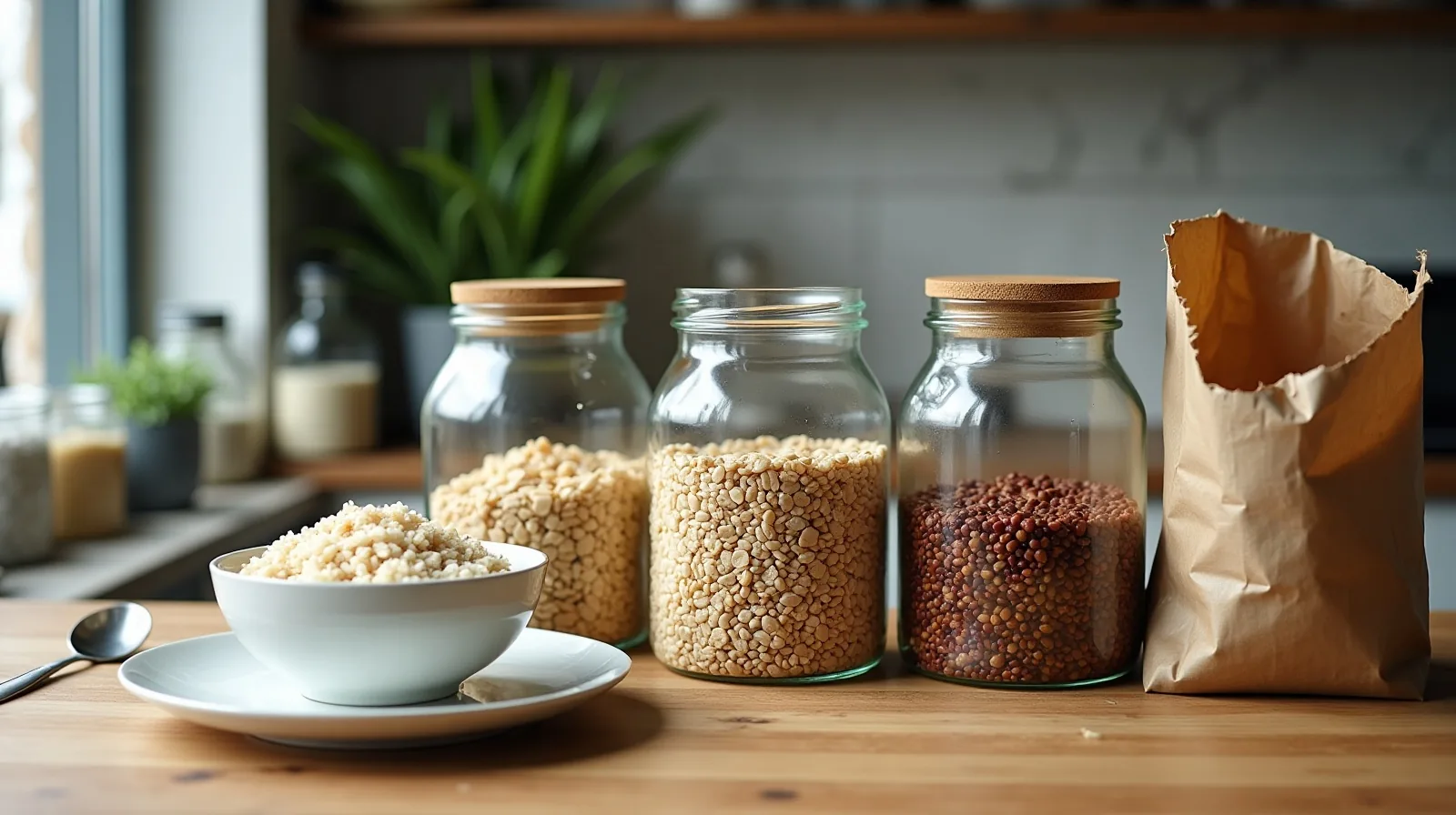
The big bag is almost always cheaper per ounce. That much is easy to check, and it is why a warehouse cart fills up so fast. What the shelf tag never tells you is how much of the bag survives long enough to be eaten. Rice that keeps for years and salad greens that turn in nine days are priced by the same arithmetic and reward you very differently. Buying well in bulk has less to do with hunting deals than with knowing which foods will still be food in three months.
Run the Unit Price, Then Run the Waste
Start with the number on the tag. Most shelf labels print a unit price, whether per ounce, per pound, or per hundred count, and comparing that instead of the sticker price settles the question in about four seconds. Then apply the second, harder test: what share of this would you have to throw away before the deal disappears? A bulk size that saves thirty percent per ounce stops saving anything once roughly a third of it goes in the bin. Ask yourself honestly how fast your household actually eats the thing, and whether you have somewhere sensible to put the rest. A pantry with no free shelf and a full freezer is a good reason to buy the smaller size at any price.
The Staples That Genuinely Reward It
- Dried rice, beans, and lentils. Cheap to begin with, shelf-stable for a year or more in a sealed container, and the per-pound gap between the small bag and the sack is usually enormous.
- Rolled oats and other whole grains. They keep for months in an airtight jar, freeze indefinitely, and get used daily in most households that buy them at all.
- Whole spices and peppercorns. Ground spice fades within months, but whole seeds and berries hold their oils far longer, so the large jar stays good until it is gone.
- Frozen vegetables and berries. Already stabilized at the peak of harvest, priced well in large bags, and immune to the spoilage clock that undoes fresh produce.
- Paper goods and cleaning supplies. Not food, but the clearest win of all: no expiry, steady demand, and the only cost is the space they take up.
What Spoils Before You Reach the Bottom
Fats go first. Nuts, seeds, nut butters, whole-grain flours, and the oils they contain turn rancid within a few months at room temperature, and the flavor slides so gradually that most people never notice until they taste a fresh one. Ground coffee and pre-ground spices lose their character on the same schedule. Fresh produce is the obvious trap, though not uniformly: potatoes, onions, carrots, and cabbage hold for weeks in a cool dark spot, while greens, berries, and herbs are on a countdown from the moment they are picked. Dairy in family sizes only works if the family drinks it. And anything you have never cooked before is not a bargain in quantity — buy the small one, decide whether you like it, then commit.
Storage Is the Half That Protects the Savings
The savings live or die in the twenty minutes after you get home. Decant grains and legumes into airtight containers rather than leaving them in the paper sack, which admits air, moisture, and pantry moths. Push nuts, seeds, whole-grain flour, and coffee into the freezer, where their oils stay put for close to a year; they thaw in minutes and lose nothing. Split large packs of meat into meal-sized portions before freezing so you never defrost more than you need. Label with a date, because memory is a poor inventory system. Then keep the oldest package in front, and cook from the front — a habit that quietly does more for a grocery budget than any coupon.