A first ski trip can feel like a puzzle with too many pieces: which mountain, what to wear, whether to buy gear, how lift tickets work, and whether you will spend the whole weekend sitting in the snow. Beginners need far less than the glossy resort brochures suggest. A small mountain, rented equipment, one lesson and a short first day cover most of what makes a ski trip fun instead of exhausting.
Choose a Mountain That Suits Beginners
The biggest, most famous resort is rarely the best place to learn. Its terrain is built for experienced skiers, its lift tickets cost the most, and its beginner area can be a crowded afterthought. A smaller hill closer to home often makes a better first trip. Look at the trail map for a dedicated learning area, a gentle surface lift or slow chairlift, and a good share of green-circle runs.
Timing matters as much as the mountain. Weekdays are quieter and often cheaper, and the slopes feel far less intimidating without a stream of fast skiers going by. Many mountains also sell beginner packages that bundle a lift ticket for the learning area, rental gear and a group lesson for less than buying each piece on its own.
Rent Gear Instead of Buying It
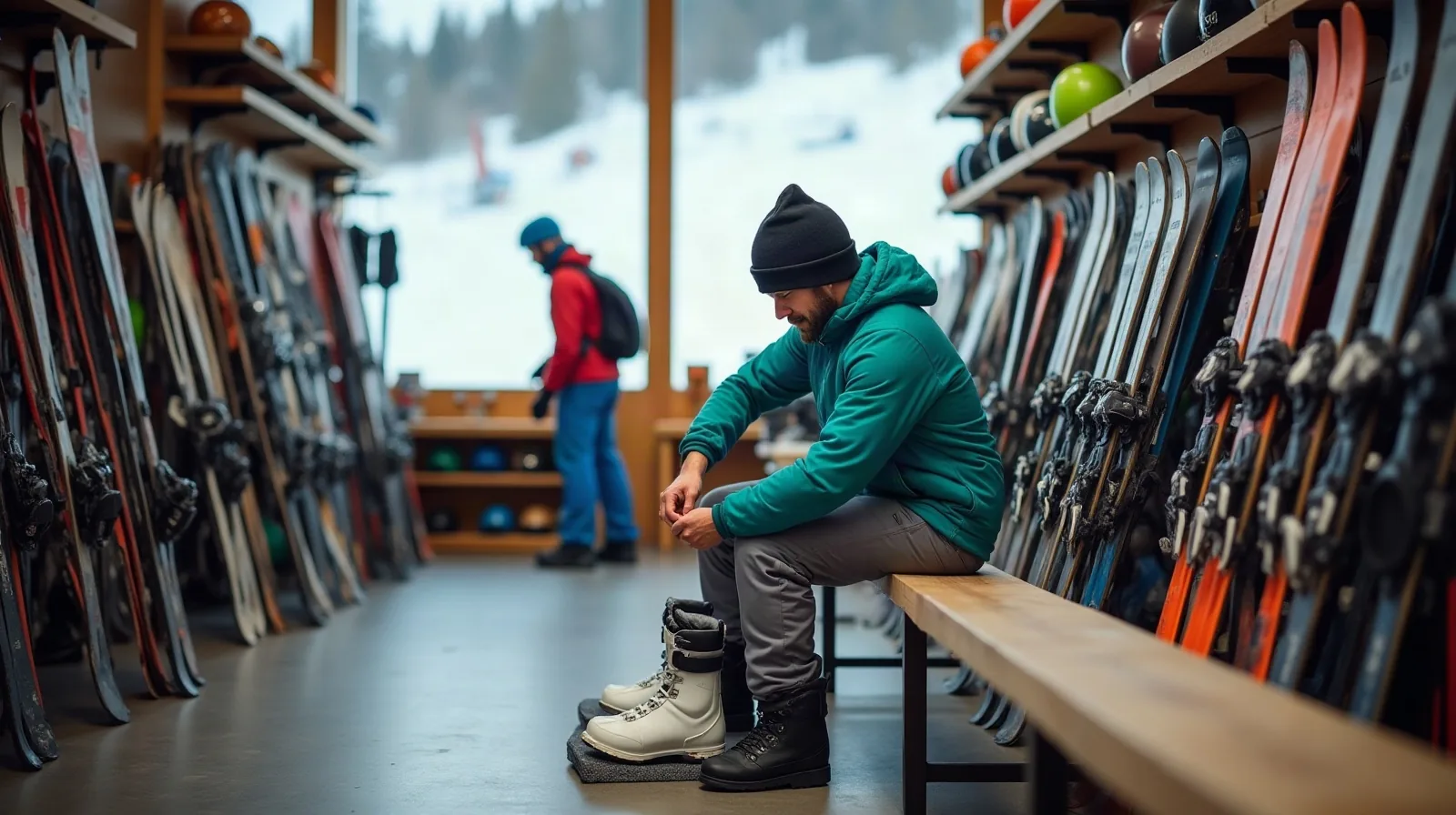
Skis, boots, poles and a helmet add up quickly, and nobody knows what they like until they have skied a few days. Renting keeps the first trip affordable and lets you try the sport before committing. Renting at the mountain is the simplest option, while a shop in a nearby town can be cheaper and less rushed if you pick up the gear the evening before.
Boots are the piece that deserves real attention. They should feel snug, with your heel held down and your toes just brushing the front when you stand up straight, then backing off slightly as you bend your knees. Wear one pair of thin or medium ski socks, not two thick pairs, and speak up if anything pinches. A five-minute swap at the counter beats a day of sore feet.
Book a Lesson for Day One
Learning from a friend sounds generous, but even patient skiers tend to take beginners onto terrain that is too steep, too soon. A group lesson with a certified instructor teaches the basics in the right order: how to stand, glide, slow down with a wedge, turn and stop, and how to ride the lift without drama. Book a morning session if you can, while you are fresh.
Pack the Small Things That Make the Day
Dress in thin layers rather than one bulky coat, and skip cotton next to the skin, since it stays damp and cold. Beyond the basics, these small items make the biggest difference on the hill:
- Waterproof gloves or mittens. Beginners touch the snow a lot, and wet hands end a day early.
- Goggles or wraparound sunglasses. Snow reflects sunlight, and flat light hides bumps without them.
- A neck gaiter. It blocks wind on the lift and tucks away when you warm up.
- Sunscreen and lip balm. Sun at altitude burns faster than most people expect, even on cloudy days.
- A small snack and a water bottle. Skiing is more work than it looks, and thirst sneaks up in cold, dry air.
Keep the First Day Short
Most beginner falls happen late in the day, when legs are tired and focus slips. Plan to ski the morning, take a real lunch break indoors, and call it after a couple of afternoon laps rather than chasing one more run. Higher mountains can also leave newcomers short of breath and headachy, so drink water, go easy on the first evening, and check with your doctor before the trip if you have a heart or lung condition. A second, fresher day almost always beats a long, wobbly first one.