
Most travelers treat a layover as dead time to endure, or as a gap so tight it ruins the whole trip. Both reactions come from the same missing piece: nobody counted what the gap actually holds. A little arithmetic before the first flight turns a connection into a calm stretch with a plan, whether that means a long sit with a good snack or a short wander through a new city.
Count the Real Free Time
A layover listed as three hours is never three hours of free time. Start with the scheduled gap, then subtract the time to leave the plane, which can run from ten minutes to half an hour depending on seat row. Subtract the walk to the next gate, which in a large airport can take as long as a short flight’s boarding line. Then subtract a boarding buffer, since gates generally close well before departure and a cushion of about an hour is a common rule of thumb. What remains is the window to eat, rest, or explore.
Airlines and airports publish minimum connection times, and those numbers are the shortest the system allows rather than the amount that feels comfortable. When booking, a connection that sits only a little above the minimum leaves no room for a late arrival, so treating the minimum as a floor rather than a target is a safer habit. Checking the gate and terminal on the airline app while still in the air helps too.
Match the Plan to the Gap
Different gaps call for different ideas, and picking the right shape in advance removes the stress of deciding on the spot.
- Under two hours — stay inside the secure area, find the next gate first, then refill a water bottle and eat something simple.
- Two to four hours — walk the terminal, sit down for a proper meal, and use the time to charge devices and stretch.
- Four to six hours — look into a quiet lounge pass, a day room, or a nap pod if the airport offers them.
- Six hours or more — a short trip into the city becomes realistic, though only when entry rules, luggage, and transit times all line up.
- Overnight — book a nearby hotel with a shuttle, or settle into a calmer corner of the terminal with a jacket as a blanket.
Pack a Small Comfort Kit
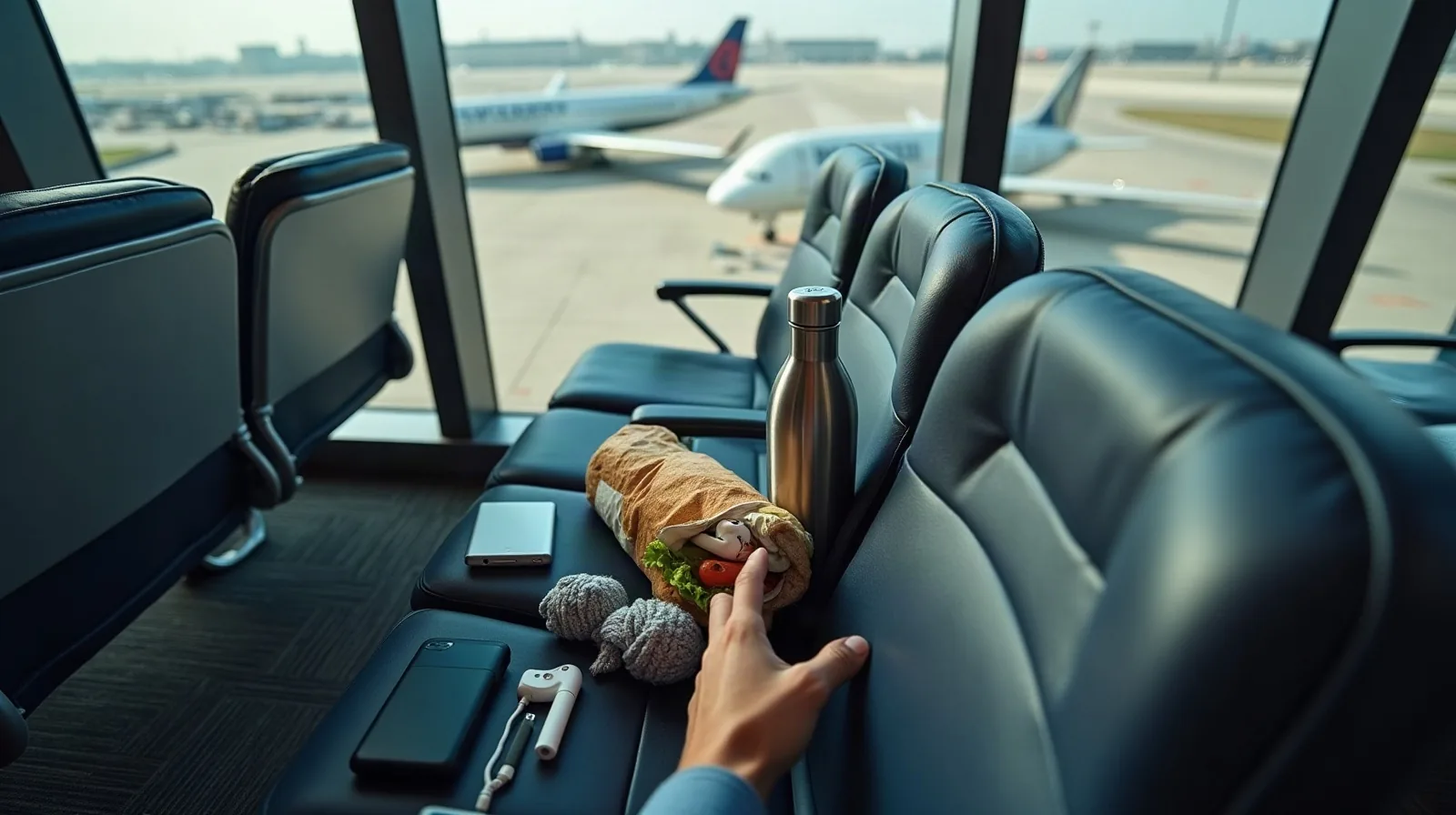
A handful of items kept in an easy-to-reach pocket make any wait better. An empty reusable bottle can be filled after security, a power bank and short cable save a hunt for an outlet, and a wrapped snack beats overpriced options near the gate. Rolled socks, an eye mask, and earplugs matter more as the gap stretches. Keeping a toothbrush and a clean shirt in a carry-on gives a long overnight stop a real reset.
Protect the Connection
Leaving the secure area adds steps, so confirm before stepping out whether a new security screening, a visa, or a bag recheck is involved. Bags on a single ticket are usually checked through, while separate tickets can mean collecting luggage and checking in again, which calls for a much larger buffer. Setting a phone alarm for the time to head back to the gate, rather than the departure time, keeps a pleasant afternoon from turning into a sprint. If a delay breaks the connection, the airline desk or app is the place to ask about rebooking, since they handle that directly.