
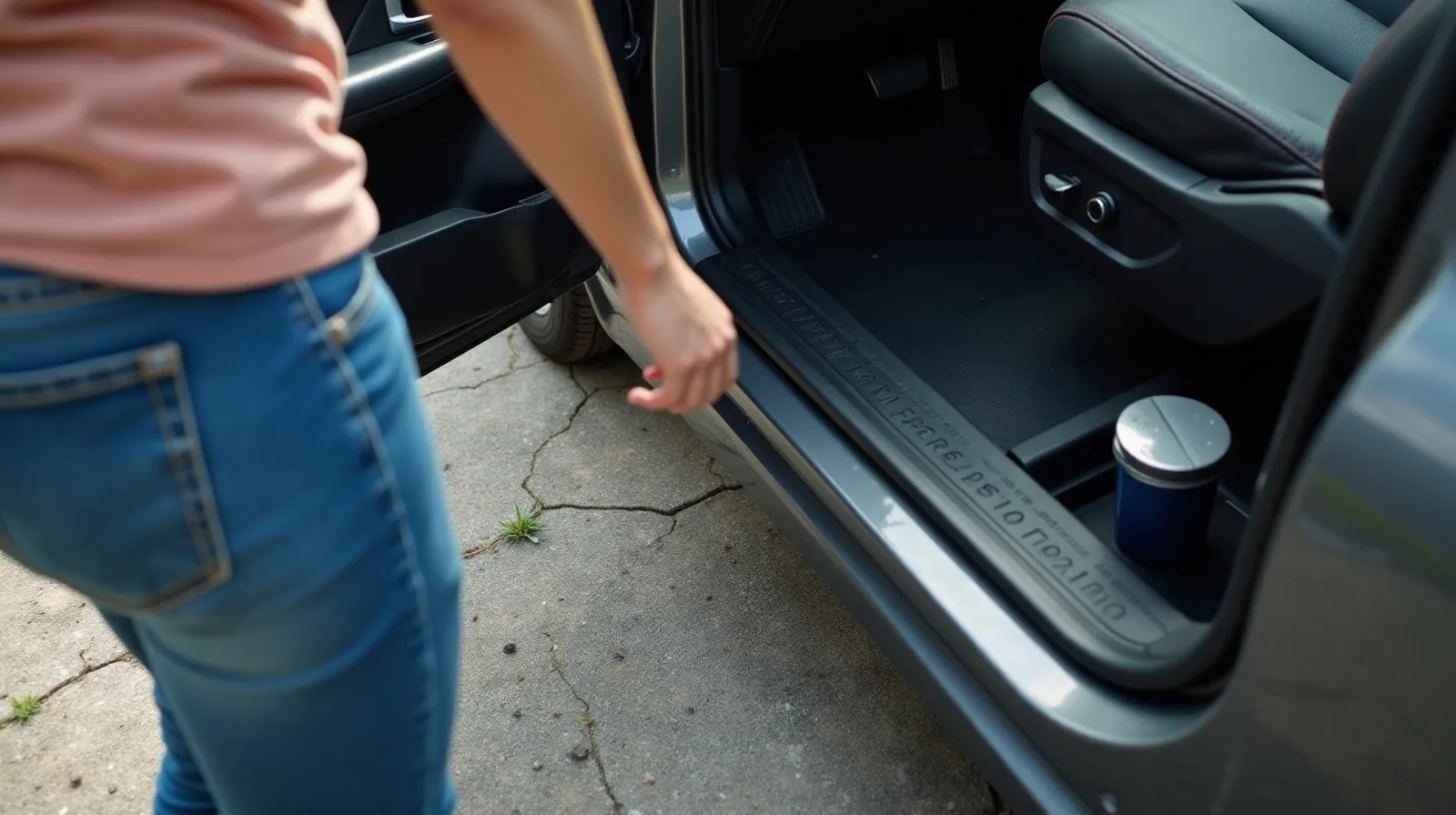
A car doesn’t get messy the way a kitchen does. Nobody cooks in it, nobody really lives in it — and yet it fills with wrappers, receipts, stray napkins, and a floor’s worth of gravel all the same. The reason is simple: a car is a room with no trash can, no storage, and no cleaning schedule, used mostly at moments when your hands are full and your mind is on where you’re going. The fix isn’t vowing to be tidier, and it isn’t a dreaded monthly deep clean. It’s the same move that keeps any room in the house under control: give the mess somewhere to go, and attach a tiny reset to something you already do.
Give Trash a Home Before It Finds the Floor
Almost everything rattling around a messy car is trash that had no destination — so it landed in the door pocket, the seat gap, or the passenger floor. A small lidded trash cup that sits in a cup holder ends that quietly. The lid matters more than it seems: it hides the contents, keeps smells in, and makes the cup read as equipment instead of garbage riding along with you. Line it with a produce bag, and emptying it becomes a five-second move. Tie the emptying to something you already do — every fill-up, the cup goes into the gas station bin — and the car effectively takes out its own trash.
Stage the Car Like You Stage a Kitchen
A clean car is mostly a well-supplied car. A few cheap things, parked where the mess actually happens, do the daily work for you:
- A lidded trash cup. In the cup holder or on the transmission hump — wherever a wrapper can reach it without looking.
- A pack of wipes. In the console or door pocket, for spills and dusty vents while you wait in a parking lot.
- A seat-gap organizer or small caddy. One spot for the sunglasses, charger, and parking passes that otherwise migrate everywhere.
- All-weather floor mats. They catch the gravel and crumbs, and they shake out in ten seconds instead of needing a vacuum.
- An empty tote in the trunk. The holding pen for anything that needs to go inside — returns, library books, the jacket somebody shed.
The One-Minute Exit Habit
Supplies keep the mess contained; one small habit keeps it from accumulating. Every time you park at home, take out everything that doesn’t live in the car — the coffee cup, the delivery box, the hoodie. You’re walking inside anyway, and your hands were about to be empty. It takes less than a minute, and it’s the entire difference between a car that resets daily and one that compounds. For the stuff that isn’t yours to carry, deputize the passengers: kids old enough to buckle themselves are old enough to bring in their own snack wrappers. And when you do stop for gas, use the dead two minutes at the pump for a quick sweep — trash cup emptied, mats shaken, seat gaps checked.
Make the Deep Clean Rare, Short, and Boring
With trash contained and the daily exit sweep running, the “real” cleaning shrinks to almost nothing: a quick vacuum every month or so, a wipe of the dash, glass when it bothers you. That’s the actual goal — not a showroom car, but one where cleaning is a ten-minute touch-up instead of an archaeology project. If the car has drifted too far to start these habits, do one honest reset first: empty everything into two piles (trash and take-inside), shake the mats, vacuum once. From that baseline, the cup, the caddy, and the exit habit will hold the line on their own.