The first cold snap announces itself in the knees. Stairs feel stickier in the morning, an old ankle complains on the walk to the car, and hands take longer to loosen around a mug. Nothing has changed structurally overnight, which is the confusing part. Cold does not damage a joint, but it reliably changes how one feels and how freely it moves, and the season stacks a few other habits on top that make the whole thing worse. Most of it responds to adjustments that cost nothing.
Why Cold Weather Makes Joints Feel Worse
Researchers have chased the weather-and-joints question for decades without landing on one tidy explanation; several small effects probably add up. In the cold, blood flow shifts toward the core and away from the hands, feet, and skin, so the tissue around a joint gets less warm circulation. The fluid that lubricates a joint is more viscous when cool, a bit like oil on a cold morning. Muscles and tendons crossing a joint tighten protectively, which reduces the range that feels available.
Then there is behavior, which may matter most of all. Winter quietly removes movement: fewer walks, more sitting, more time in a chair. A joint that moves less gets stiffer, and stiffness that arrives in November often has more to do with the calendar than the thermometer.
Warm Up Longer Than Feels Necessary
The single highest-value winter adjustment is stretching the on-ramp. Whatever warm-up worked in July is too short in January. Give it several extra minutes of easy, full-range movement before anything demanding, and treat that time as part of the activity, not a delay before it.
Warm-up here means motion, not holding a stretch. Slow circles at the ankles and shoulders, gentle knee bends, arms swinging, a few minutes of walking before a faster pace. The aim is to raise tissue temperature and take each joint through its available range without loading it hard. Cold static stretching tends to feel unpleasant and does little, while easy repeated movement usually restores a surprising amount of range within five minutes.
Keeping the Habit Alive Indoors
When the sidewalk is icy and the daylight ends at five, the routine has to move inside or it quietly disappears. Consistency matters more than intensity, and short sessions repeated daily generally beat one heroic weekend effort. Anyone with a diagnosed joint condition, persistent pain, or a recent injury should check with a doctor or a physical therapist before changing an exercise routine, since the right modification depends on the joint.
- Break the sitting up. Standing and moving for a couple of minutes each hour does more for stiffness than a single long stretch session.
- Choose low-impact options. Stationary cycling, swimming in a warm pool, and mobility work keep joints moving without the pounding that some people find aggravating in the cold.
- Keep some strength work. Muscle around a joint absorbs load the joint would otherwise take. Bodyweight or light resistance work a couple of times a week is usually enough to hold ground through winter.
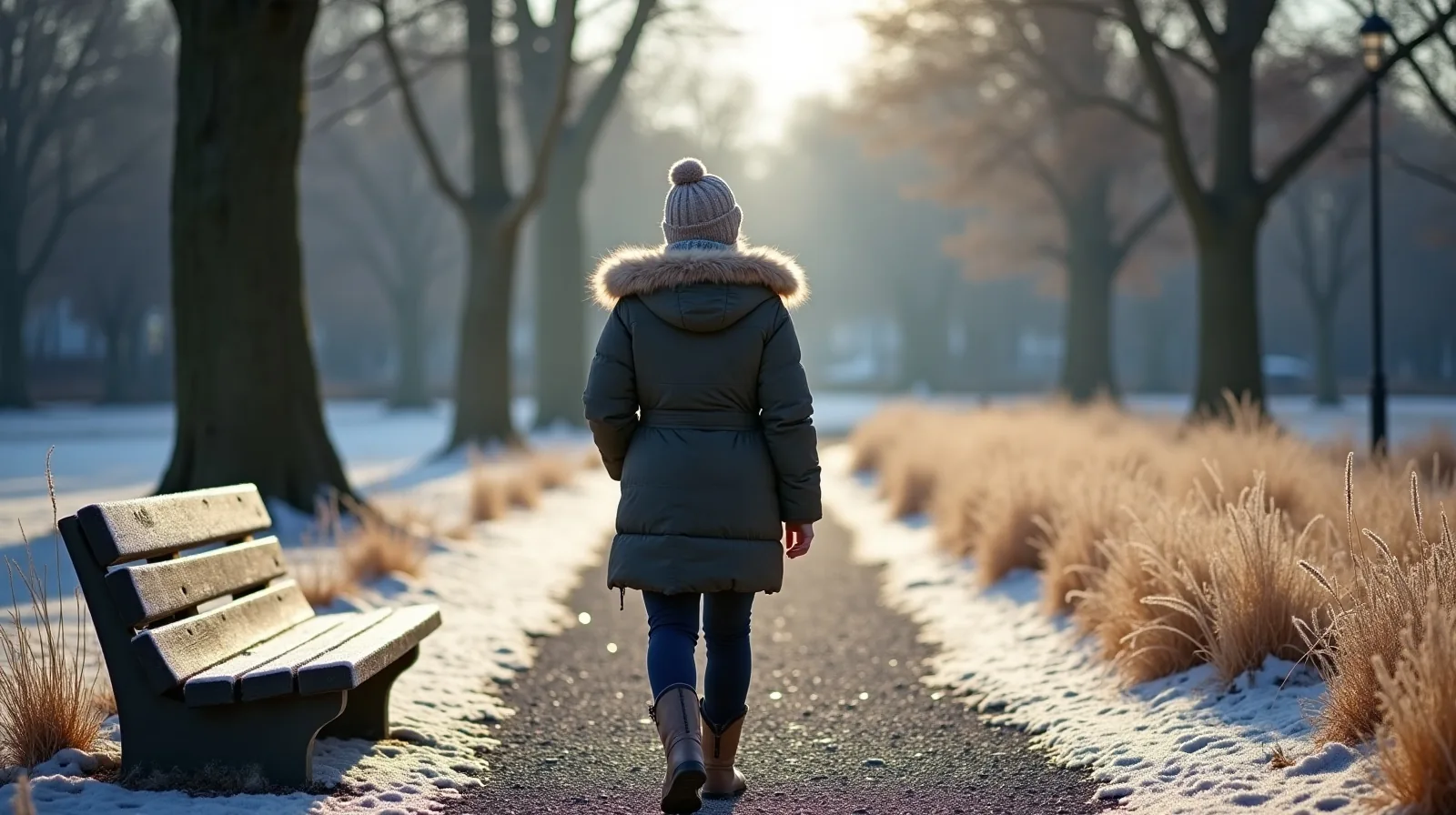
- Walk indoors when the pavement turns. Hallways, malls, and stairwells all count, and traction footwear makes an outdoor walk possible on days that look off-limits.
- Watch the surfaces. A fall costs far more than a skipped session, so switch the plan rather than pushing through ice.
Layers, Warmth, and When to Ask
Layering works better than one heavy coat because trapped air insulates and layers can come off before sweat cools against the skin. Cover the joints that complain: gloves earlier in the season than feels reasonable, sleeves that reach the wrists, and a thermal base layer for anyone whose knees run cold. Applied heat before activity helps many people move more comfortably, and a warm shower is the simplest version.
Hydration slips in winter because thirst fades in the cold, and sleep and activity usually dip too, both of which affect how pain is perceived. If a joint is swollen, hot to the touch, locking, or painful in a way that lasts beyond the usual seasonal grumble, that belongs in a conversation with a clinician rather than another lap of the hallway.