Rain against the windows, a canceled park trip, and a toddler orbiting the coffee table at steadily increasing speed: every parent knows how this afternoon goes if the energy doesn’t find an exit. Toddler energy isn’t optional — it’s a physical fact, like weather — and it will spend itself on something. The only real choice you get is whether that something is a game you set up on purpose, or the couch springs, the dog’s patience, and everyone’s bedtime. The good news: burning it off indoors takes almost nothing you don’t already own.
Why the Energy Has to Go Somewhere
Small children are built to move — movement is how they develop balance, coordination, and a sense of where their body ends and the coffee table begins, and general guidance for young kids points toward plenty of active play spread across every day, not just the sunny ones. A toddler who hasn’t moved enough isn’t being difficult at five p.m.; they’re carrying a charge with nowhere to put it, and it tends to leak out as whining, wall-bouncing, and heroic bedtime resistance. Ten or fifteen minutes of genuinely big movement, a few times a day, changes the entire shape of an indoor afternoon.
Set Up the Room, Not the Kid
Two minutes of prep prevents most tears and most broken lamps. Slide the coffee table against the wall, clear a runway, and mind the classic hazards: hard corners at head height, rugs that slide, and slippery socks on bare floors — grippy socks or bare feet are the indoor uniform. Then lower your standards for what the living room looks like for the next hour. A room that’s safe to be wild in will not simultaneously be tidy. That’s the deal, and it’s a good one.
The Games
These six run almost entirely on furniture, tape, and full commitment to the bit:
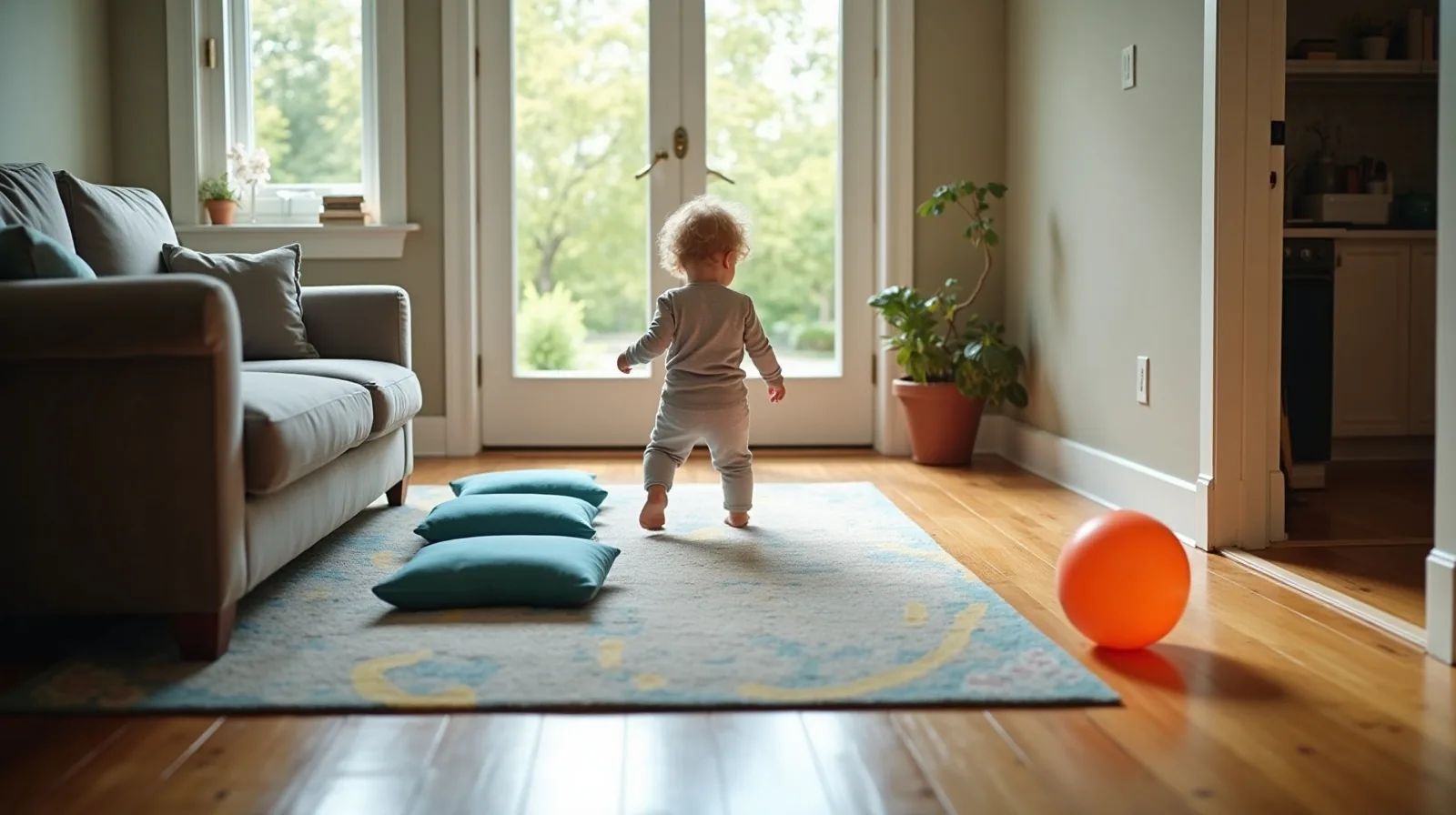
- Cushion stepping stones. Couch cushions spaced across the floor become islands over lava. Hop island to island, and move them farther apart as the hopping improves.
- Animal parade. Bear crawls, frog jumps, crab walks, and penguin waddles down the hallway — sneaky full-body exercise wearing a costume of silliness.
- Freeze dance. Music on, everyone dances; music off, everyone freezes. The freezing is the real skill — stopping a moving body on cue is genuinely hard toddler work.
- Balloon keep-up. One balloon, one rule: it can’t touch the floor. Slow enough for toddler reflexes, endless enough for toddler stamina.
- Tape-line circus. A painter’s-tape line down the hall becomes a balance beam, a long-jump pit, or a tightrope, depending on the announcer’s voice — and it peels off the floor cleanly afterward.
- Laundry-basket toss. Rolled-sock balls, an empty basket, and ever-sillier throwing positions: over the shoulder, between the legs, eyes squeezed shut.
Land the Plane
The ending matters as much as the games. A toddler wound up to full speed and then handed a sudden “okay, quiet time now” will predictably crash — so downshift instead of stopping. The animal parade turns into slow, stretchy cats; freeze dance gets one last slow song; the stepping stones become a lie-down-and-breathe island. A cup of water, a small snack, and something calm to land on turn the last game into the start of an actual rest — which was, let’s be honest, the secret goal all along.