
A generous holiday dinner, a second helping, then straight to the couch — and an hour later a burning feeling creeps up behind the breastbone. Heartburn after a big meal is one of the most common digestive complaints there is, and for most people it is occasional and manageable. Understanding why it happens makes the fixes feel less like rules and more like common sense, and most of them cost nothing.
Why Big Meals Set Off Heartburn
Where the esophagus meets the stomach sits a ring of muscle that acts like a one-way valve. It opens to let food down and closes to keep stomach acid where it belongs. Heartburn is what happens when some of that acidic stomach content slips back up into the esophagus, whose lining is not built to handle it.
A large meal stretches the stomach and raises the pressure inside it, which makes it easier for contents to push back past the valve. Rich, fatty food tends to stay in the stomach longer, so the window for trouble stays open. Lying down removes the help gravity was giving. Put all three together — a big plate, a heavy menu and a nap soon after — and the classic holiday-evening burn makes sense.
Eat in a Way That Goes Easier on the Valve
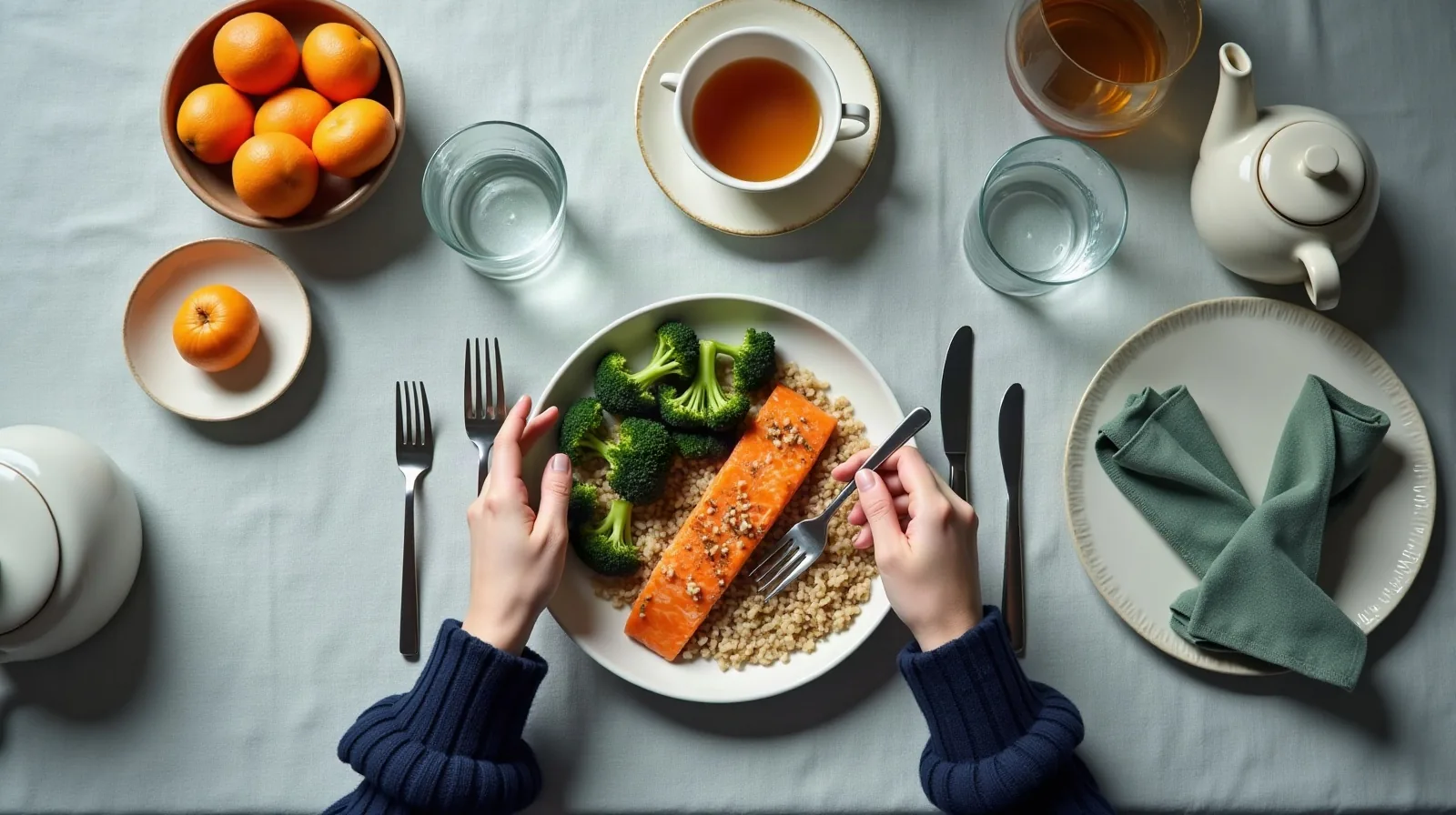
The single most useful change is usually portion size, not a forbidden-foods list. A moderate plate, eaten at a relaxed pace, keeps stomach pressure lower. Putting the fork down between bites, drinking water alongside the meal rather than gulping a lot at once, and stopping at comfortably satisfied instead of stuffed all help. Loose clothing matters more than it sounds, too: a snug waistband presses on the abdomen and adds to the pressure from below.
Some foods and drinks are common triggers — fried and very fatty dishes, chocolate, peppermint, citrus, tomato sauces, spicy food, coffee, alcohol and carbonated drinks are the usual suspects. Triggers vary a lot from person to person, though, so cutting everything on that list is rarely necessary. A few weeks of noticing which meals line up with symptoms tells you far more than any generic list.
After the Meal: Stay Upright and Give It Time
What happens in the two or three hours after eating matters as much as the meal itself. Gravity is free help, so the goal is to keep the stomach below the esophagus while it does its work. A few habits make that easy:
- Wait before lying down — common guidance suggests about three hours between a large meal and bed or a nap
- Take a gentle stroll instead of settling into a deep recliner straight away
- Move the big meal earlier when evenings are when symptoms tend to strike
- Raise the head of the bed with blocks or a wedge under the mattress if nighttime heartburn is a pattern, since stacked pillows mostly bend the neck
- Skip the nightcap, since alcohol can relax the valve
Sleeping on the left side is also often suggested for people with nighttime symptoms, because of the way the stomach sits in the body.
When Heartburn Needs a Doctor
Occasional heartburn after a big meal is common, and over-the-counter remedies can help some people, though it is worth asking a pharmacist or your doctor which option fits, especially alongside other medications or during pregnancy. Heartburn that shows up twice a week or more, keeps returning despite these habits, or needs regular medication to control deserves a conversation with a doctor. Get prompt medical advice for trouble or pain when swallowing, unexplained weight loss, vomiting, or black stools. And chest pain that spreads to the arm, jaw or back, or comes with shortness of breath or sweating, should be treated as a possible emergency, not as heartburn.