Ask a kid to choose between a bag of crackers on the counter and an orange that needs peeling, and the crackers win every time — not because kids hate fruit, but because one option takes zero effort and the other is a small chore. That’s the real story of snack time: it’s rarely a taste battle, and mostly a convenience battle. Win the convenience, skip the pressure, and the “healthy stuff” starts disappearing on its own.
The Real Competition Is Convenience
Packaged snacks dominate for two honest reasons: they’re visible and they’re instant. The apple loses not on flavor but on logistics — it’s whole, it’s in a drawer, and somebody has to deal with it. So the play isn’t banning the crackers or lecturing about vitamins; it’s closing the effort gap. A cut-up, ready-to-grab version of almost any fruit or vegetable gets eaten at several times the rate of its whole, buried counterpart. Kids eat what’s easy. The whole strategy is making the good things easy.
Pair Something Fresh With Something Filling
A useful rule of thumb for snacks that actually hold kids until dinner: pair something fresh with something filling — fruit or vegetables alongside a bit of protein or fat. It’s not a nutrition prescription, just practical physics: the pairing satisfies in a way a handful of crackers doesn’t, which means less circling back to the kitchen. Some reliable crowd-pleasers:
- Apple slices and peanut butter. The classic for a reason — sweet, crunchy, and genuinely filling.
- Hummus and dippers. Cucumber coins, sweet pepper strips, pita triangles — kids will eat surprising vegetables when dipping is involved.
- Yogurt sundaes. Plain yogurt with berries and a sprinkle of granola, assembled by the kid — the building is half the appeal.
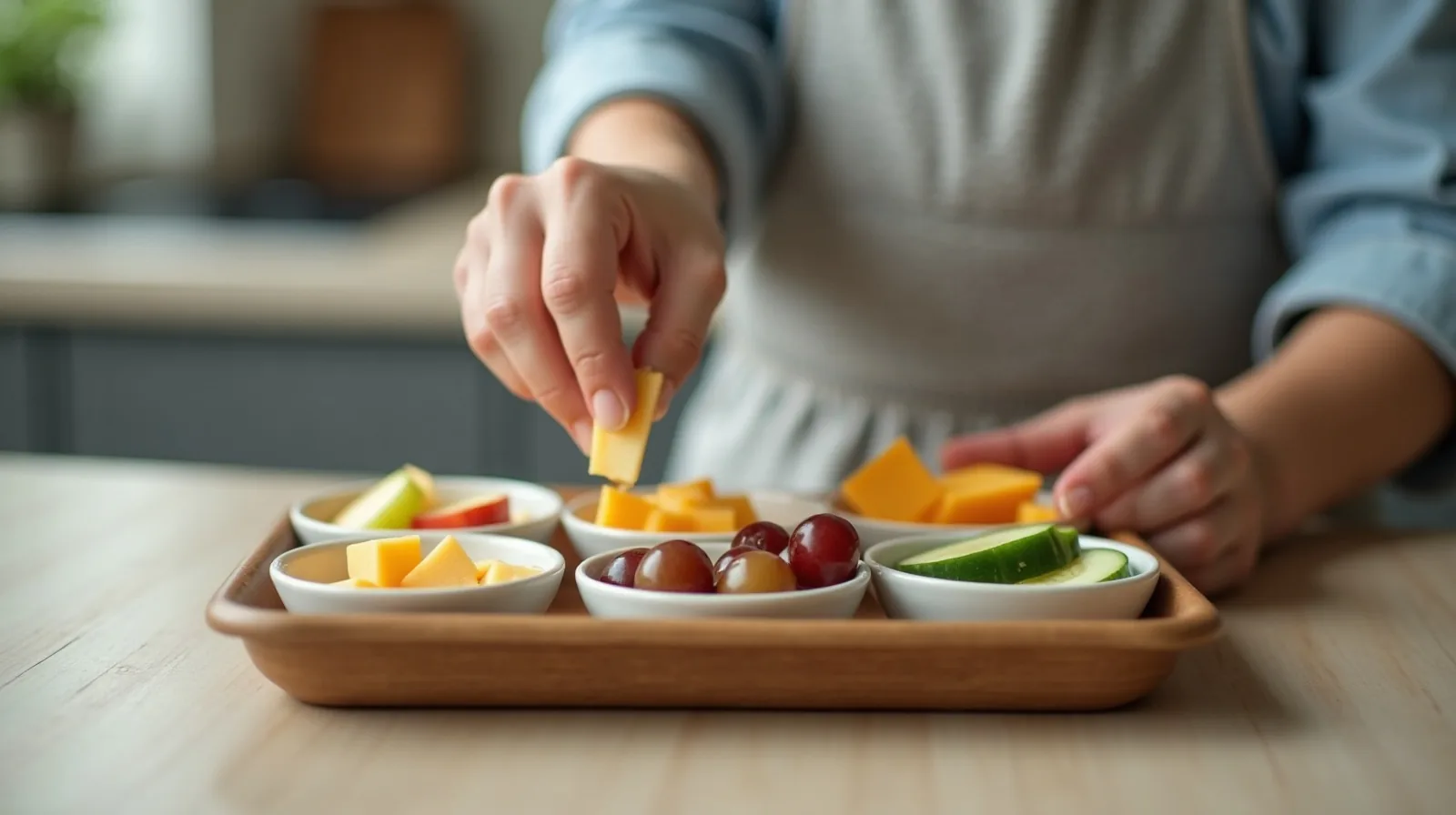
- Cheese cubes and grapes. Zero prep beyond cutting, and it looks like a party platter.
- Frozen banana coins. Slice, freeze flat, and they turn into little ice-cream-adjacent treats that are still just bananas.
Make It Grabbable — and Let Them Pick
Now put that food where small hands can win: a clear bin of ready-to-eat produce on a low fridge shelf, a snack tray or muffin tin with a little of everything for after school, washed fruit in a bowl at kid eye level instead of sealed in a drawer. Offering a choice between two options — “apples-and-peanut-butter or cheese-and-grapes?” — gives kids the autonomy they’re actually after, and letting them assemble their own kabobs or yogurt cups makes the snack part-project. One thing to leave out of all of it: pressure. Keep the framing light, skip the “it’s good for you” speech, and let the food be food — the fastest way to make a healthy snack unappealing is to turn it into a negotiation.
A Word on Nut Butters and Allergies
One practical caution amid all the peanut butter: nuts are among the most common food allergens in kids. Sunflower seed butter is an easy swap that keeps the same snacks working for nut-free households, and it’s worth checking your school’s rules before anything nutty rides along in a lunchbox. When other kids are snacking at your house, ask their parents about allergies first. And for questions about introducing allergenic foods to your own young child, your pediatrician is the right guide — that’s individual territory, not snack-list territory.