
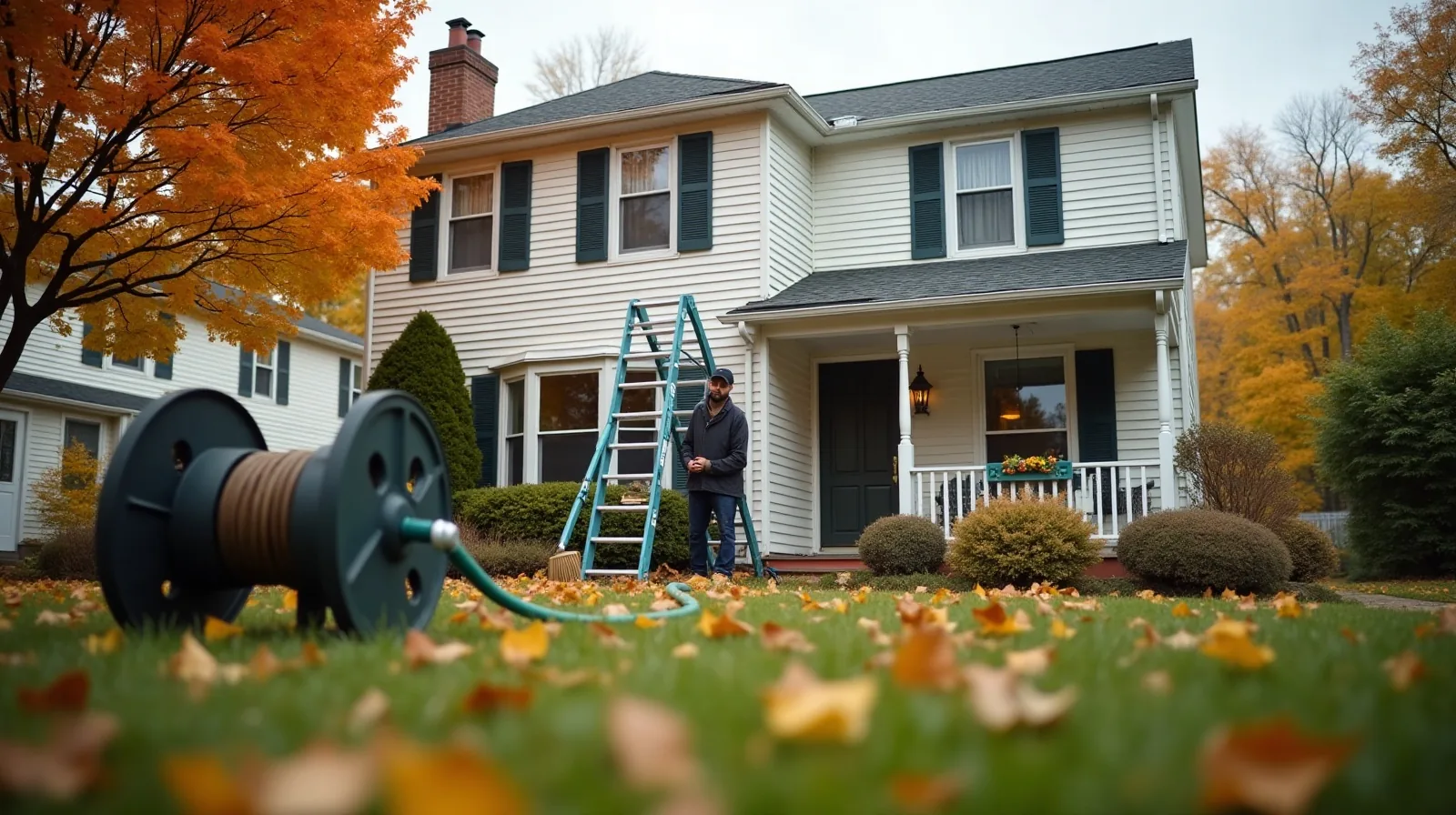
Fall maintenance is mostly a bet against water. Everything that goes wrong in a house over winter tends to start as water in the wrong place: pooled at a foundation, backed up behind leaves, frozen inside a pipe, or seeping under a lifted shingle. The good news is that the list of jobs that prevent all of that is short, cheap, and doable across two decent weekends. The bad news is that it has a deadline, and the deadline is the first hard freeze.
Give Water Somewhere to Go
Gutters come first, and they need doing after most of the leaves have actually fallen rather than in the middle of the drop. Clear the troughs, then run a hose through them to check that water leaves rather than pools; a section that holds standing water is either clogged downstream or pitched wrong. Check that every downspout is connected and that it discharges several feet away from the house, not straight onto the soil at the corner of the foundation.
Look at the ground itself while the ladder is out. Soil should slope away from the walls, and the low spots that puddle in autumn are the same spots that become ice in January. Then handle the outdoor plumbing: disconnect every hose and store it drained, because a hose left attached traps water in the spigot where it can freeze and split the pipe behind the wall. Shut off the interior valve feeding each outdoor faucet if the house has one, and open the outside tap to drain the line.
Test the Systems Before Leaning on Them
A furnace that has sat idle since March deserves a trial run on a mild day rather than a discovery at eleven at night in a cold snap. Replace the filter first, note the size printed on the old one, and buy a few so the next change does not require a trip. Then run the heat for fifteen minutes and pay attention: a burning-dust smell in the first minutes is normal, while persistent odor, banging, or short cycling is not.
Book annual professional service early, before the calendar fills with emergency calls. Anything involving gas lines, combustion, or a chimney flue belongs to a qualified technician, and a fireplace that saw use last winter should be swept before the first fire of this one.
The Pre-Winter Walk-Around
The rest of the list is one slow lap of the house with a notebook, ideally on an overcast day when glare is not hiding anything.
- Roof and flashing. Scan from the ground with binoculars for lifted, cracked, or missing shingles and for gaps where flashing meets chimneys, vents, and valleys. Most winter leaks start at a joint rather than in the open field of the roof.
- Detectors. Test every smoke and carbon monoxide alarm and change batteries on a fixed schedule. A sealed-up house running combustion appliances is exactly when those alarms matter most.
- Weatherstripping and sweeps. Feel around doors and window sashes for drafts on a windy day. Replacing a brittle door sweep or a flattened strip is a twenty-minute job that pays back all season.
- Caulk and gaps. Seal openings where siding meets trim and where pipes or cables pass through walls. These are also the routes rodents use once the temperature drops.
- Dryer vent. Pull the duct and clear the lint, then check that the exterior flap actually closes. A restricted vent is both a fire risk and a slow-drying nuisance.
- Walkways and steps. Fix loose treads and wobbling railings now, and stage the shovel, ice melt, and a bag of sand somewhere reachable before the first storm.
What Deserves a Professional
Plenty of this list is genuinely straightforward, but ladders and roofs account for a serious share of home injuries every year, and a two-story gutter run is not the place to learn. Anyone uneasy on a ladder, working alone, or facing a steep or wet roof should hire out the height and keep the ground-level tasks. Gas appliances, electrical panels, and chimney work sit in the same category. Paying for the two jobs that carry real risk still leaves most of the checklist in the homeowner’s hands.