
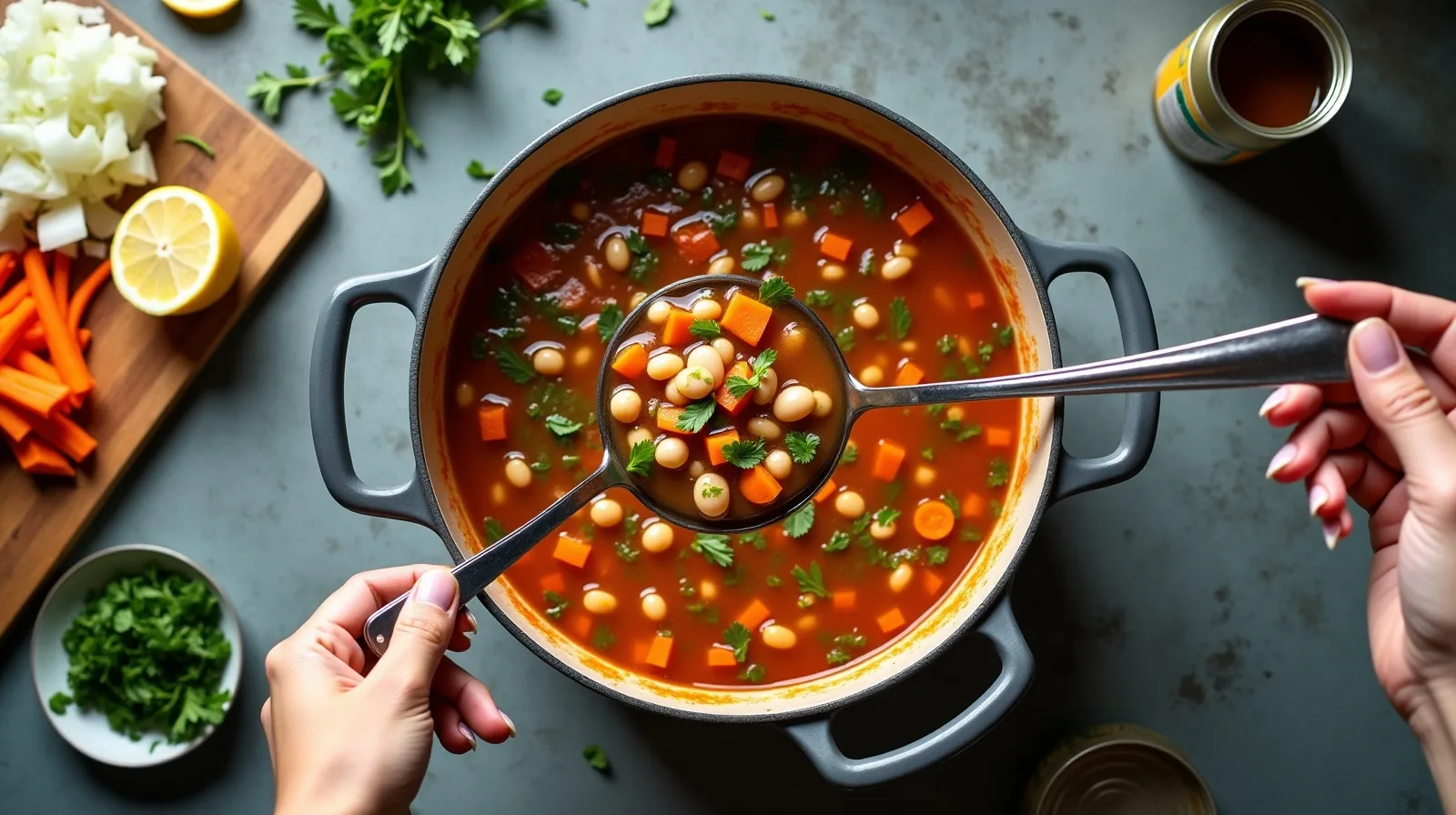
The gap between someone who cooks from recipes and someone who simply cooks is often one pot of soup. Soup forgives in a way almost nothing else does: it absorbs substitutions, swallows leftovers, and rewards tasting along the way instead of measuring in advance. Once the underlying shape is clear — the same five moves, in the same order, nearly every time — a thin fridge and forty minutes become dinner with no printed page anywhere in the kitchen.
The Five Parts Every Soup Has
Almost every pot of soup on earth is the same sentence with different words in it. Learn the five slots and the guessing stops.
- Aromatics. The vegetables and spices softened in fat at the start: onion, celery, carrot, leek, garlic, ginger, chilies, or whole spices bloomed in oil. This is where flavor gets built rather than added.
- Body. The ingredient that gives the pot texture and substance: beans, potatoes, squash, lentils, grains, noodles, shredded meat, or a pile of chopped vegetables.
- Liquid. Stock, water, canned tomatoes, coconut milk, or any combination. Cover the solids by roughly an inch, and hold some back so the pot can be loosened later.
- Seasoning. Salt in layers as the pot builds, plus the savory depth that comes from tomato paste, soy sauce, miso, a parmesan rind, or a spoon of chili paste.
- Finish. The bright or rich thing stirred in at the very end: lemon, vinegar, herbs, yogurt, cream, chili oil, or toasted crumbs on top.
Getting the First Three Right
Start the aromatics in a generous slick of fat over moderate heat and give them longer than feels necessary. Onions that have gone soft, sweet, and slightly golden do more for a pot than any late addition can. Salt them at this stage; it pulls out moisture and speeds the softening. Dried spices and tomato paste go in near the end of that stage so the heat can wake them up without burning them.
The body decides how the finished soup eats. Quick vegetables such as zucchini or greens need minutes; dried beans, root vegetables, and tougher cuts want an hour or more. Layer them so everything lands tender at the same moment rather than dumping the whole board in at once. Then add liquid, bring it up, and hold it at a lazy simmer with the surface barely moving. A hard boil breaks vegetables apart, clouds the broth, and toughens meat.
Four Directions From the Same Pot
The formula bends four obvious ways. A brothy soup keeps the liquid loose and generous, with noodles, grains, or dumplings cooked separately and added at the bowl so they never turn to mush. A blended soup leans on one dominant vegetable, cooked soft and pureed smooth, thinned back to the texture wanted rather than left however the blender leaves it.
A thick, spoon-standing pot comes from starchy body: beans partly mashed against the side, potatoes broken down, lentils cooked past the point of holding shape. And a creamy soup takes any of the above and finishes with dairy or coconut milk off the boil, since high heat can curdle it. Same five slots, four completely different dinners.
Seasoning, Tasting, and the Finish
Taste at three moments: after the aromatics soften, once the liquid has simmered a while, and just before serving. Salt added early tastes different from salt stirred in at the end, and a soup that seems flat is usually short on salt or short on acid, not short on ingredients. A squeeze of lemon or a splash of vinegar tends to fix more pots than an extra spice ever will.
The finish is where a homemade pot stops tasting homemade. Something fresh, something rich, or something crunchy on top gives the spoon contrast: torn herbs, a swirl of yogurt, chili oil, crumbled toasted bread, a grating of hard cheese. Keep leftovers thick and loosen them with hot water or stock when reheating, because most soups tighten overnight and taste better on day two.