Kids who are dressed well will happily dig, sled and stomp through slush for an hour; kids who are dressed badly come back in after ten minutes with wet socks and red fingers. The difference is rarely the price of the gear. It comes down to how the layers go together, extra attention to hands and feet, and a routine that gets everyone out the door calmly.
Think in Layers, Not One Big Coat
A single heavy coat over a cotton T-shirt is warm for about five minutes. Once a child starts running, they sweat, the damp cotton turns cold, and the chill sets in from the inside. Layers solve that: each does a different job, and any of them can come off as play gets more active.
The simple version has three parts. A thin base layer sits against the skin and moves sweat away from it; wool or a synthetic fabric works far better here than cotton. A middle layer, such as a fleece or a light sweater, traps warm air. On top, an outer shell or snowsuit blocks wind and keeps out snow and slush. For very young children, a common rule of thumb is one more layer than an adult would need to feel comfortable in the same conditions.
Protect the Hands, Feet and Head
Fingers, toes, ears and noses get cold first, and they are usually what ends playtime early. A few small choices make the biggest difference:
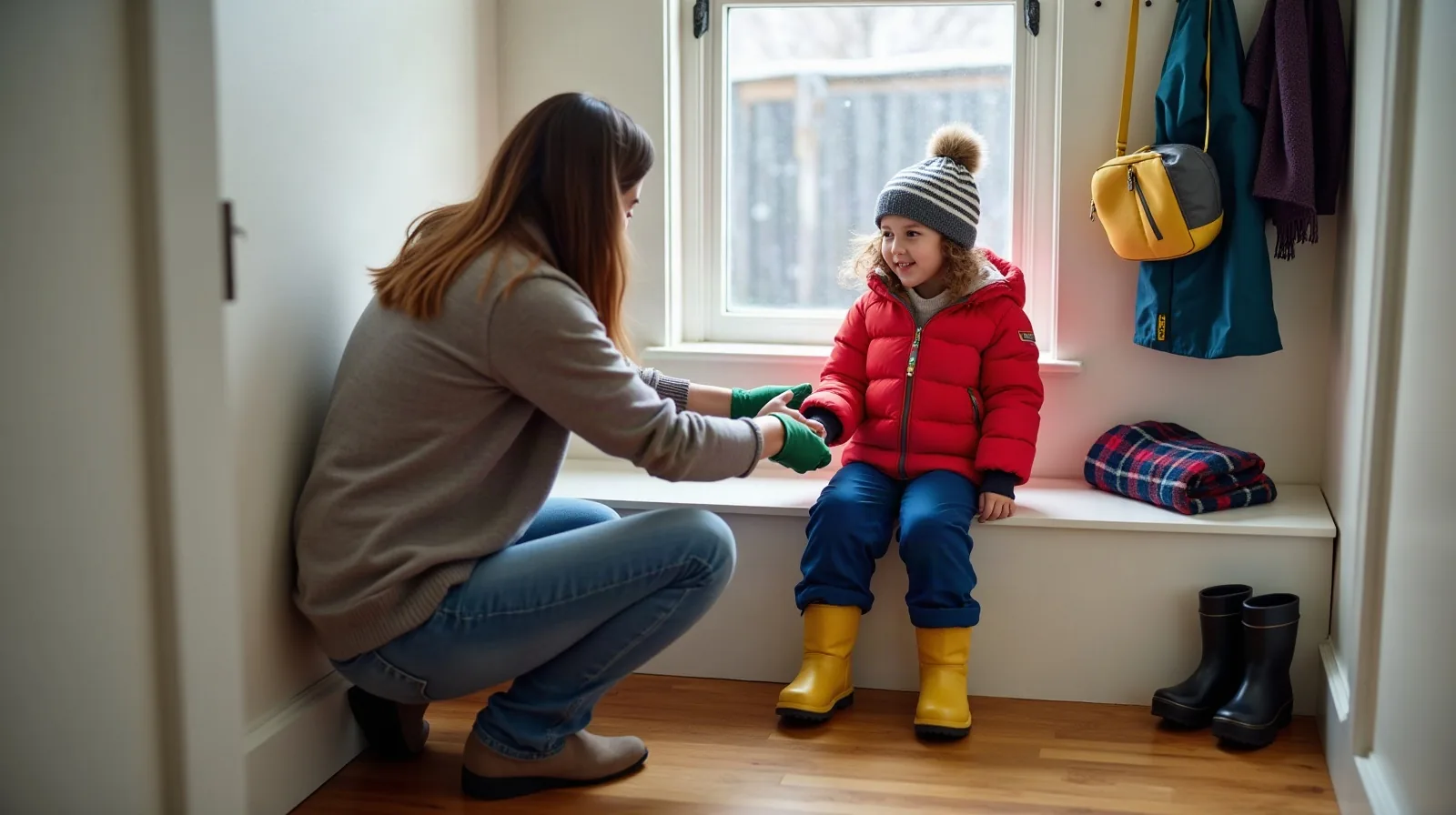
- Mittens over gloves for little ones. Fingers share warmth inside a mitten, and mittens are easier for small hands to pull on alone. Waterproof outers matter for snow play.
- A spare pair in the pocket. Mittens get soaked fast. Swapping in a dry pair halfway through can buy another half hour outside.
- Socks that fit, and only one pair. Two pairs of socks squeezed into snug boots cut circulation and make feet colder. One warm pair with a little wiggle room works better.
- Boots a half size roomier. A bit of space leaves room for a warm sock and trapped air. Tuck snow pants over the boot tops so snow stays out.
- A hat that covers the ears. A neck gaiter or scarf tucked inside the coat closes the gap at the collar, which is where cold air sneaks in.
Check Comfort While They Play
Kids often will not say they are cold until they are miserable, so check rather than ask. Slip a finger inside the collar at the back of the neck: warm and dry is the goal, while clammy means a layer should come off and chilly means one should go on. Take short indoor warm-up breaks on very cold days, and swap anything wet right away. Shivering, numb or unusually pale skin, or a child who suddenly gets quiet and sluggish, are signals to head inside. If you are unsure how cold is too cold for a baby or a child with a health condition, check with your pediatrician.
One safety note for the drive: bulky snowsuits and puffy coats can leave a car seat harness too loose to protect a child in a crash. Buckle kids in wearing thinner layers, then add the coat backward over the straps or a blanket on top.
Make Getting Dressed Faster
Half the struggle of winter play is getting out the door. Set up a small staging spot near the exit with a bench, low hooks and a bin per child so everything lives in one place. Teach a fixed order, such as snow pants, boots, coat, hat, then mittens last, so kids can do more of it themselves. Dress the youngest last so they do not overheat while waiting. Back inside, hang wet things to dry right away so the gear is ready next time.