Cooking with a small child sounds charming right up until the flour is airborne and dinner is forty minutes behind. The difference between a happy kitchen session and a mess that ends in tears is almost never the recipe. It is whether the job handed over actually matches what those hands can do. A four-year-old given a whisk and a wide bowl stays delighted for ten solid minutes. The same four-year-old asked to measure flour into a narrow cup gives up in thirty seconds.
Match the Job to the Age
Ages here are rough guides rather than rules; a cautious seven-year-old and a confident five-year-old often swap places. Watch the child in front of you, not the number.
- Two to three. Washing produce in a bowl of water, tearing lettuce and herbs, stirring cold ingredients, pressing cookie cutters, carrying unbreakable things to the table.
- Four to five. Whisking eggs, spreading with a butter knife, mashing soft fruit or cooked beans, cracking eggs into a separate small bowl, scooping batter with a measured scoop.
- Six to seven. Measuring dry and wet ingredients, peeling with a Y-shaped peeler, grating on the large holes, kneading dough, minding the timer.
- Eight to ten. Cutting soft foods with a small serrated knife under supervision, using the stovetop with an adult right there, following a short recipe from start to finish.
- Eleven and up. Proper knife technique, running the oven, and owning one family dinner a week from shopping list through cleanup.
Knife and Heat Rules Worth Setting Once
Rules stated calmly once and then enforced every single time cause far fewer arguments than rules invented mid-panic. A short set covers most of the risk: knives stay on the board and get carried point-down, pan handles always turn inward, nobody opens the oven without an adult, hands get washed after touching raw eggs or meat, and whoever is carrying something hot says so out loud before moving. Hand a beginner a dull table knife and soft food — bananas, mushrooms, cooked potato — long before anything sharper appears. A sturdy step stool that brings the counter to hip height does more for safety than any warning, because a child stretching upward has almost no control.
Four Recipes Built for Small Hands
Forgiving recipes share three traits: no precise measuring, no narrow window between done and ruined, and at least one job that is genuinely fun to do.
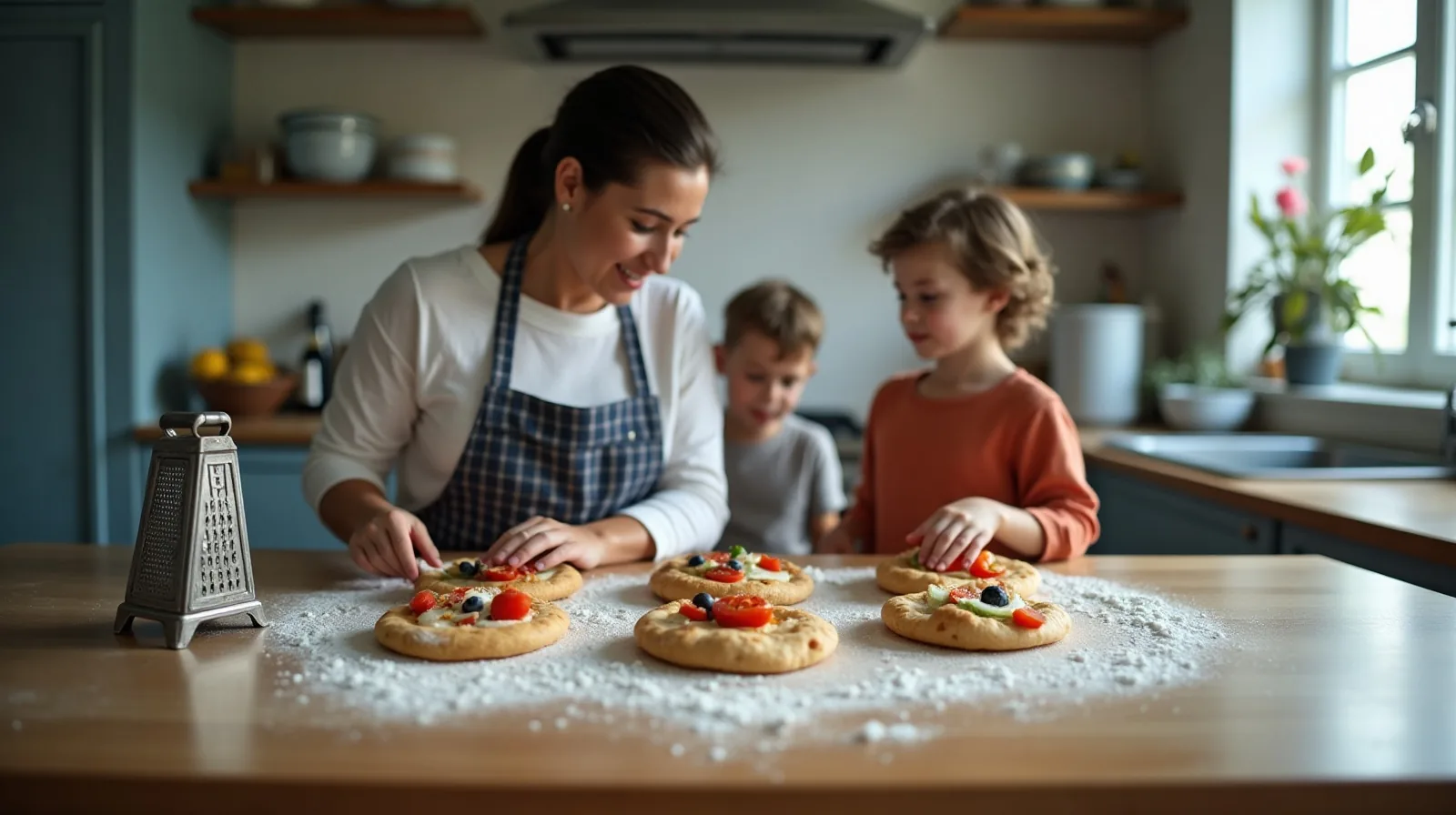
Flatbread pizzas are the reliable opener. A flatbread or split roll, a spoonful of tomato sauce pushed out to the edges, grated cheese, and whatever toppings each kid picks. Spreading and sprinkling are the whole task, everyone gets a personal one, and eight minutes in a hot oven finishes it. Layered yogurt cups are the no-heat option: plain yogurt, chopped soft fruit, and something crunchy, built in a clear glass so the stripes show. Nothing gets cooked at all, which makes it the right first recipe for a three-year-old.
Pinwheel wraps turn lunch into a craft. A soft tortilla, a thin layer of soft cheese or hummus, flat fillings laid down the center, rolled tight and then sliced by an adult into spirals. Smashed bean quesadillas are the step up to heat: a child mashes drained beans with a fork, spreads them on a tortilla with cheese and folds it over, while an adult works the pan and the kid calls the flip. All four tolerate a heavy hand, an uneven spread, and an extra ten minutes of enthusiasm.
Keeping the Mess Survivable
Set the station before the child arrives. Ingredients portioned into small bowls, a damp cloth parked at the kid’s elbow, a scrap bowl for peels and shells, and a rimmed tray under the work to catch what falls. Cleanup belongs to the session rather than to the adult afterward: the kid who wipes the counter is the one who gets invited back next week. Choose a weekend afternoon over six o’clock on a Tuesday, when the clock makes patience scarce. And if food allergies are in play at all, check packages before small hands start opening them and follow whatever guidance your pediatrician has already given.