
Legs that feel heavy by mid-afternoon. A sock that leaves a deep ring at the ankle. Fingers that stay cold in a room everyone else finds warm. Those small signals often trace back to the same place: blood has to make a return trip against gravity, and long stretches of stillness make that trip harder than it needs to be. The changes worth trying first are unglamorous and free. They are mostly adjustments to how long you hold one position, and to what your legs are doing while you hold it.
What Better Circulation Does and Does Not Mean
The heart pushes blood out through the arteries. Veins bring it back, helped by one-way valves and by the squeeze of the muscles wrapped around them. When people talk about improving circulation in everyday life, they are usually talking about that return trip — less pooling in the lower legs, less stiffness after a long sit, warmer hands and feet. Public health guidance generally points toward regular movement and shorter unbroken stretches of sitting as good for the cardiovascular system overall, and that is a real benefit, if a modest one.
What these habits do not do is flush toxins, melt fat from one spot, or treat a diagnosed vascular condition. The same heavy-legged feeling can also come from something that deserves a proper look, so if a symptom is new, one-sided, or steadily worsening, the next step is a doctor rather than a new routine.
Your Calves Do Most of the Returning
The calf is sometimes described as a second pump, and the description is fair. Every time the muscle contracts it presses on the deep veins running through it and pushes blood upward, and the valves keep that blood from sliding back down between squeezes. Sitting perfectly still switches the pump off, which is why a two-minute walk to refill a water glass tends to do more for heavy legs than a long stretch at the desk.
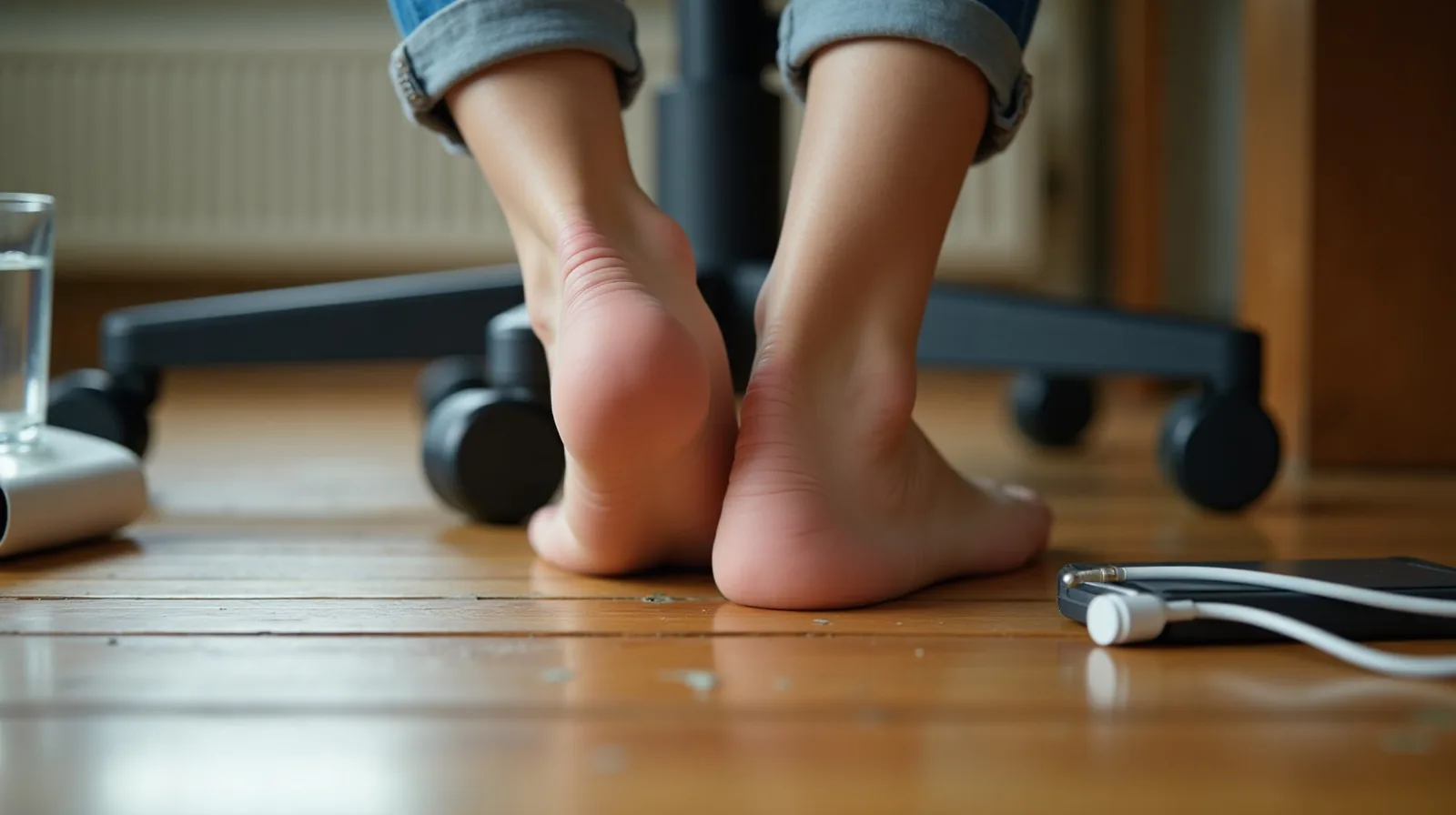
The encouraging part is how little it takes. Ankle pumps under a desk, heels planted and toes lifting slowly twenty times, put the pump back to work without anyone noticing. Heel raises while the kettle boils do the same standing up. Neither counts as exercise in any impressive sense. Both interrupt the stillness, which is the point.
Small Changes That Add Up
- Break up the sitting. A short stand-and-move every half hour tends to help more than one burst of activity bolted onto an otherwise motionless day.
- Work the ankles where you already are. Slow ankle circles, toe lifts, and heel raises at a desk or a bus stop take under a minute and switch the calf pump back on.
- Drink water steadily. Blood volume depends on fluid, and even mild dehydration makes everything feel sluggish. Sips spread across the day beat one large glass at the end of it.
- Keep hands and feet genuinely warm. Cold narrows the small vessels near the skin, so warm socks, long sleeves, and a hot mug held in both hands are doing real work.
- Change position, not just posture. Uncross the legs, alternate between sitting, standing, and perching, and put the feet up for ten minutes at the end of a long day.
- Notice what is tight. A waistband or sock cuff that leaves a lasting mark is worth swapping out. Graduated compression stockings suit some people, though they are worth clearing with a doctor first.
Signs Worth a Doctor’s Attention
Habits are for the ordinary version of stiff, heavy, cold legs. Some signals sit outside that category. Swelling in one leg and not the other, particularly alongside warmth, redness, or a deep ache in the calf, needs prompt medical attention. So does a sudden colour change in the fingers or toes to white or blue, a sore on the foot that will not heal, or cramping that reliably begins after a set distance of walking and eases with rest.
Anyone managing diabetes, heart disease, or a clotting disorder, and anyone on medication that affects blood flow, should check with their doctor before adding compression garments or changing an exercise routine.