
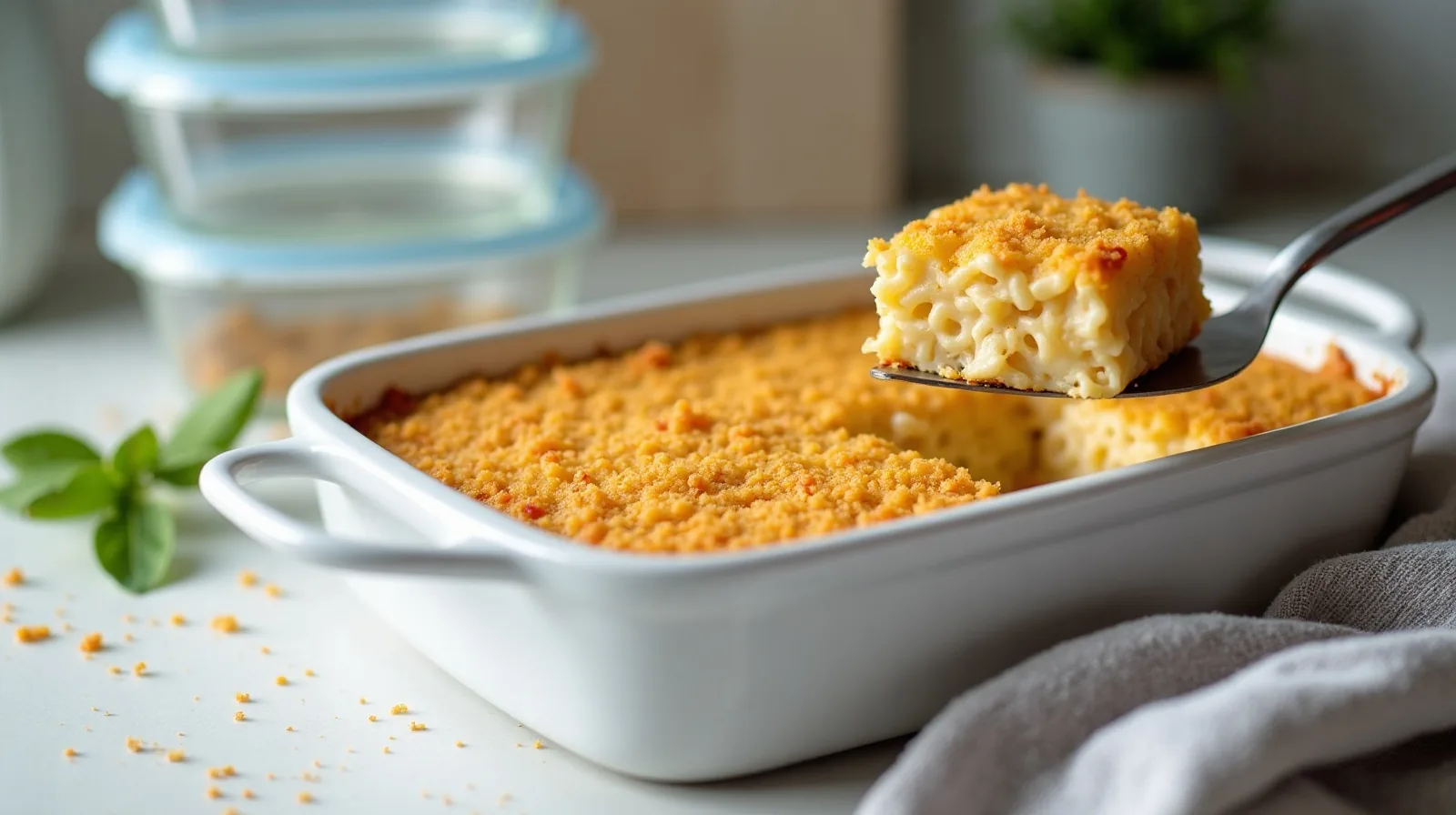
A casserole is supposed to be a gift to your future self, and plenty of them arrive at the second night as a shadow of the first: pasta gone to mush, a crust turned to damp cardboard, a sauce that broke and slid into a puddle at the edge of the dish. The difference between a casserole that reheats beautifully and one that falls apart has almost nothing to do with how ambitious the recipe was. It comes down to four decisions made before the dish ever goes in the oven.
What Actually Survives a Second Heating
Reheating is a second cooking, and everything in the dish keeps cooking during it. That single fact explains most casserole failures. Starches keep drinking liquid as they sit, so a bake that looked perfectly saucy on Sunday can be dry and pasty by Tuesday. Fat and dairy that were emulsified into a smooth sauce will separate when pushed back up to temperature too fast. And anything crisp is doomed the moment it sits under a lid with steam rising through it.
The fix in every case is to build in slack: extra sauce, a starch that is deliberately undercooked, a fat that tolerates heat, and a topping that never goes into the fridge in its finished state.
The Four Levers to Pull
- Moisture, with margin. Make the sauce looser than looks right, roughly a quarter more liquid than the dish seems to need. It should look slightly soupy going into the oven and exactly right coming back out two days later.
- Undercooked starch. Boil pasta three minutes shy of the package time, and choose a waxy potato or a parboiled rice over a floury one. Starch that still has somewhere to go absorbs sauce instead of shedding it.
- Fat that holds. Whole milk, cream, a firm melting cheese, or a flour-thickened sauce all come back to temperature smoothly. Low-fat dairy and delicate fresh cheeses tend to split and weep.
- Topping added late. Breadcrumbs, crushed crackers, fried onions, and grated hard cheese belong on top for the last ten minutes of the reheat, not baked in on day one and stored under a lid.
- A bright finish. A squeeze of lemon, a spoonful of mustard stirred through, or a handful of chopped parsley scattered over the reheated dish puts back what long, slow heat flattens.
Four Builds That Hold Up
Baked pasta with a milk-based white sauce is the most forgiving dish in the category, as long as the noodles leave the pot early and the sauce is thinned with a splash of the cooking water. A layered tortilla-and-bean bake with a chili sauce genuinely improves overnight, because corn tortillas soften into something closer to fresh pasta sheets the longer they sit.
Root-vegetable gratins reheat cleanly when the slices are thin and the cream is generous, since the starch released by the potatoes holds the whole thing together. A chicken-and-rice bake works too, provided the rice goes in parboiled and swimming in stock — though it is the one to portion carefully, because rice dries out fastest at the edges of a big dish.
Portion It Before You Store It
The single habit that improves every casserole’s second life is dividing it before it goes into the fridge. Let the dish cool on the counter for no more than two hours, cut it into single servings, and move them into shallow containers rather than one deep block. Shallow food chills quickly and reheats evenly, which matters for texture and for food safety alike.
Refrigerated portions are best eaten within three or four days; the freezer buys roughly three months, and thawing overnight in the fridge beats reheating from solid. To warm a portion, spoon a little stock, milk, or water over the top, cover it with foil, and use a moderate oven around 325°F. Pull the foil off for the last ten minutes, scatter on the topping, and let it brown. A microwave handles a single serving perfectly well if you cover it, heat in short bursts, and stir the edges toward the middle so it warms through instead of boiling at the rim.