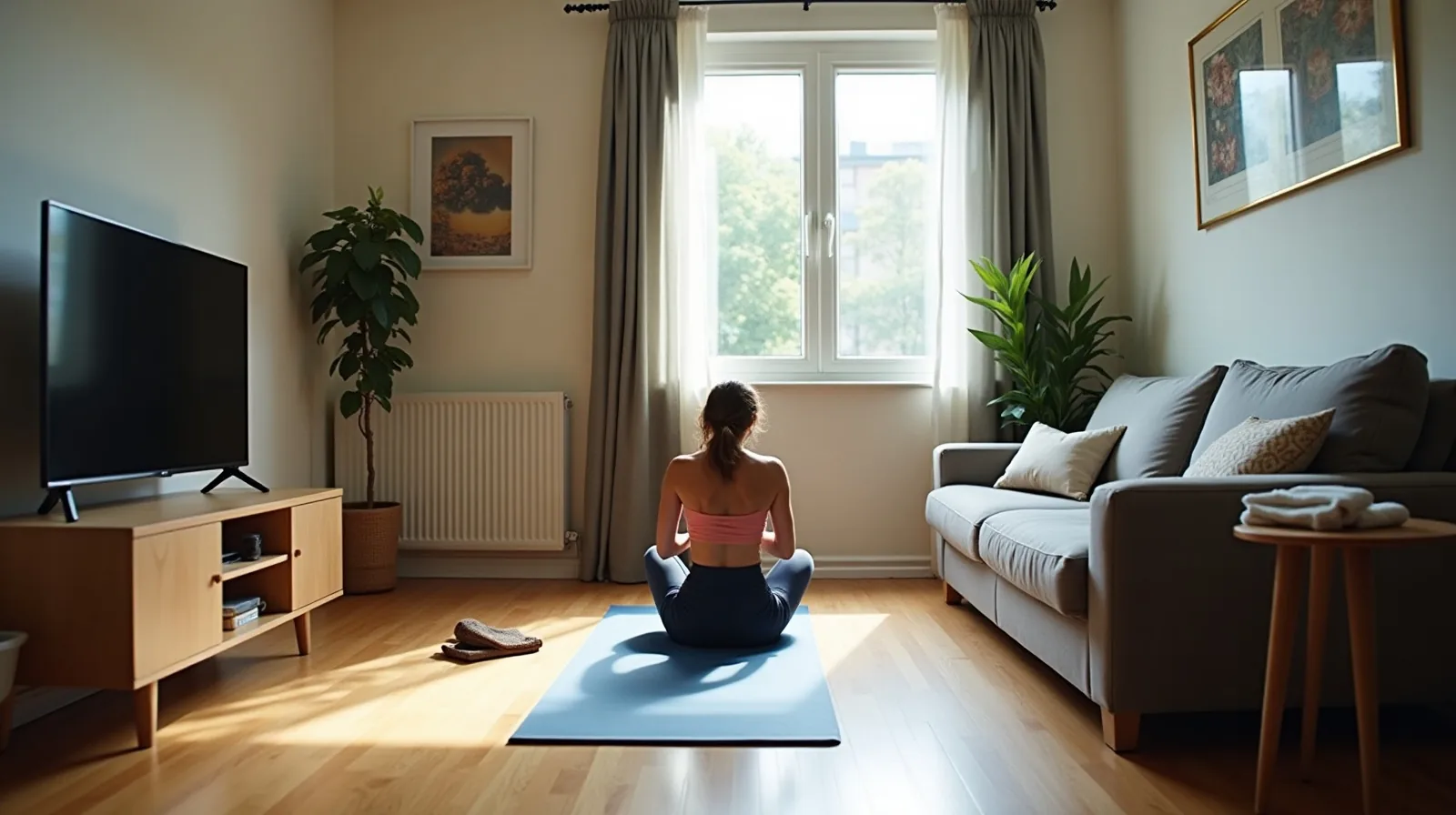
Strength training has a set-dressing problem: say the words and most people picture racks, plates, and a membership fob. Your muscles picture none of that. They respond to one thing — being asked to work harder than they’re used to — and your own body is a perfectly good source of that work. Public health guidelines generally point toward muscle-strengthening activity a couple of times a week alongside the walking-style cardio everyone talks about, and you can cover that at home in the space of a yoga mat. The trick is knowing which movements matter.
Strength Is a Pattern, Not a Machine
Gym machines slice the body into parts — a lever for this muscle, a cable for that one. Real life doesn’t work in parts. You lower yourself into chairs, push doors, pick things up off the floor, haul bags, and carry them across parking lots. Those are movement patterns, and almost everything your body does for you traces back to five of them: squat, push, hinge, pull, and carry. Train the patterns and the parts take care of themselves — which is why five unglamorous moves cover more ground than an hour of machine-hopping.
The Five Moves
Each one comes in an easier and a harder version — start where the last few reps feel challenging but doable:
- Squat. Start with sit-to-stands from a sturdy chair — stand up without using your hands, sit back down with control. Graduate to air squats, then slow ones.
- Push. Wall push-ups, then hands on a counter, then the floor. The incline is your resistance dial — lower surface, harder push.
- Hinge. The hips-back, flat-back bow that protects your spine every time you lift something. Glute bridges build it lying down; standing hinges groove the pattern with a proud chest and soft knees.
- Pull. The awkward one without equipment — load a backpack with books and row it toward your ribs from a hinged position, one arm braced on a chair.
- Carry. The forgotten lift: pick up something moderately heavy in each hand — water jugs, loaded grocery bags — stand tall, and walk. Grip, core, posture, done.
Make It Harder Without Adding Weight
Progress doesn’t require buying anything. Slow the lowering phase to a three-count. Pause for a full second at the hardest point — the bottom of a squat, the chest-to-counter moment of a push-up. Work through a deeper range. Shift work onto one side: a split squat asks twice the question of a regular one. And simply do more — more reps per set, then one more set. Any single one of those dials turned slightly is progress; you never need to turn them all at once.
A Week That Actually Builds
Two or three short sessions a week is plenty: pick the five moves, do two or three sets of five to twelve controlled reps each, and stop each set while one or two more reps still feel possible — strength grows on effort, not on collapse. Leave a day between sessions, and expect the first results in week two or three as ordinary things — stairs, luggage, the low cabinet — quietly get easier. One honest caveat: this is general guidance, not a personal program. If you’re managing a health condition or an old injury, are new to exercise, or feel sharp pain (not muscle burn — pain) during any move, check with your doctor or a qualified trainer about the right starting point for you.