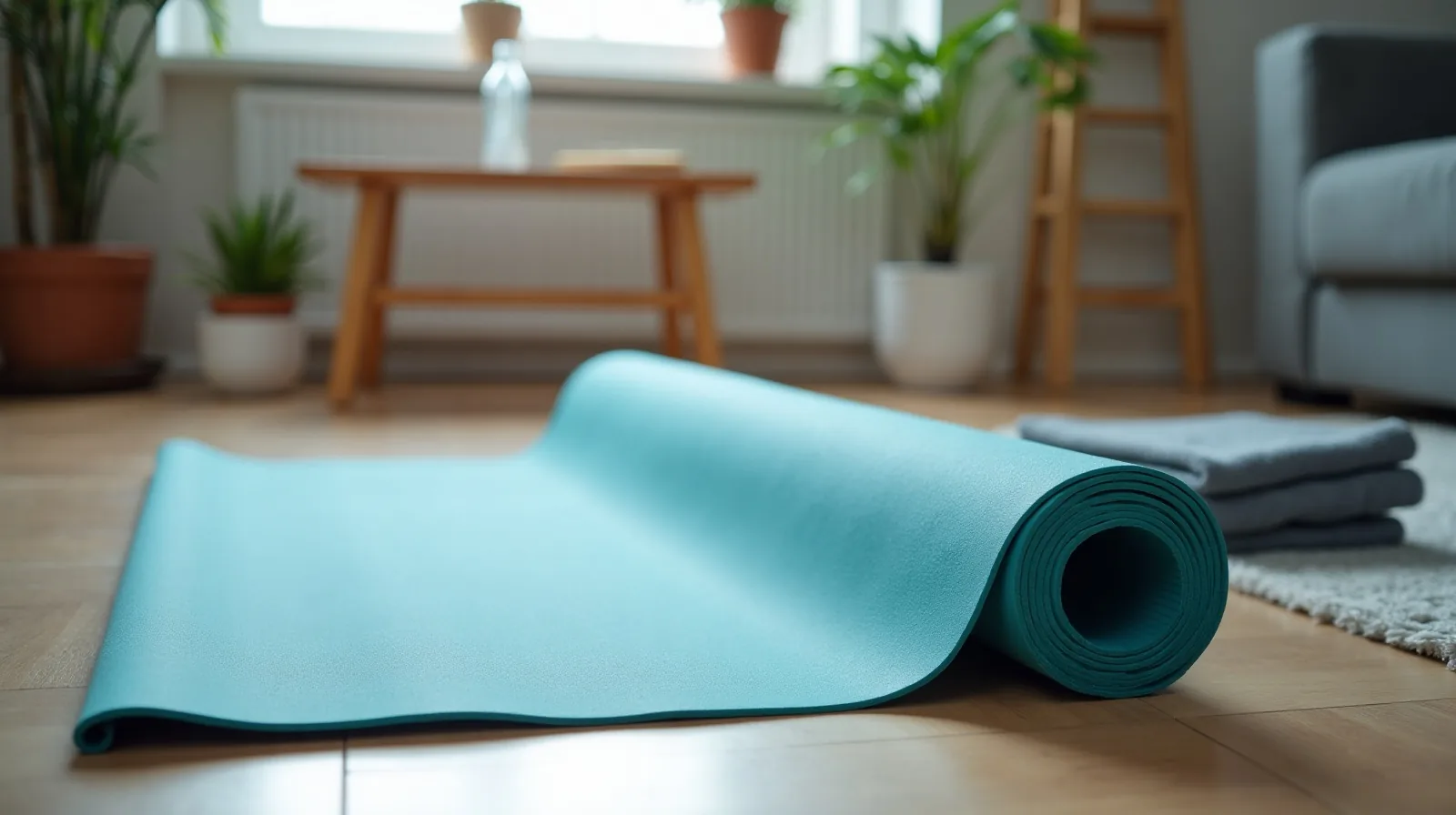
Glutes get talked about like a mirror muscle, which sells them short. They do quiet structural work all day: holding the pelvis level while you walk, keeping the knee tracking straight on stairs, and taking load off the lower back when you lift something off the floor. Sit for most of the day and they get slow to switch on — not weak exactly, just out of the habit of participating. A clear patch of floor and ten minutes is a real starting point.
Why Glutes Matter for Hips and Back
What people call the glutes is really three muscles working as a group. The big one at the back drives hip extension, the motion behind standing up, climbing and pushing off. The two smaller ones sit toward the side of the hip and handle stability, keeping the pelvis from dropping every time your weight shifts to one leg. When that group is under-used, other tissue quietly covers for it: the lower back arches to finish a movement the hips should have finished, and the knee drifts inward on a single-leg step.
Public health guidance generally points toward strengthening the major muscle groups a couple of times a week for most adults, and the hips are a high-return place to spend that time. If you already live with hip, knee or lower-back pain, check with your doctor or a physical therapist first; some pain patterns need assessment rather than more repetitions.
Five Moves That Need Nothing but Floor
Run them in this order. A folded towel under the hips or knees makes every one of them kinder on a hard floor.
- Glute bridge. On your back, knees bent, feet flat and close enough that your fingertips nearly reach your heels. Press through the heels until the body makes one line from knee to shoulder, pause, then lower slowly.
- Clamshell. On your side, knees bent and stacked. Open the top knee without letting the hips roll backward. The range is small; the target is the side of the hip, not the height of the knee.
- Step-up. Use a sturdy low step or the bottom stair. Place one whole foot on it, drive through that heel to stand tall, then lower under control rather than dropping.
- Hip hinge. Knees soft, push the hips straight back and let the chest tip forward with a flat back until the thighs stretch. Stand up by squeezing the glutes, not by pulling with the back.
- Side-lying leg raise. Bottom knee bent for balance, top leg straight and slightly behind the body. Lift to hip height, hold a beat, lower without swinging.
How to Actually Feel Them Working
Plenty of beginners can do all five and feel almost nothing in the glutes, because faster muscles get there first. Slowing down fixes more than adding weight does. Take three seconds to lower on every repetition and pause for two full seconds at the top of a bridge or a step-up. If a bridge shows up mostly in the hamstrings, walk the feet closer to the body and press through the heels instead of the toes. If the lower back complains, the hips have gone past straight; stop where the body forms a line rather than an arch. Resting a hand on the side of the hip during clamshells also helps, since the muscle under your fingers should firm as the knee opens.
Turning Ten Minutes Into a Habit
Two sets of eight to twelve repetitions of each move, two or three days a week on non-consecutive days, is enough to matter and short enough to repeat. Progress by making the movement harder before making it heavier: pause longer at the top, take a bridge to one leg, or step onto something taller. When those stop feeling like work, a looped band above the knees is the next rung.
Mild soreness a day later is ordinary. Sharp joint pain during a repetition is not, and it is a reason to stop and have it looked at. Consistency wins here: three short sessions a week for a month will change how stairs feel far more than one heroic afternoon.