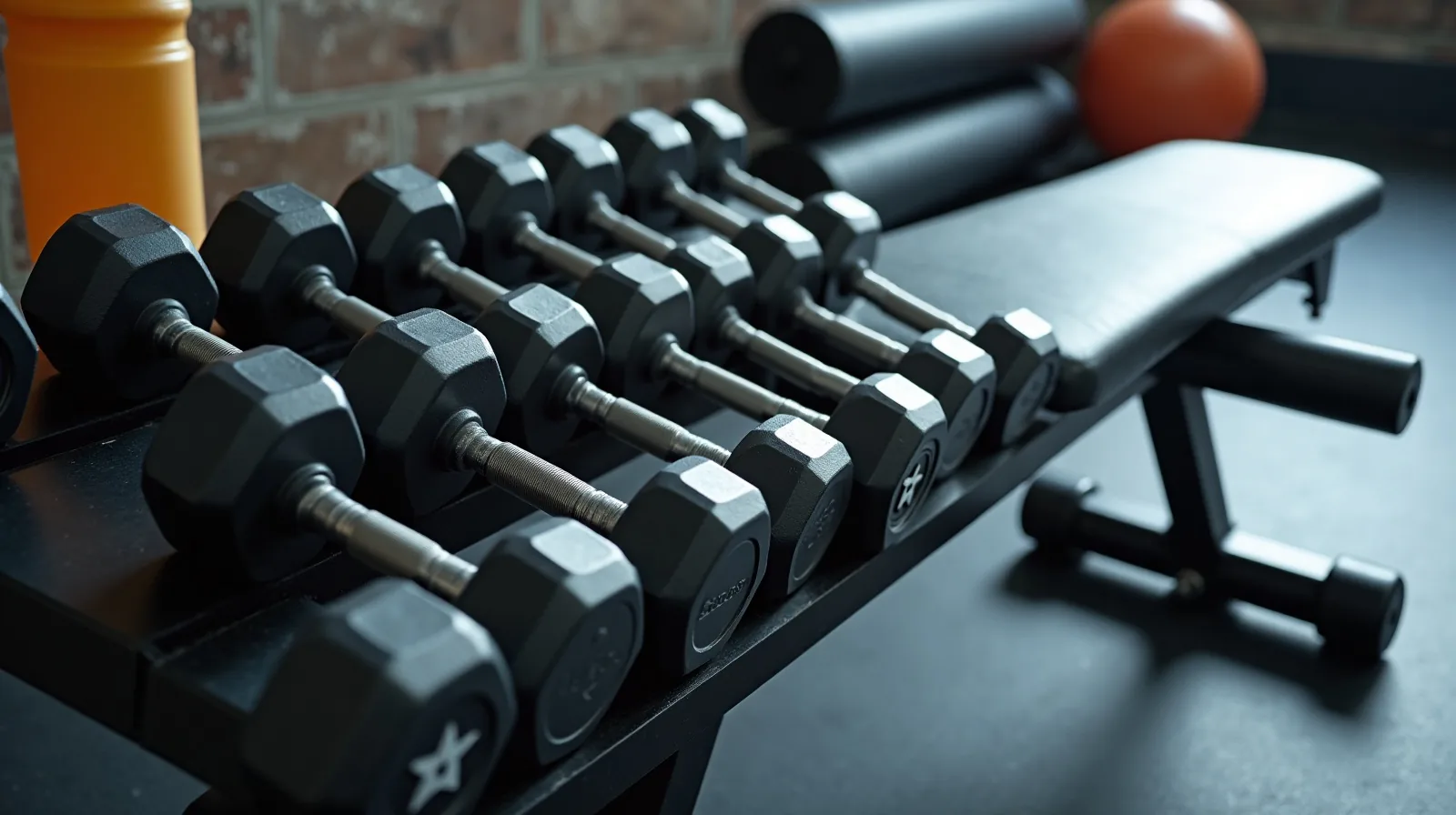
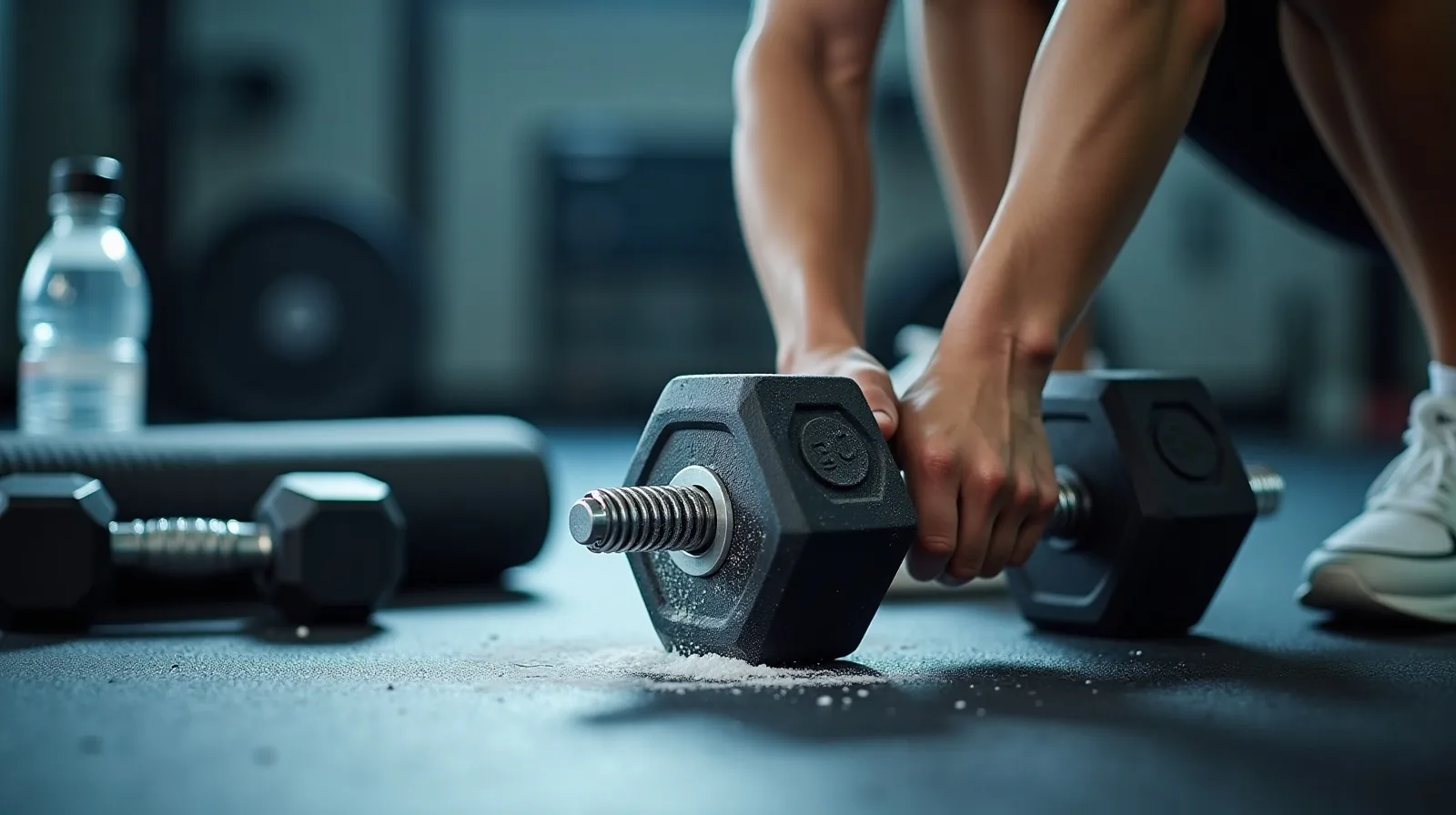
A pair of dumbbells and a clear patch of floor is enough equipment to train every major muscle group, which is why they are usually the first weights anyone buys. The trouble starts right after. A gym rack runs from two pounds to seventy, the internet offers forty exercises with strong opinions about each, and it is genuinely hard to know which movements matter, how heavy to begin, or how to fit them into a session that ends before your motivation does. Six movements answer most of that.
Choosing a Starting Weight
The useful rule is not a number stamped on the dumbbell — it is a number of repetitions. Pick a weight you can move about ten times with clean form, where the last two reps feel like real work but nothing has to be jerked, arched, or swung to finish. If your form falls apart before rep eight, the weight is too heavy. If rep twelve feels identical to rep two, it is too light.
Expect the right load to differ enormously between movements. Legs and back handle far more weight than shoulders and arms, so the dumbbell you row with and the one you press overhead may be twenty pounds apart. That is why two or three pairs beat one perfect pair. If a joint has a history of injury or surgery, or a condition affects your blood pressure, balance, or connective tissue, check with your doctor or a physical therapist before adding load to it.
The Six Movements Worth Learning First
Between them, these six cover a squat, a hinge, a pull, a press, a single-leg pattern, and a carry — the pattern set most strength programs are quietly built from.
- Goblet squat. Hold one dumbbell upright against your chest and sit down between your heels. The weight out front works as a counterbalance, which makes an upright, full-depth squat much easier to find.
- Romanian deadlift. With a dumbbell in each hand, push your hips backward and let the weights travel close to your legs until the hamstrings pull. Knees stay soft, spine stays long, and the movement stops well before the floor.
- One-arm row. Brace a hand and a knee on a bench or sturdy chair and pull the dumbbell toward your ribs, elbow tracking past your side rather than flaring out. This trains the whole back of the shoulder girdle.
- Floor press. Lie on your back with knees bent and press two dumbbells up from a position where your upper arms rest on the floor. The floor caps the range of motion, which is kind to shoulders early on.
- Split squat. One foot forward, one behind, dropping straight down rather than pushing forward. Single-leg work exposes the side-to-side differences a two-legged squat hides.
- Farmer carry. A dumbbell in each hand, walking tall for thirty or forty seconds. It builds grip, trunk stability, and honest work capacity with almost no technique to memorize.
Sets, Reps, and Adding Weight
Beginner programs tend to land in a similar place: two or three sets per movement, roughly eight to twelve repetitions on the squat, press, and row patterns, six to ten on the hinge, and the carry measured in seconds. Rest long enough that the next set is limited by the muscle rather than by breathlessness, usually a minute or two. Progress the simple way: add a rep or two per set each week, and once the top of the range feels controlled everywhere, move up to the next pair and start again from the bottom of the range.
Putting It Into One Session
Order the session by demand. Goblet squat first, then Romanian deadlift, one-arm row, floor press, split squat, and the carry last, when technique no longer matters much and fatigue is the point. Five minutes of easy movement beforehand, a light warm-up set on the first exercise, and the whole thing runs about thirty-five minutes. Two or three sessions a week with a rest day between them holds up for months. Ordinary next-day soreness that fades is expected; sharp or joint pain is worth stopping for and raising with a qualified professional.