Ask around and you’ll hear two opposite convictions: kids today do far too few chores, and kids today are too scheduled for chores at all. Both camps tend to agree on one thing, though — children who grow up contributing to a household have a head start on becoming adults who can run one. The trick isn’t convincing a child to love chores. It’s matching the job to the kid: young children genuinely want to help, and the window for building the habit opens years earlier than most families use it.
Right-Size the Job
A chore teaches responsibility only when it sits at the edge of a child’s ability — hard enough to feel real, doable enough to finish without rescue. Too easy reads as busywork, and kids sniff that out instantly; too hard ends in frustration and a parent taking over, which teaches the opposite lesson. It also helps to keep two categories in view: self-care jobs, like making their own bed and packing their own bag, and family-contribution jobs, like setting the table everyone eats at. Kids need both — the second kind is where “we all keep this house running” actually sinks in.
The Ladder, Age by Age
Every child is different, so treat these as starting points rather than report cards:
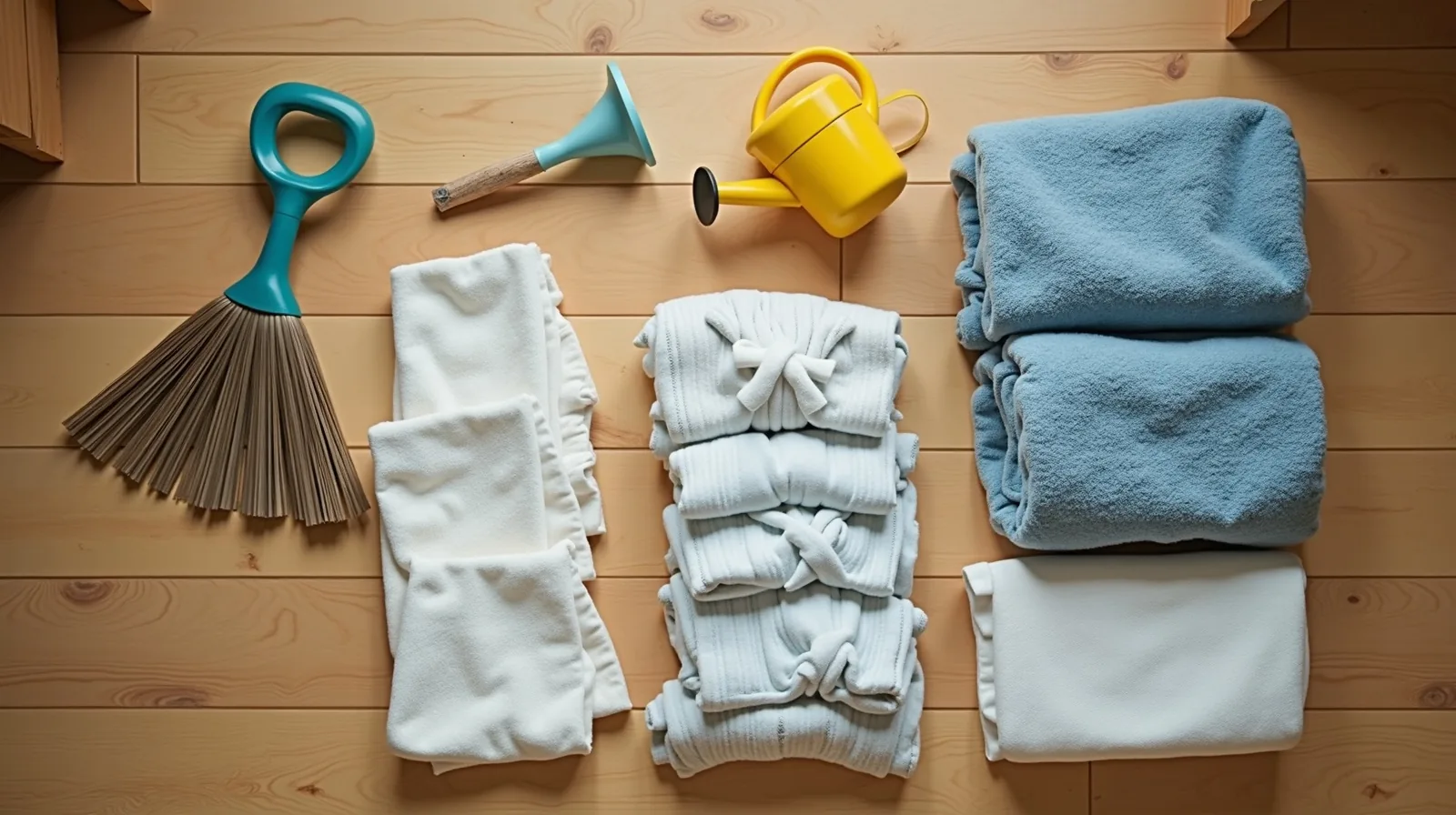
- Ages 2–3. Put toys in a bin, carry their plate to the counter, drop dirty clothes in the hamper, help water a plant. It’s slow and imperfect — participating is the whole point.
- Ages 4–5. Make the bed (lumpy counts), set and clear the table, feed a pet with supervision, match socks from the laundry, wipe up small spills.
- Ages 6–8. Fold simple laundry, empty small trash cans, pack their school bag, sweep, water the plants, help put groceries away.
- Ages 9–11. Load and run the dishwasher, vacuum, make simple food like sandwiches or eggs with an adult nearby, take out the trash, change their own sheets.
- Ages 12 and up. Laundry start to finish, yard work, cooking a straightforward family dinner, cleaning a bathroom properly — whole jobs, owned completely.
The Handover Is the Whole Trick
New chores usually fail in the gap between “go clean your room” and a child who’s never been shown how. Hand a job over in stages: do it together a few times while narrating the steps, then watch them do it, then let it be fully theirs. Accept a kid-level standard for a kid-done job — a six-year-old’s folded towels will not pass adult inspection, and refolding them in front of the child quietly announces that their work didn’t count. Consistency beats variety, too: the same few jobs owned completely build more responsibility than a long rotating list nobody remembers.
Where Judgment Comes In
Age ranges are guidelines, not rules — you know your child’s coordination, focus, and maturity better than any chart. Anything involving heat, sharp tools, cleaning chemicals, or machinery deserves a slow on-ramp with real supervision, whatever the birthday count says, and stronger products stay parent-managed for younger kids. If a child has developmental or physical differences, scale the ladder to their pace; the sequence matters far more than hitting any job by a certain age. Because in the end, the responsibility doesn’t come from the specific chore — it comes from owning something real that the family genuinely counts on.