
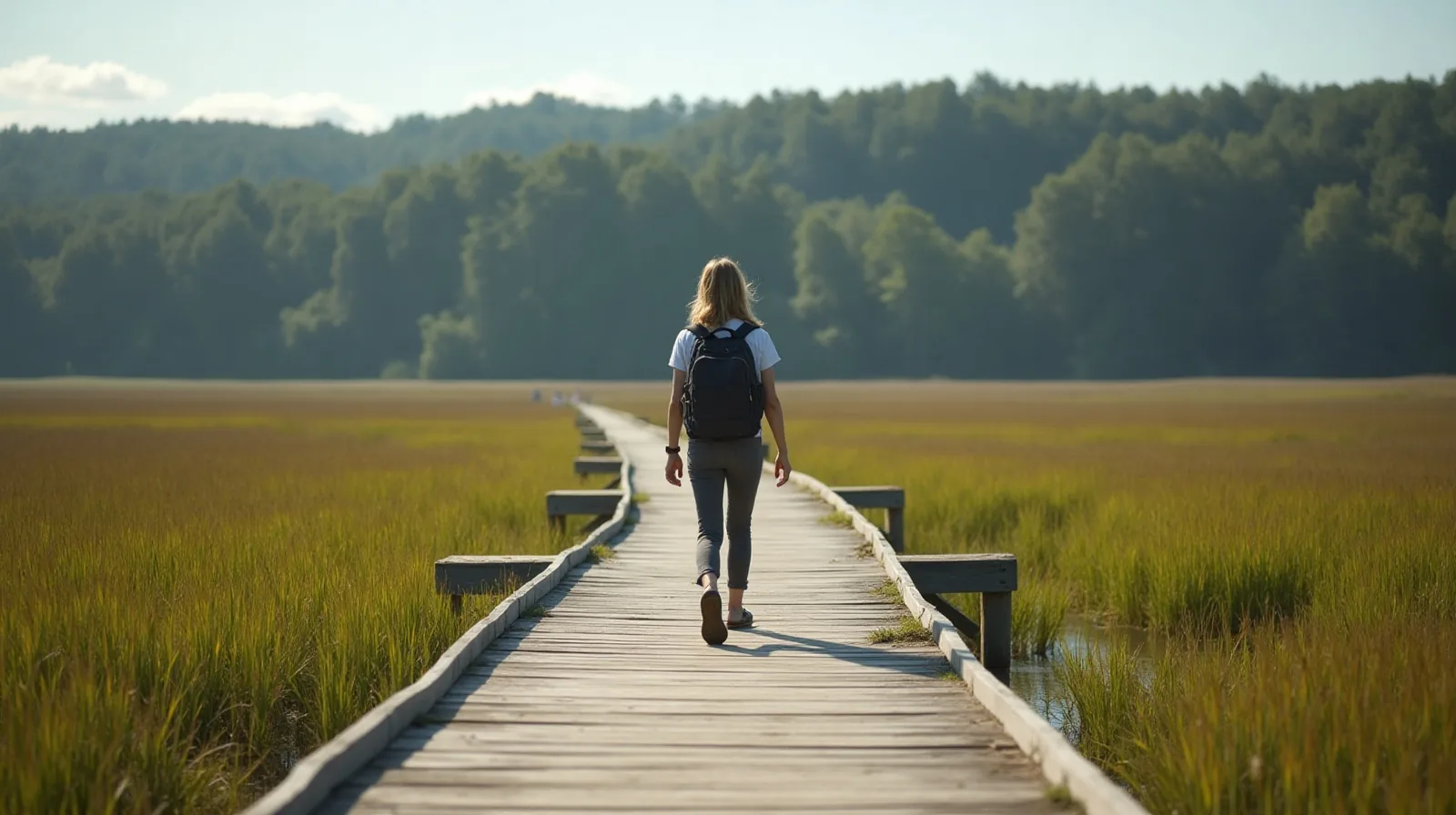
Somewhere along the way, “travel” got tangled up with airports, and the weekends within driving distance of your own front door stopped counting. But a good trip isn’t defined by mileage — it’s defined by how different the day feels from an ordinary one. Within an hour or two of almost anywhere are state parks, small towns, city neighborhoods, and stretches of water you’ve driven past a hundred times without stopping. Learning to see them as destinations is the cheapest travel upgrade there is.
Draw the Two-Hour Circle
Start with a map. Put a finger on home and trace what sits within roughly two hours’ drive — far enough to feel like an outing, close enough that no hotel is required and a late start doesn’t sink the day. Inside that circle, list candidates by kind rather than by name: parks and trails, towns with an old main street, the nearest bigger city, lakes and rivers, back roads people call scenic. Most of us can name ten spots in our own circle we’ve never actually visited. That list, kept on your phone, is a year of weekends waiting.
Pick a Trip Shape, Not Just a Place
Choosing the kind of day you want makes choosing the place easy:
- The state-park day. One marked trail, a packed lunch, and no plan beyond walking it. Parks do the itinerary for you.
- The small-town wander. Park on the main street and drift — the diner, the secondhand shop, the bakery. The point is having no agenda somewhere unfamiliar.
- The city day trip. Treat the nearest city the way a tourist would, but modestly: one museum, one market, or one neighborhood done well beats trying to see it all.
- The water day. A lake, a riverbank, or a shoreline changes the whole texture of a day — bring chairs and stay past the point you’d normally pack up.
- The slow scenic loop. Pick a back-road route and make the drive itself the trip, stopping for farm stands and overlooks along the way.
Plan It Like a Real Trip
Close-to-home trips fail when they’re treated like errands. Give the day the same light structure you’d give a vacation day: one anchor activity, one meal you’re genuinely looking forward to, and a rough leave-time — early, because the first two hours of a Saturday are the easiest ones to lose. Stage a day bag by the door the night before with water, snacks, layers, and a thermos, so the morning is grab-and-go instead of a scavenger hunt. Then leave one gap in the plan on purpose; the unplanned roadside stop is usually the part everyone remembers.
Make It a Rhythm, Not an Event
The biggest shift is treating nearby trips as a rotation instead of a rare occasion. Once a month is enough to work through a different trip shape each time and to watch the same circle change through the seasons — the packed summer lake gone quiet in fall, the tourist town in its sleepy months. Keep adding to the list whenever a local mentions a place, and let repeats in: somewhere worth visiting once is usually worth knowing well. Done this way, travel stops being something you save up for and becomes something your calendar already contains.