
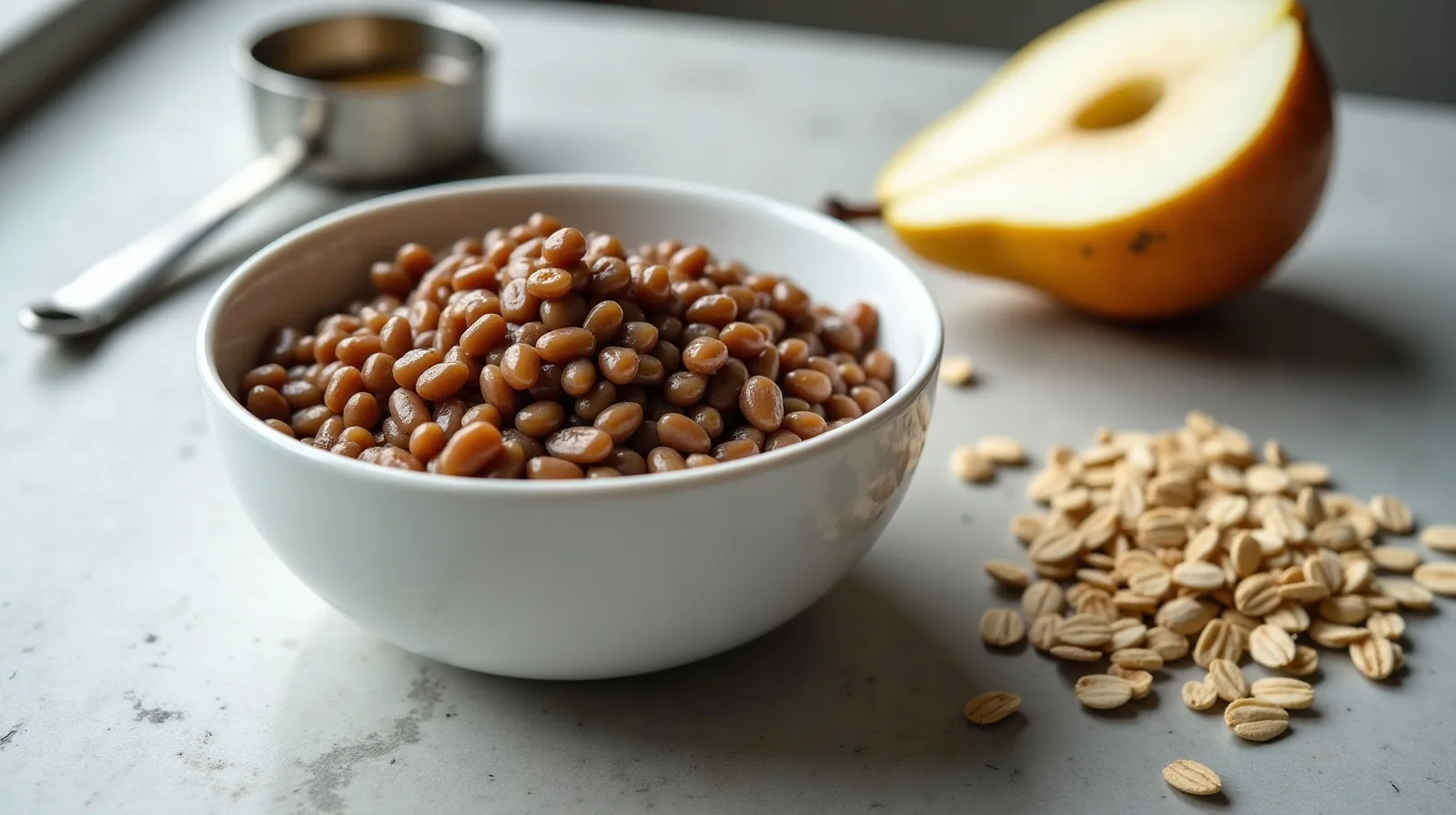
Fiber shows up in nearly every conversation about eating well, and rarely as the star. It is the thing nutrition researchers mention almost apologetically, after the more interesting topics, in the tone of someone repeating a point they have made many times. There is a reason for the repetition. Among all the ways typical modern diets diverge from what health guidance recommends, fiber is one of the widest and most consistent gaps — and unlike most nutrition debates, it is barely controversial.
How Wide the Gap Actually Is
Public health guidance generally points toward somewhere in the range of 25 to 35 grams of fiber a day for adults, though the exact figure varies by country and calorie intake. Dietary surveys across several wealthy countries consistently land typical intake at roughly half that. The shortfall is not distributed evenly, either: it tracks closely with how much of a diet comes from refined grains and packaged foods, since milling and processing strip fiber out efficiently. That is why the gap is a structural feature of how many people eat rather than a personal failure of willpower.
What Fiber Does Once It Is In There
Fiber is the part of a plant your body cannot break down, which sounds unhelpful until you follow where it goes. Because it passes through largely intact, it adds bulk and holds water, which is why it has such a direct effect on regularity. It also slows the pace at which sugars from a meal reach your bloodstream, softening the peaks. Further down, some types become food for the bacteria living in your large intestine, which ferment them into compounds researchers are actively studying for their role in gut lining health and inflammation. Observational research has linked higher fiber intake with lower rates of several chronic conditions, though studies of that kind show association rather than proof of cause.
Soluble and Insoluble, in Plain Terms
The two words on the label describe how the fiber behaves in water. Soluble fiber dissolves into a gel: think oats, barley, beans, apples, citrus, and psyllium. That gel is what slows digestion and what accounts for the modest cholesterol-lowering effect associated with foods like oats. Insoluble fiber does not dissolve. It is the structural scaffolding of plants: wheat bran, fruit and vegetable skins, nuts, seeds, and stalks. Its job is bulk and movement. Nearly every whole plant food contains both in some ratio, which is the practical takeaway: you do not need to track them separately. Eat a range of plants and the ratio takes care of itself.
Closing the Gap Without the Bloating
The most common mistake is enthusiasm. Jumping from ten grams a day to thirty in a weekend reliably produces gas, cramping, and a firm decision that fiber is not for you. Add roughly five grams a week, drink more water as you go, and give your gut bacteria a few weeks to adjust.
- Put beans or lentils in one meal a week. A cup of cooked lentils carries around 15 grams, which closes most of a typical day’s gap on its own.
- Swap one refined grain for a whole one. Whole-grain bread, brown rice, or whole-wheat pasta in place of the white version adds a few grams per serving with no new habits required.
- Leave the skins on. A pear or apple eaten whole roughly doubles the fiber of the peeled version, and the same goes for potatoes.
- Add seeds to something you already eat. A spoonful of chia or ground flax stirred into yogurt or oats is a couple of grams for almost no effort.
- Drink more water as fiber goes up. Fiber works by holding water, and increasing one without the other is what produces the discomfort people blame on fiber itself.
- Start with food rather than supplements. Supplements can help in specific situations, but they are worth discussing with your doctor or a dietitian first, particularly if you have a digestive condition or take daily medication.
If eating more fiber leaves you persistently uncomfortable, or your digestion changes and stays changed, that is a conversation for a qualified professional rather than something to push through.