A digital clock hands over the answer; an analogue clock asks a child to build it. That is why so many kids read the numbers on a microwave at four and still stall in front of the round classroom clock at eight. The face does three jobs at once: it counts hours, counts minutes, and shows both on the same twelve numbers. Broken apart and turned into play, though, it becomes one of the easier things a child picks up at home.
Why the Round Clock Confuses Kids
Ask a child what the number three means on a clock face and the honest answer is that it depends which hand points at it. The short hand says three o’clock. The long hand says fifteen minutes. Nothing else in a child’s world works that way, since a three is a three on a page, a door, a dice roll. Add two hands moving at wildly different speeds and the confusion looks reasonable rather than worrying. Teaching in the order the face was built, one hand at a time, removes most of it.
Start With the Hour Hand Alone
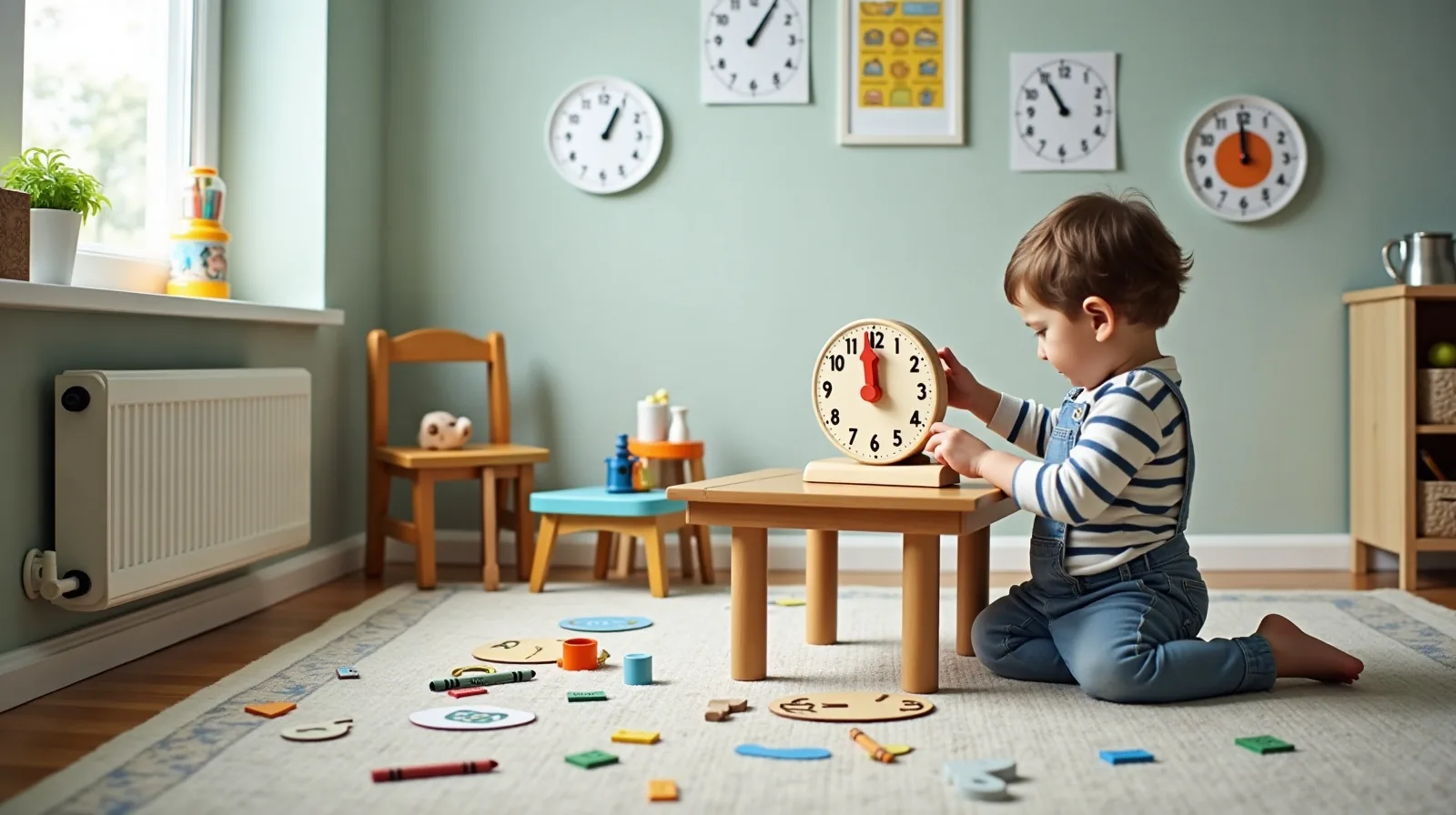
Cover the minute hand. A paper plate, a split pin and one cardboard arrow make a one-handed clock, and a one-handed clock is genuinely readable. Point the arrow at a number and that is the hour. Point it between two numbers and the useful language is “a bit past four” or “nearly five” — vague on purpose, because that vagueness is exactly how the hour hand behaves.
Stay here longer than feels necessary. A child who glances at a one-handed clock and says “almost six” already has the hard part: the sense that time is a position on a circle, always moving forward. Minutes are detail added to a skill that already works. When the long hand returns, introduce it as a counter that travels right round once while the short hand crawls from one number to the next.
Play That Builds the Skill
Practice sticks when it looks like a game rather than a worksheet. A few that need almost nothing:
- A clock face on the floor. Chalk or tape a circle with twelve numbers, then have a child stand in the middle and stretch both arms into a called-out time. Bodies remember angles better than eyes remember rules.
- Set the time, do not read it. Hand over the paper plate and call out times to build. Making a time is harder than naming one, and it exposes whatever has not landed yet.
- Spot the wrong one. Draw four clock faces beside one written time and let the child cross off the three that are wrong. Finding errors builds the skill faster than producing answers.
- Hour-hand week. Tape over the long hand for seven days and ask only for “about” answers, all day, everywhere.
- Guess the ring. Set a wind-up timer out of sight and let a child guess when it will sound by watching the wall clock instead of counting.
Anchor the Clock to the Day You Already Have
Numbers stay slippery until they attach to something. A day already has fixed landmarks — breakfast, lunch, pickup, dinner, bath, lights out — and each one has a shape on the clock face. Draw those six times once, tape the strip near the kitchen clock, and let a child match real hands to a picture rather than decode from scratch. Within a couple of weeks the picture stops being needed, because the day itself has become the reference.
Duration Is the Other Half
Reading a clock and feeling time are separate skills, and the second one is why kids insist that five more minutes is nothing. Build it deliberately. Guess-then-check works well: ask how long tidying the blocks will take, run the timer, compare. Sand timers and analogue kitchen timers beat digital ones here, because what is left shows up as a shrinking amount rather than a falling number. Over a few months the guesses tighten, and a child who knows what ten minutes feels like handles the end of screen time with far less friction.