Few childhood moments feel as big as the first wobbly ride without a hand on the seat. The good news is that learning to ride is mostly a balance skill, and balance responds well to short, relaxed practice. With the right setup and a little patience, many kids go from nervous to rolling in a handful of sessions.
Start With Balance, Not Pedals
Pedaling is the easy part. The hard part is staying upright, and a child who cannot yet balance will only be frustrated by a bike that demands pedaling too. Many families lower the seat until both feet sit flat on the ground, then have the child scoot along like a runner. Some remove the pedals for the first few sessions, which turns any small bike into a balance bike.
Once scooting feels easy, ask for longer glides: push off, lift both feet, and coast as far as possible. Cycling guidance often points to this glide as the real milestone, because a child who can coast for several seconds already knows how to balance.
Get the Setup Right
A calm lesson begins with equipment that fits. A bike that is too big makes every wobble scarier, so look for a frame the child can straddle with feet flat. Check these basics before the first push:
- Helmet: snug, level across the forehead, with the straps forming a V under each ear and room for one finger under the chin strap.
- Shoes: closed-toe with a flat sole, never sandals or loose slip-ons.
- Brakes: small hands should be able to squeeze the levers firmly, or the bike should have a pedal brake they can use easily.
- Tires: firm, with the chain tidy and nothing loose that could snag clothing.
- Place: a wide, smooth, empty surface such as a quiet parking lot or park path, far from traffic, with a very gentle downhill if possible.
Let Go a Little at a Time
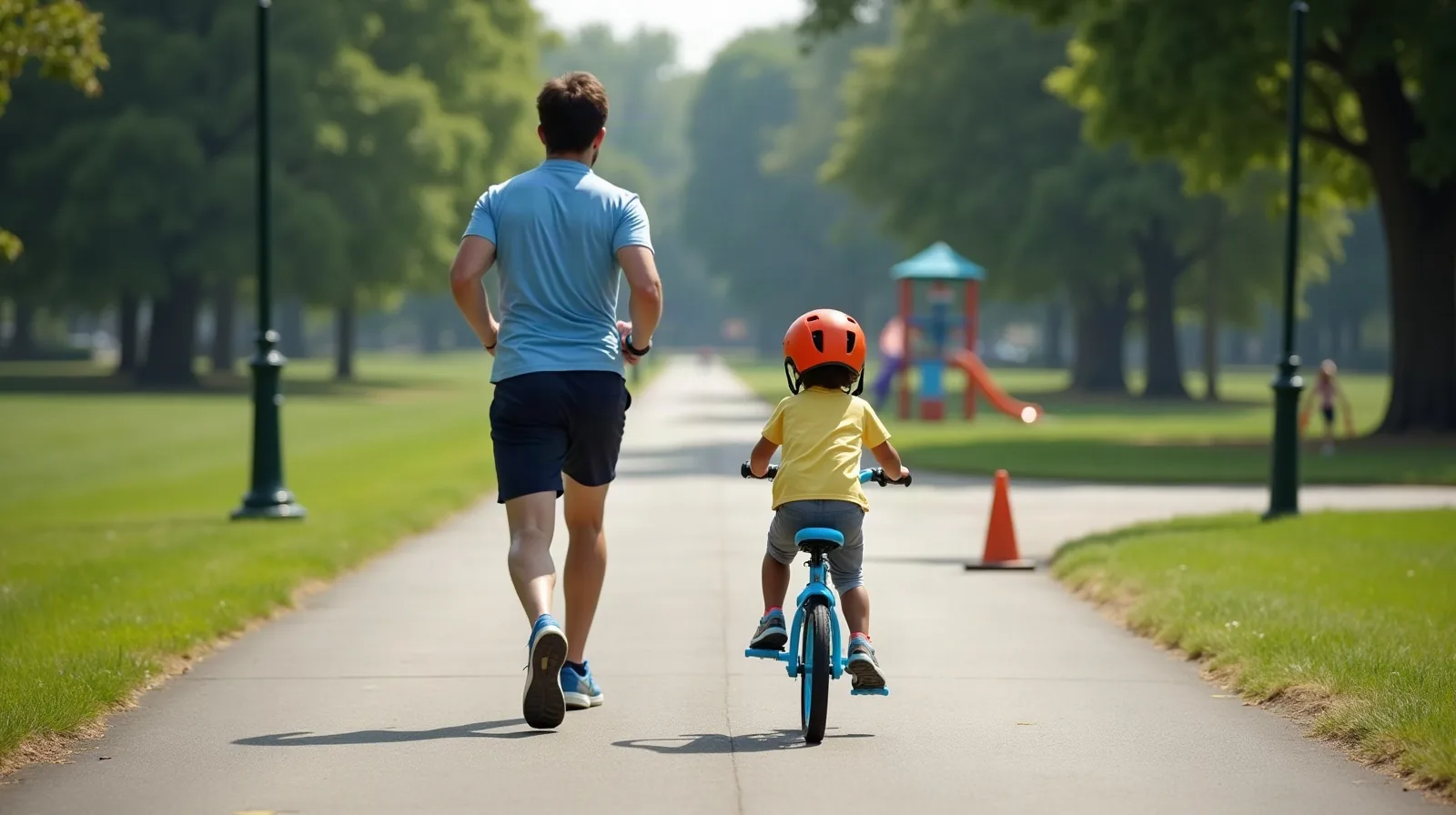
When gliding is steady, put the pedals back on or raise the seat slightly so the child can still touch the ground with their toes. Have the child look ahead at a landmark instead of at the front wheel, since eyes tend to steer the bike. A hand on the back of the shoulders, rather than gripping the seat or handlebars, gives support without taking over the balance.
Then ease off in small steps. Jog alongside with a hand hovering, then a finger, then nothing. Many kids do not realize you have let go until they have already gone several meters, which is often the cue for a delighted shout rather than a panic. Keep sessions short, about fifteen to twenty minutes, and stop on a good attempt rather than a frustrated one.
Handle Wobbles and Falls Calmly
Falls are part of learning, and a child reads the adult’s face to decide how scary it was. A relaxed “Good try, that happens to everyone” lets kids reset quickly. Teach two habits early: squeeze the brakes to stop, and put a foot down when things feel shaky.
If a child seems stuck, take a few days off and return to scooting; progress often shows up after a break. Some children are ready at four and others at eight, so there is no deadline. If a child has trouble with balance, coordination or strength that seems out of step with peers, a pediatrician or physical therapist is a good person to ask for guidance.