
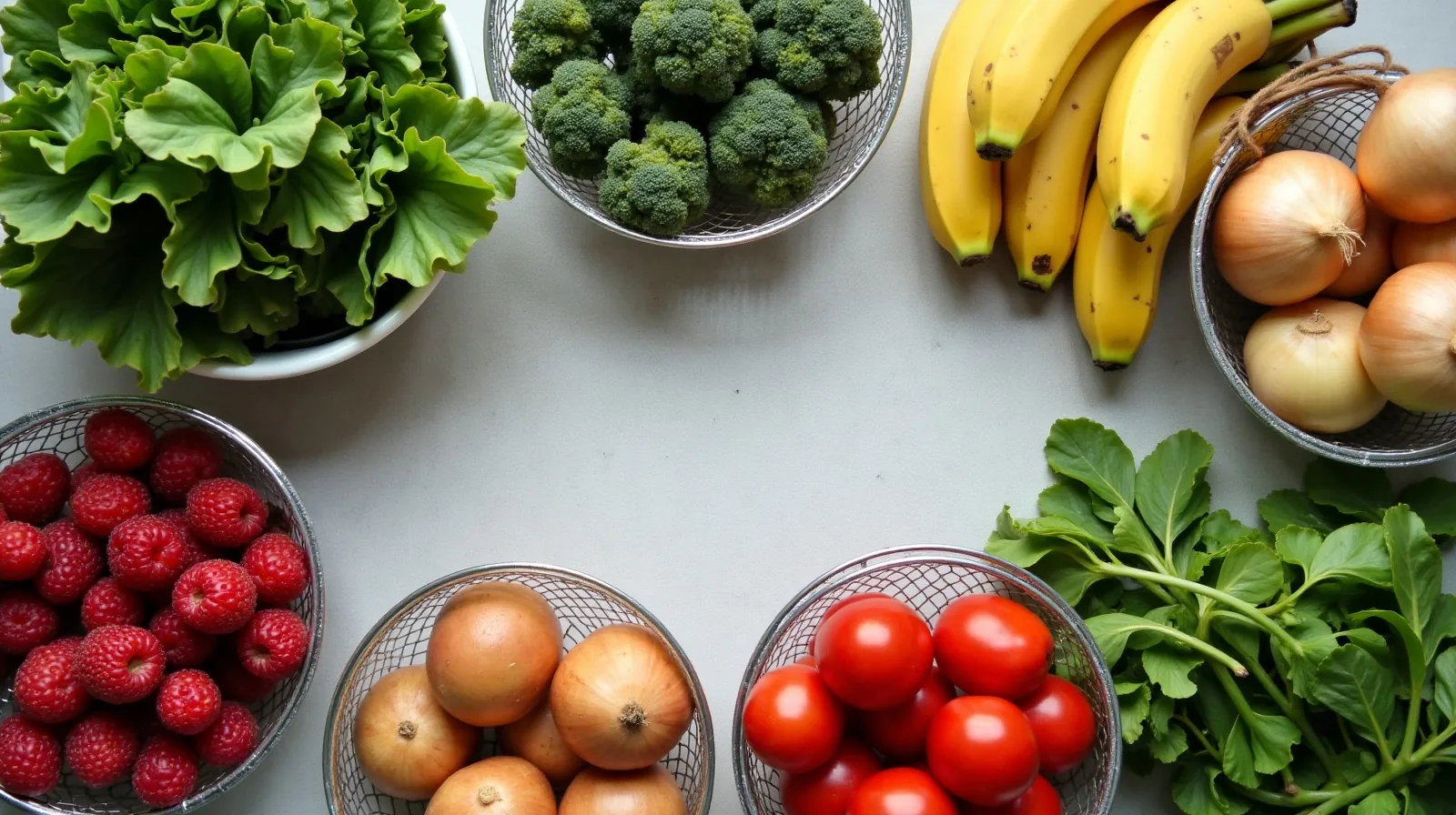
Everyone knows the ritual: buy a bag of spinach with the best intentions, rediscover it ten days later as green soup in the crisper drawer, feel briefly terrible, repeat. The gap between good intentions and slimy greens usually isn’t about eating habits at all — it’s about storage. Most produce dies early from one of three preventable causes: the wrong location, trapped moisture, or bad neighbors. Fix those on shopping day and the same groceries genuinely last about twice as long, which quietly means fewer store runs, less food in the trash, and less money following it there.
Cold Lovers and Counter Dwellers
The first sorting decision is simply where things live, and the fridge is not the answer for everything. Tomatoes go mealy and bland in the cold — they belong on the counter, stem-side down. Bananas, whole melons, and unripe avocados, peaches, and pears want counter time too; once they’re ripe, the fridge becomes a pause button. Potatoes, onions, and whole winter squash prefer a cool, dark cabinet — never the fridge, where potatoes turn oddly sweet. Almost everything else — leafy greens, berries, broccoli, carrots, celery, grapes — wants cold air from the moment it comes home. Getting the geography right is half the battle.
The Rules That Do Most of the Work
- Keep greens dry. Moisture is what turns lettuce to sludge. Wash, dry thoroughly, and store in a container lined with a clean, dry towel to catch condensation — crisp for a week or more.
- Treat soft herbs like flowers. Cilantro and parsley last for ages standing in a jar of water in the fridge with a loose bag over the top. Hardy herbs like rosemary do better wrapped in a barely damp towel.
- Don’t wash berries until you eat them. Wet berries mold in a day or two. Store them dry, in a breathable container, and rinse right before serving.
- Separate the ripeners. Apples, bananas, and ripe avocados give off ethylene, a natural gas that fast-forwards everything nearby. Keep them away from greens, broccoli, and anything you want to slow down.
- Split up potatoes and onions. Both want the dark cabinet, but stored together each pushes the other to sprout and spoil faster. Same neighborhood, different shelves.
Decode the Crisper Drawers
Those sliders on the crisper drawers actually do something: they open and close a vent. Closed vent means high humidity — that’s the drawer for anything that wilts: greens, herbs, broccoli, carrots, cucumbers. Open vent means low humidity, the right home for things that rot when moisture builds up, like apples and grapes — and conveniently, keeping ethylene-heavy apples in their own drawer solves the bad-neighbor problem too. Lining the high-humidity drawer with a clean dish towel catches stray condensation before it pools under your vegetables, and shaking the towel out weekly takes all of ten seconds.
The Five-Minute Unpacking Routine
None of this works as a memory test at the fridge door, so make it a routine instead. When groceries land on the counter, take five minutes: greens washed, dried, and boxed with their towel; herbs into their jar; ripeners quarantined; counter fruit into the bowl; berries checked for any moldy scouts (one bad berry recruits the rest). Then put one container at the front of the fridge as the “eat first” bin for anything on its last days — half a pepper, aging carrots, the yogurt near its date. Most produce doesn’t get thrown out because it spoiled; it gets thrown out because it was invisible. Five minutes of unpacking fixes both.