The frantic pre-departure search — coat pockets, couch cushions, yesterday’s jeans — feels like a personal failing, but it isn’t one. Keys and wallets get lost for a boringly mechanical reason: they’re small, they travel with you all day, and they get put down wherever your hands happen to be full. No fixed home means dozens of plausible locations, and your memory was never designed to track which one won today. The fix, accordingly, has nothing to do with concentrating harder. It’s a small piece of household engineering that takes an afternoon to set up and then quietly works forever.
It’s a Storage Problem, Not a Memory Problem
Think about the things you never lose: your toothbrush, your coffee maker, your shoes if they live on a rack. They have exactly one home, so “where is it” isn’t a question your brain ever has to answer. Keys and wallets fail because they have many acceptable homes — kitchen counter, desk, jacket, bag — and every extra option multiplies the search space. Worse, you set them down mid-thought, while carrying groceries or answering a text, so no memory of the placement gets recorded at all. You’re not forgetting where you put them; you never knew.
Build the System Once
The whole apparatus costs less than a takeout dinner, and it lives within arm’s reach of your door:
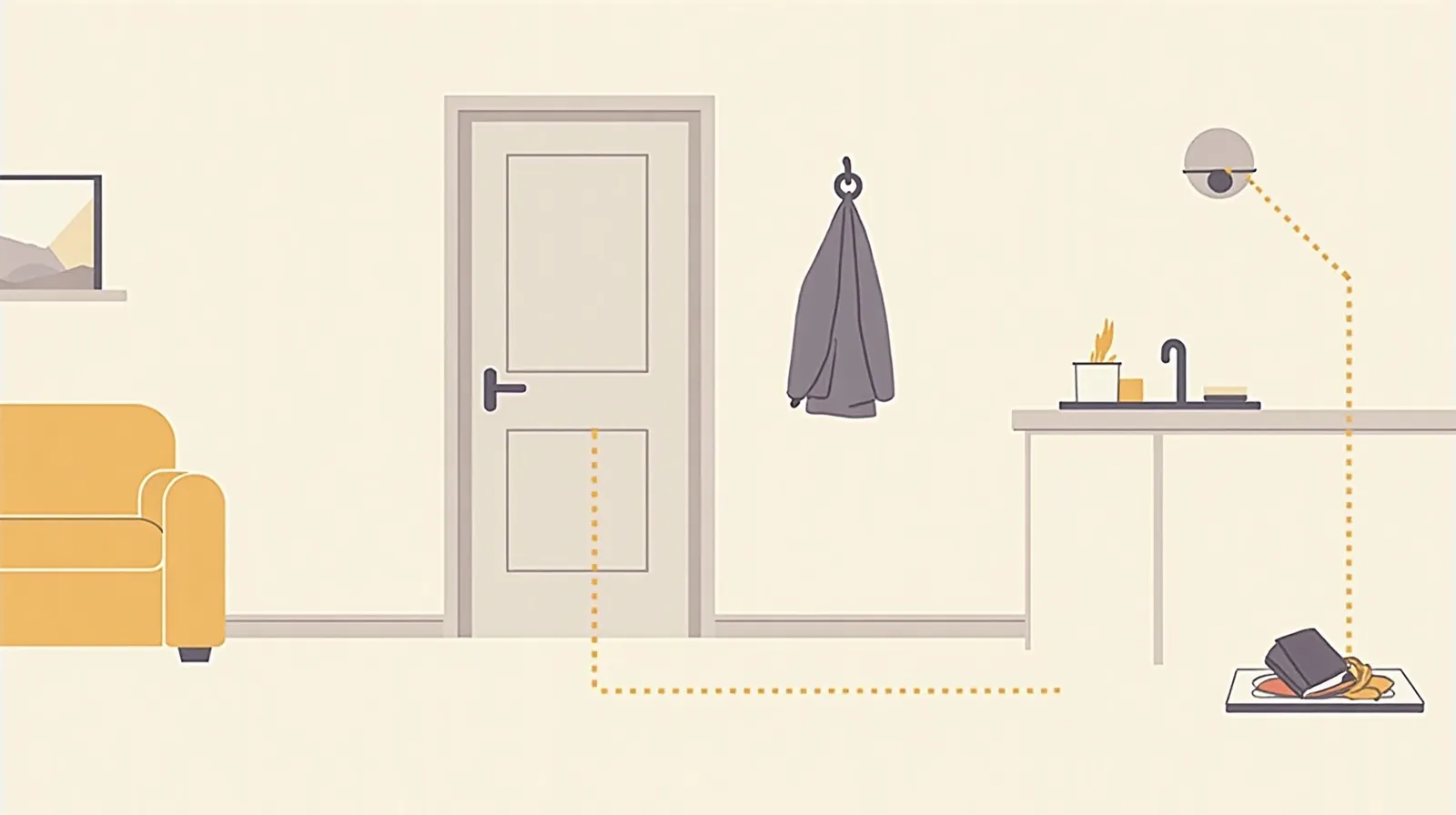
- One landing spot. A small tray, bowl, or wall hook immediately inside the front door — directly on the path you walk in on, not in another room, or it will lose to the kitchen counter.
- The hand-to-tray rule. Keys and wallet go from your hand to the spot the moment you cross the threshold — before the bathroom, the fridge, or the phone. The rule only works if it outranks everything.
- One wallet home per mode. If you carry a bag, the wallet lives in one specific pocket of it; if you don’t, it lives in the tray. What loses wallets is commuting between systems.
- A tracker on the keys. A small Bluetooth tracking tag turns the occasional failure from a twenty-minute search into a thirty-second beep — cheap insurance for the days the system slips.
- A spare key that isn’t heroic. A copy with a trusted neighbor or family member converts the worst case from a crisis into an errand.
The Exit Habit That Catches Everything Else
The tray solves arrivals; departures need one more piece: a quick physical check — phone, keys, wallet — patted in the same order every time you reach the door, said aloud at first if that helps. It feels silly for about a week, and then it becomes the kind of automatic ritual that catches the forgotten wallet while you’re still standing somewhere it can be fixed. Pair it with the doorknob trick for unusual items: anything extra you must take tomorrow — a package to mail, borrowed dishes — leans against the door the night before, where leaving without it is physically awkward.
When the System Slips Anyway
It will, occasionally — a rushed morning, a different jacket, a houseguest tidying your keys into a drawer. When it does, resist the urge to ransack. Check the system spots first: the tray, the bag pocket, yesterday’s coat. Then retrace the last arrival, since the item is almost always wherever your hands were last full. And treat every slip as data rather than failure — if things keep migrating to the kitchen counter, the counter is telling you where the tray actually wants to live. The point of a system is that it bends without collapsing; adjust it to match how you really come through the door.