
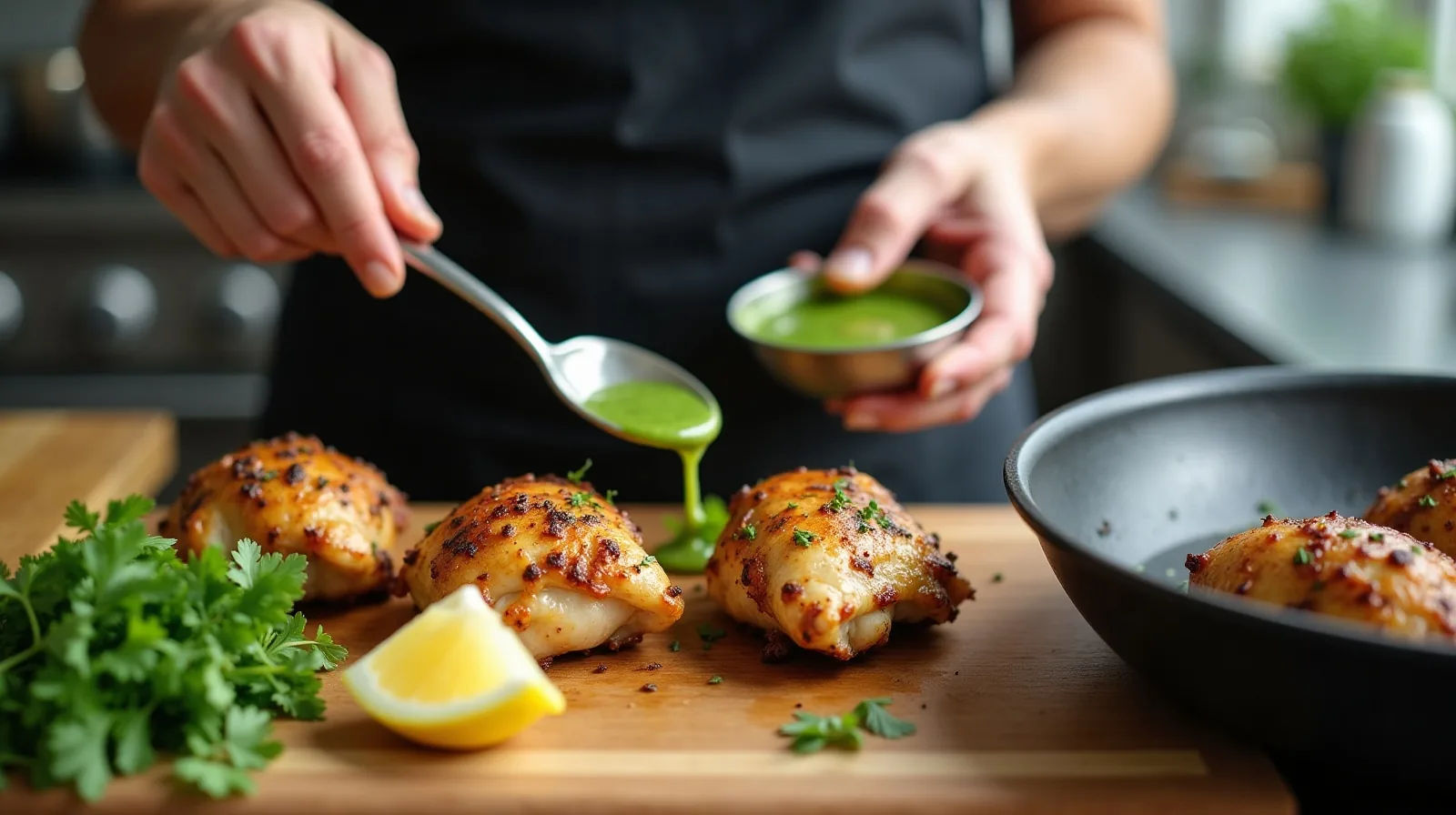
The gap between a fine dinner and a memorable one is usually not the recipe — it’s a spoonful of sauce. Plain chicken becomes dinner-party chicken under a bright herb sauce; roasted vegetables wake right up with a drizzle of garlicky yogurt. The best part is that sauces aren’t really recipes at all. They’re formulas — short, forgiving patterns you can hold in your head and improvise from whatever’s in the fridge. Learn five of them and you can upgrade almost anything you already know how to cook, without adding more than a few minutes to the process.
Why Sauce Is the Highest-Leverage Skill in the Kitchen
Restaurants figured this out long ago: the proteins and vegetables on most menus are simple, and the thing you’re actually paying for is what gets spooned over them. Sauce delivers the three things plain food tends to lack — fat, acid, and concentrated flavor — in one move, which is why it fixes a dry pork chop, a bland grain bowl, and a pile of steamed broccoli with equal ease. And because a sauce is made on the side, it lets you keep the main cooking simple. You don’t need a more complicated dinner. You need the same dinner, sauced.
The Five Formulas Worth Memorizing
Each of these takes five to ten minutes, uses ordinary ingredients, and bends to whatever you have on hand:
- Herb sauce. A big handful of soft herbs (parsley, cilantro, basil), chopped fine or blitzed with olive oil, a squeeze of lemon or splash of vinegar, a small garlic clove, and salt. Brilliant on grilled meat, fish, eggs, and roasted anything.
- Pan sauce. After searing meat, pour off excess fat, splash broth (or a little wine) into the hot pan, scrape up the browned bits, simmer until slightly thickened, then swirl in a knob of butter. Dinner-party flavor from what you were about to wash off.
- Yogurt sauce. Plain yogurt, lemon juice, grated garlic, salt — plus grated cucumber, chopped herbs, or a spoonful of tahini if you like. Cool and tangy against anything roasted, spiced, or grilled.
- Vinaigrette, promoted. Three parts oil to one part vinegar, a dab of mustard, a pinch of salt, shaken in a jar. Stop reserving it for lettuce — it’s superb over warm grains, beans, roasted vegetables, and flaky fish.
- Quick tomato. Garlic sizzled briefly in olive oil, a can of crushed tomatoes, salt, and about fifteen minutes of simmering. Pasta is the obvious home, but it’s just as good under baked eggs or alongside crusty bread.
The One Rule Behind All Five
Every sauce above is balancing the same four things: fat for richness, acid for brightness, salt for depth, and something aromatic — herbs, garlic, mustard, browned pan bits — for character. Which means fixing a sauce is never a mystery. Taste it. Flat? Add acid. Harsh or too sharp? Add fat, or a tiny pinch of sugar. Boring? Salt, then aromatics. Tasting and adjusting as you go is the entire skill; the formulas just give you somewhere sensible to start.
Make It a Weeknight Habit
The trick to actually using these is making them before you need them. Herb sauce and vinaigrette hold for days in a jar in the fridge; yogurt sauce keeps several days too, and quick tomato freezes beautifully. Whisk one together on a Sunday, or while the pan heats on a Tuesday, and suddenly the same rotation of chicken, salmon, eggs, and roasted vegetables tastes like five different dinners. One saucepan-free spoonful of effort, most of the payoff of a brand-new recipe.