Most road trip planning covers the good version: the route, the playlist, the stop at the enormous roadside sculpture. The version worth preparing for is the other one, where a warning light comes on two hours from anywhere, a pass closes in bad weather, a kid throws up in the back seat, or the campground that supposedly never fills is full. None of those ruin a trip by themselves. What ruins a trip is having no plan when one of them lands after dark, on one bar of signal, with everybody tired.
The Four Ways It Actually Goes Wrong
Road trip trouble is unglamorous and repetitive. Nearly everything falls into four buckets: the vehicle stops, the road closes, a person gets sick, or the place to sleep disappears. Each has a different shape. A breakdown is a waiting problem. A closure is a routing problem. Illness is a triage problem. A missing bed is a search problem, and that search gets dramatically harder after sunset. Naming the four in advance is most of the work, because it turns vague dread into four short plans made calmly at a kitchen table.
Breakdowns Are a Waiting Problem
Assuming nobody is hurt, the hard part of a breakdown is not the repair. It is the hours spent on a shoulder or in a gravel lot with no shade, no water, and no bathroom, while phone batteries drain and moods collapse. Solve the waiting and the rest is logistics. Before leaving, check whether roadside assistance already comes with the insurance policy or a card in the wallet, and save that number where it works offline. Get in the habit of noting the last exit passed, because dispatchers ask for a location and a mile marker beats a description of trees. Pull as far off the road as the shoulder allows and stand away from traffic.
What to Keep in the Car
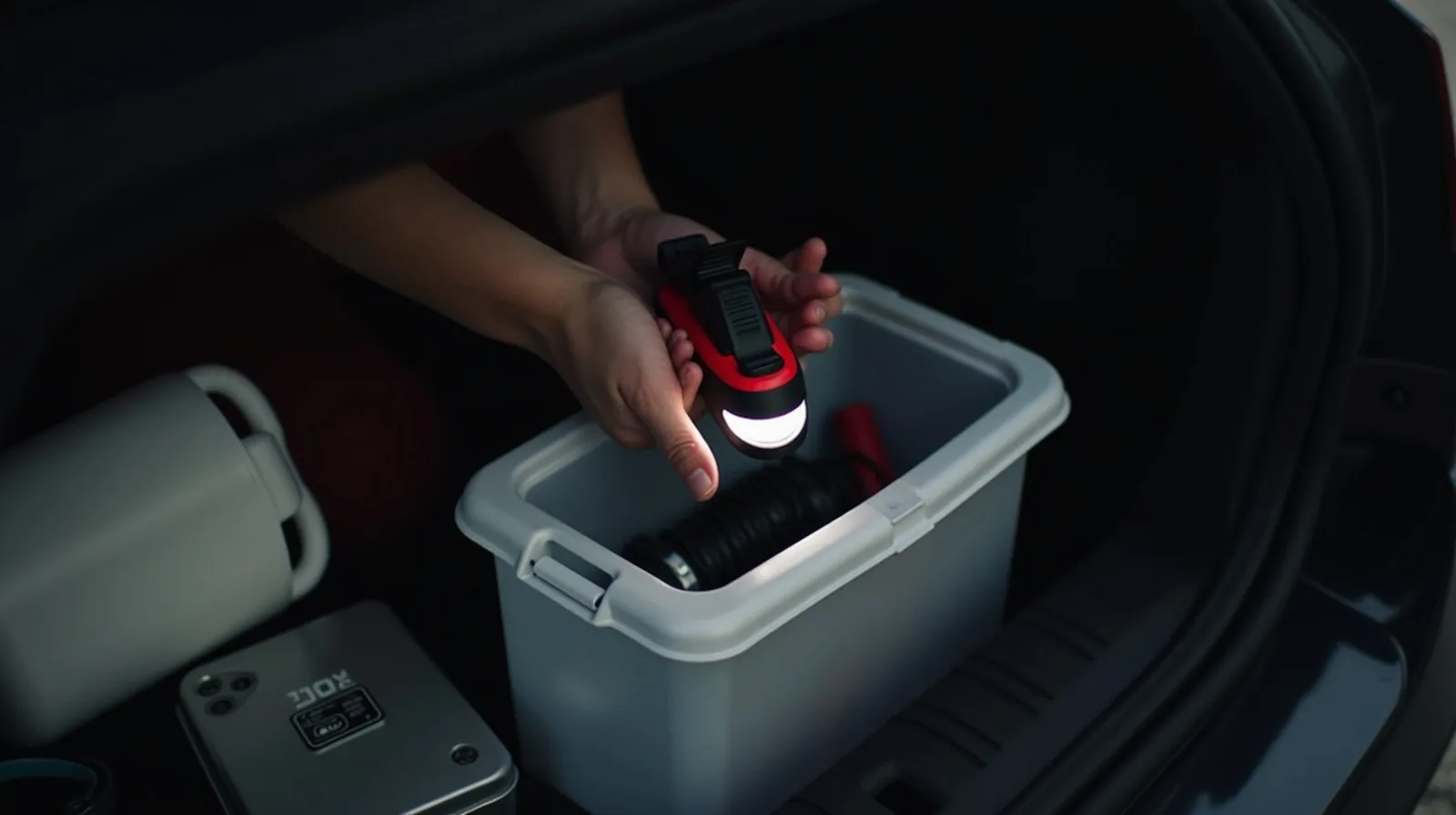
The kit that covers most of these scenarios lives in one plastic bin in the trunk and gets restocked once a year.
- Water and dense snacks. A gallon jug plus something with protein solves more roadside misery than anything else in the bin.
- A charged power bank and a spare cable. A dead phone turns every other problem on this list into a considerably larger one.
- A headlamp and a warm layer per person. Roadside problems get darker and colder than expected, including summer nights at elevation.
- A basic first-aid kit and motion sickness supplies. Ask a pharmacist or doctor which options suit each passenger, especially young children.
- Offline maps and a written list of key numbers. Download the region ahead of time and keep insurance, roadside, and lodging details on paper in the glovebox.
- A cleanup bundle. Trash bags, paper towels, wipes, and a change of clothes per kid, ignored until the day it saves the upholstery.
Closures, Detours, and the Daylight Rule
Mountain passes, coastal highways, and desert routes close for weather, fire, and construction with little notice, and the official detour can add hours rather than minutes. Two habits cover it. Check the state transportation department road conditions page on the morning of any drive crossing a range or a remote stretch, and hold a rough alternate route in mind before setting out, so a reroute becomes a decision instead of a scramble. The daylight rule is the other half: when a closure pushes arrival past dark in unfamiliar terrain, stopping early is usually the better trade.
A Sick Passenger or a Bed That Fell Through
Motion sickness, a fever, or a stomach bug turns a car into a small sealed room. Pull off, get air, and give it time instead of pushing to make up the schedule. Anything that looks serious, such as a high fever in a young child, trouble breathing, or worsening pain, is a reason to find urgent care and speak to a doctor rather than drive on. A lost reservation is less frightening but rewards speed. Start searching by mid-afternoon instead of nine at night, widen the radius to the next town over, and decide in advance what counts as acceptable for one night.