Ask a room of adults to drop and give twenty push-ups and most will discover the same thing: the move is humbling. That is not a character flaw. A full push-up asks the arms, chest, shoulders and core to hold a rigid plank while lowering most of your bodyweight, and nobody starts with that ready. The fix is simple, and it is not more grinding at the same failed rep. It is a ladder of easier versions that you climb down at your own pace.
Why the Push-Up Is Worth the Patience
One movement trains the chest, shoulders, triceps and trunk together, and it needs nothing but a bit of floor, a wall or a sturdy surface. That makes it easy to practice at home, in a park or in a hotel room. Public health guidelines generally point toward muscle-strengthening activity on a couple of days a week, and pushing movements like this one are an accessible way to cover the upper body.
Because the load comes from your own weight, you can change the difficulty just by changing the angle. The more upright your body, the lighter the work; the closer to horizontal, the heavier it gets.
Climb Down the Ladder
Pick the surface that lets you do eight to ten smooth reps with a straight line from head to heels. For most beginners that begins at a wall, then a kitchen counter, then a sturdy bench or stair, and finally the floor. Each lower surface moves more weight onto your arms.
Place the hands slightly wider than the shoulders, with fingers spread and elbows angled back at roughly forty-five degrees rather than flared straight out. Lower the chest toward the surface under control, then press away. If the hips sag or pike up, the surface is too low for today, so step back up one rung.
Keep the Body in One Piece
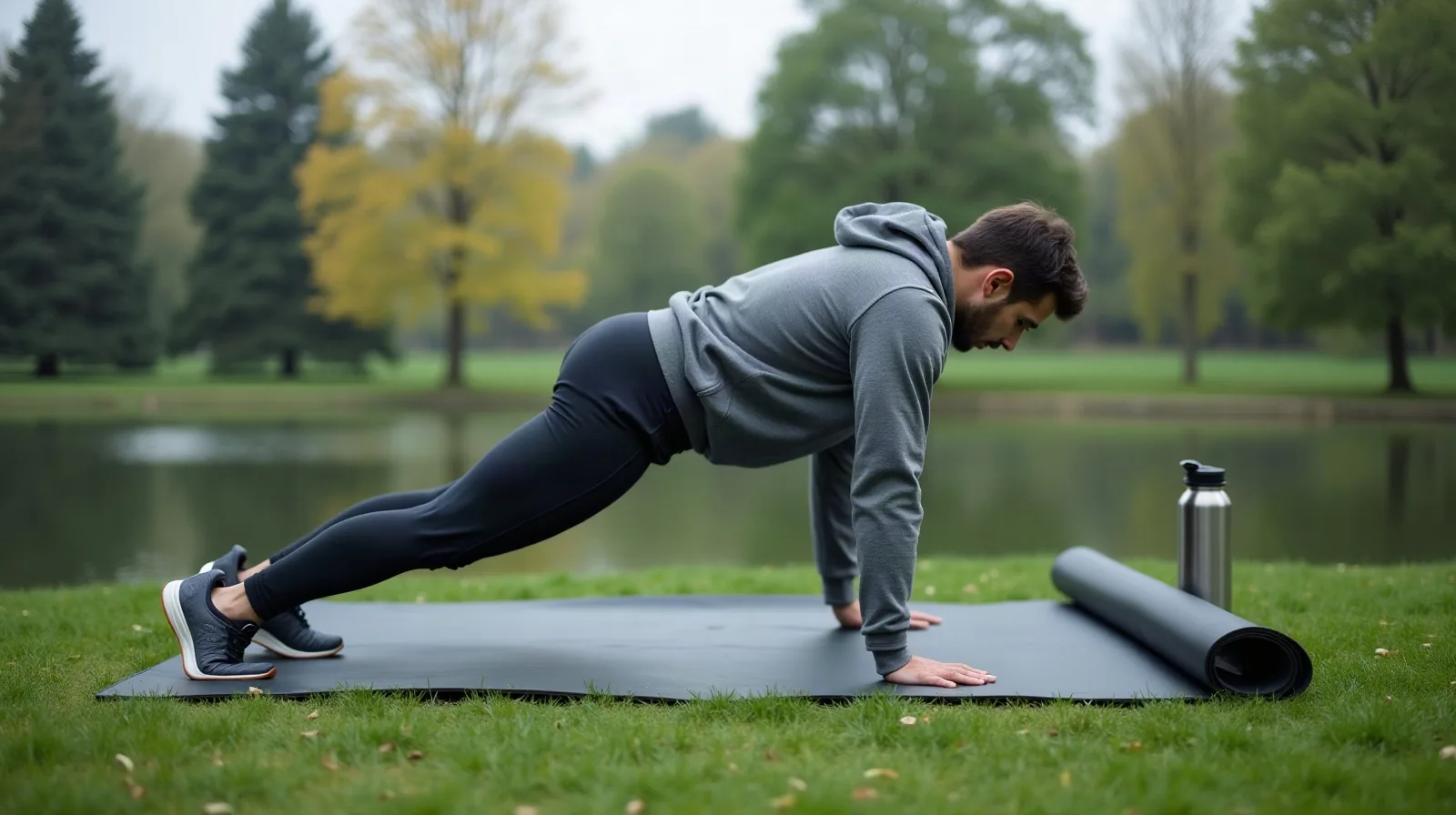
Form matters more than depth. Squeeze the glutes lightly, brace the belly as if preparing for a nudge, and keep the neck long with eyes a little ahead of the hands. The whole body should move as one board, which is why many people find the plank position a useful first drill: hold it on a counter or the floor for ten to twenty seconds and notice the effort in the trunk.
Breathing helps too. Inhale on the way down and exhale as you press, rather than holding your breath. Stop a set while a clean rep or two is still in the tank, because sloppy final reps teach the wrong pattern.
Build Up Without Overdoing It
Two or three short sessions a week, with a day between, give muscles and tendons time to adapt. Do three sets with a minute of rest, and add a rep or two across sessions. When you can finish three sets of ten to twelve clean reps, move to the next lower surface and start again at fewer reps. That reset is normal, not a step backward.
Wrists often complain first. Warm them up with gentle circles, and if the flat-palm position hurts, try gripping a pair of dumbbells or using fists on the floor so the wrists stay straight. Anyone with shoulder, wrist or heart concerns, or who is returning to exercise after a long break or an injury, should check with a doctor or a qualified professional before starting. A few reminders keep the ladder smooth:
- Warm up first. Arm circles and a minute of marching wake up the shoulders.
- Choose a stable surface. A wobbly bench or slick floor is a hazard, not a challenge.
- Go slowly on the way down. A three-second lower builds strength fast.
- Track one number. Count clean reps, and let the surface height do the rest.
- Stop for sharp pain. Muscle fatigue is expected; joint pain is a signal to rest.
Over a few weeks, the wall turns into a counter, the counter into a bench, and one day the floor is just another rung.