
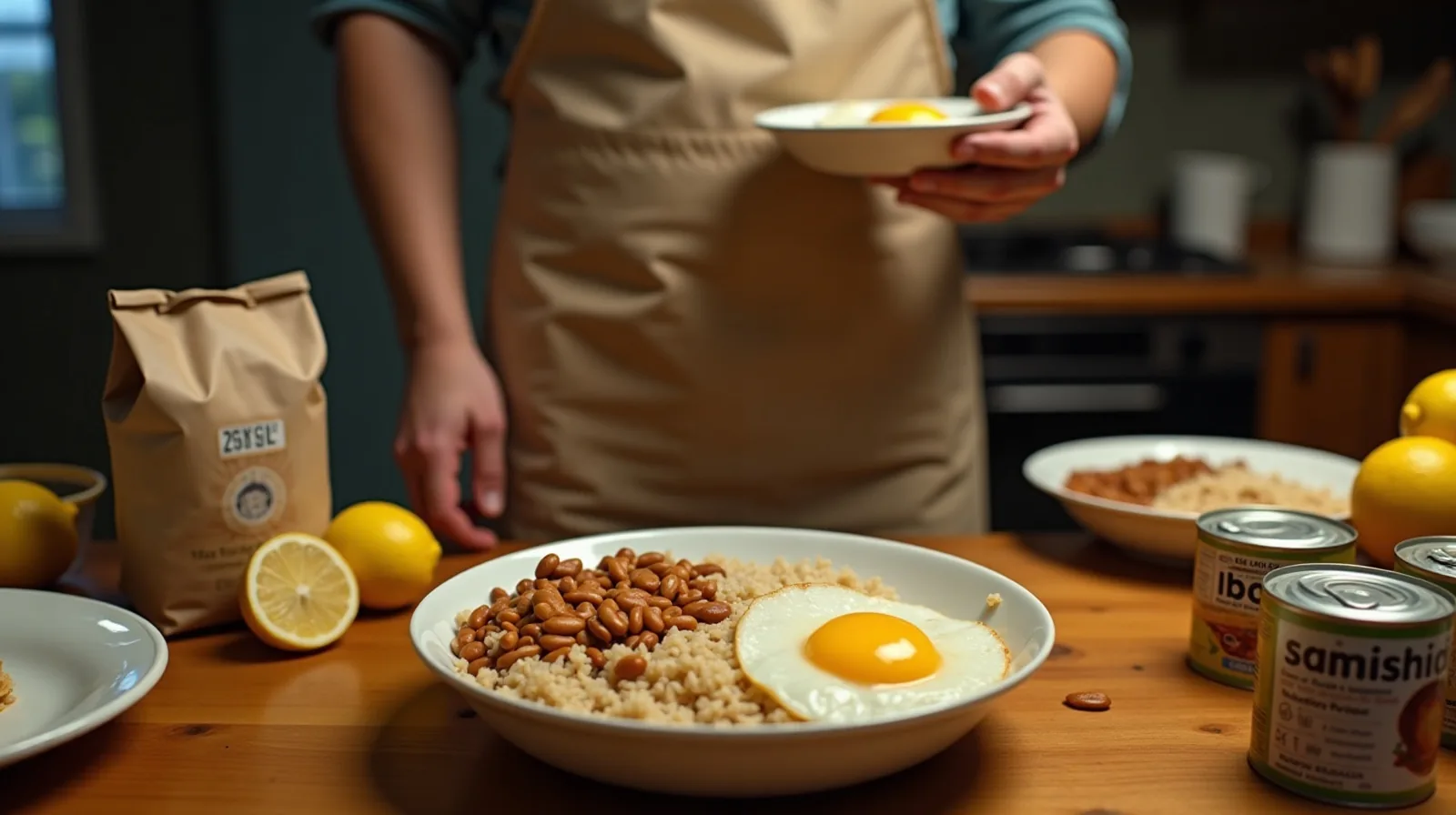
There is a particular kind of evening where the fridge looks empty, nobody wants to leave the house, and ordering something starts to feel like the only move left. Nine times out of ten the kitchen is not actually empty. It is disorganized in a way that hides dinner. A bag of rice, a can of beans, half an onion and a lemon is a meal. What’s missing is not ingredients but a way of seeing them — one that sorts whatever is on hand into jobs rather than recipes.
Five Jobs, Not a Recipe
Almost every satisfying improvised dinner fills the same five roles: something starchy for bulk, something with protein, a sauce logic that ties it together, an acid to keep it from tasting flat, and something crunchy on top. Scan the shelves for one candidate per job, then stop scanning. Four out of five still works. Three usually does not, and the missing one is almost always the acid.
- The starch. Rice, pasta, couscous, potatoes, tortillas, bread, polenta, a can of hominy. Start it first and salt the water, because it takes the longest and sets the clock for everything else.
- The protein. Eggs, canned beans, lentils, canned fish, frozen shrimp, leftover roast chicken, cubes of firm tofu. Anything already cooked or quick-cooking beats anything frozen solid.
- The sauce logic. One family of flavors, chosen before anything hits the pan, so every later addition stays in the same conversation.
- The acid. Lemon, lime, vinegar, pickle brine, a spoonful of yogurt, chopped pickled peppers. This is the step most home cooks skip and the one that makes a plate taste finished.
- The crunch. Toasted breadcrumbs, crushed crackers, seeds, chopped nuts, fried onions, raw sliced cabbage or celery. Texture reads as effort even when it took ninety seconds.
Pick a Sauce Logic and Commit
Sauce logic is what turns a pile of components into a dish, and it comes down to choosing one lane and staying in it. Fat and aromatic: oil or butter with garlic or onion, chili, and a splash of the starch’s cooking water. Tomato: paste or canned tomatoes cooked down with those same aromatics. Creamy: yogurt, sour cream, coconut milk, or a spoonful of tahini loosened with water. Savory-sweet: soy sauce or fish sauce played against a little sugar, honey or jam. Broth: stock, a bouillon cube or a spoon of miso thinned into something spoonable. Pick one. The failure mode of improvised dinner is rarely a missing ingredient; it is three sauce logics fighting in the same pan.
Substitute by Job, Not by Name
Swapping works when the replacement does the same job. Out of lemon? Vinegar and pickle brine both bring acid, so use about half as much and taste as you go. No fresh onion? Onion powder, scallion tops or the pale part of a leek fills the aromatic slot. Sour cream stands in for yogurt, tahini for peanut butter, frozen peas for anything green. What does not work is swapping across jobs. Adding a second protein because the acid is missing leaves the plate exactly as flat as it was.
The Order That Keeps It Simple
Start the starch. While it cooks, warm the fat and aromatics, build the sauce in the same pan, and add the protein when a few minutes remain. Combine everything off the heat, loosening the sauce with a splash of starchy cooking liquid if it needs it. Taste, then add the acid in small amounts until the flavors sharpen. Salt last, since acid changes how salty something reads. Crunch goes on at the table so it stays crunchy. Active time usually lands under twenty minutes, and not one step of it required a recipe.