Meal prep rarely dies on Sunday. It dies on Wednesday, at noon, when you open a container of what used to be a nice salad and find something limp and weeping instead. Two more days of that, and Thursday quietly becomes a takeout day. Here’s the encouraging part: sogginess almost never means you picked the wrong recipe. It means moisture went somewhere it shouldn’t have — and moisture is completely manageable once you know its three favorite tricks.
Sogginess Is Physics, Not Fate
Every soggy lunch traces back to one of three moves. Dressing or sauce sat in contact with delicate ingredients and slowly wilted them. Warm food got sealed under a lid, and the trapped steam condensed and rained back down on everything — this is how roasted vegetables lose their edges and how anything crispy dies overnight. Or a wet ingredient (tomatoes, cucumbers, juicy proteins) shared a compartment with a dry one and spent four days donating water to it. None of that is about your cooking. It’s about what touches what, and when — which means the fix happens at the counter while you pack, not at the stove.
The Packing Rules That Do the Work
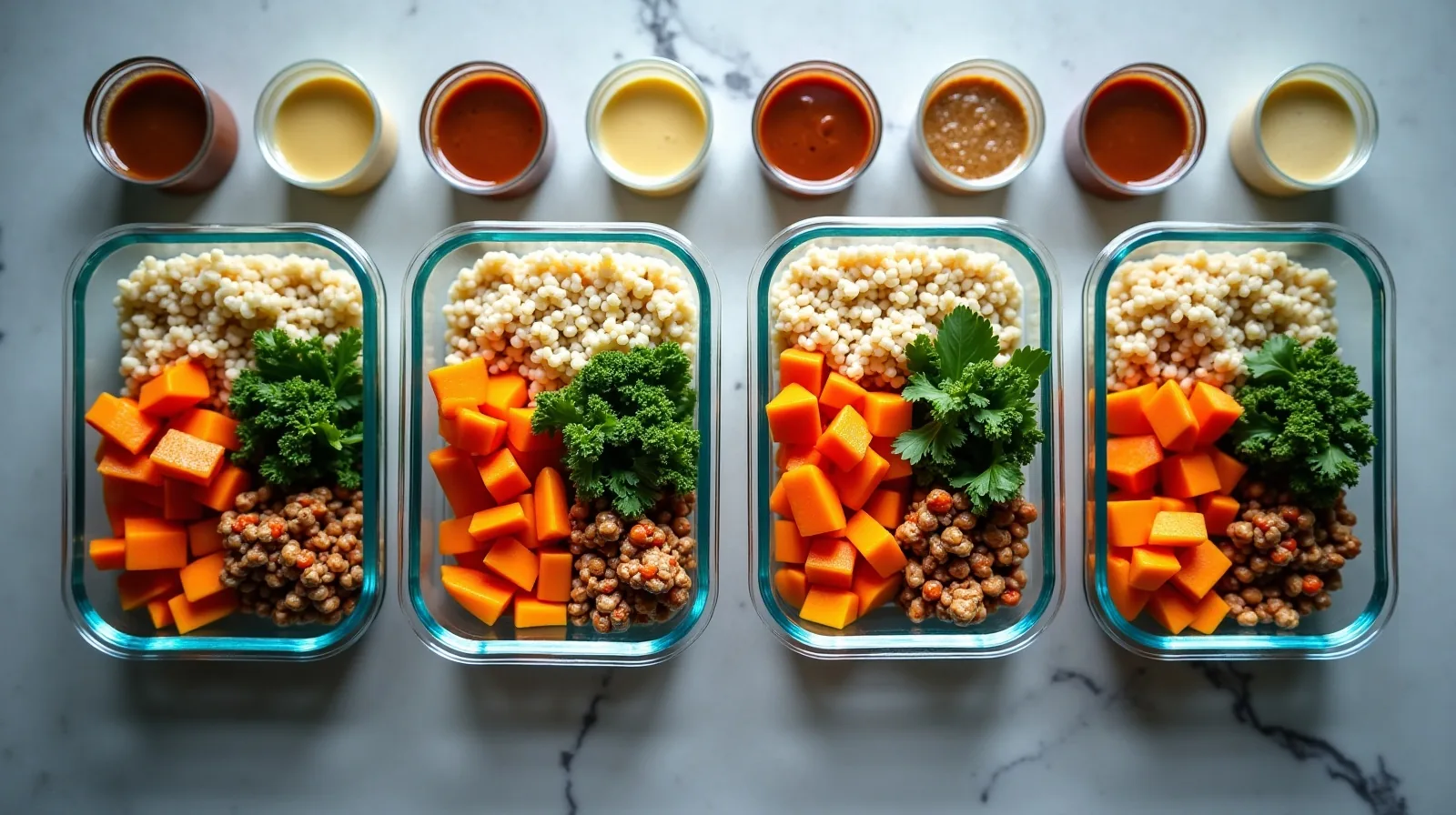
- Dressing rides separately. Small lidded cups or tiny jars, dressed at the desk — this one habit saves more lunches than any other.
- Cool completely before the lid goes on. Spread hot grains and roasted vegetables on a sheet pan for ten minutes first; steam trapped under a lid is rain later.
- Separate wet from dry. Divided containers, little cups, or even a lettuce-leaf barrier keep tomatoes and cucumbers from watering the rest.
- Layer jars bottom-wet, top-dry. Dressing on the bottom, then sturdy vegetables and grains, then protein, with greens at the very top — nothing delicate touches liquid until you tip it out.
- Crunch travels in its own container. Nuts, seeds, croutons, and crispy chickpeas stay crisp in a small dry bag or cup, added at the last second.
- Dry your greens like you mean it. Water clinging to leaves wilts them from day one; spin or pat them properly before packing.
Build on Ingredients That Hold
Some foods are simply built for day four. Grains like rice, farro, and quinoa hold their texture; roasted vegetables stay pleasant even after their edges soften; sturdy greens — kale, cabbage, romaine hearts — shrug off a few days in the fridge where delicate spring mix collapses. Marinated things (beans, slaws, pickled onions) actually improve as they sit. The reliably disappointing crowd is just as predictable: pre-dressed tender greens, cut avocado and apple, anything breaded or crispy-coated, and pasta drowned in a thin sauce it will drink by Tuesday. Prep the sturdy stuff in bulk, and let the fragile stuff join the party the morning of.
Pick a Format and Let It Work
Structure does the rest. Bento-style boxes with compartments keep components honest all week. Jar salads exploit gravity for you. Grain bowls with dressing on the side are nearly indestructible. And for the most texture-sensitive meals, prep an “assembly kit” instead of a finished dish — cooked components stored separately, combined in ninety seconds each morning. That last format costs you a minute a day and repays it with a lunch that tastes like it was made today, because functionally it was.