
Most families spend plenty of time in the same rooms — and surprisingly little of it together. Everyone knows the tableau: four people, one couch, four separate glowing rectangles, or a dinner where half the table is mentally still at work. The guilt response is usually to plan something big — a vacation, a capital-letters Family Day — but presence doesn’t really work that way. It’s less like a grand gesture and more like a habit: small, repeatable moments where your attention is actually where your body is. The good news is that the habit versions are easy, short, and mostly free.
Presence Is Minutes, Not Marathons
Ten minutes of full attention lands harder than three hours of distracted proximity — kids in particular can tell the difference instantly, and so can a spouse. That reframe takes the pressure off. You don’t need to manufacture magical afternoons; you need a handful of short windows a day where nothing is competing. The other half of the skill is noticing bids — the small reaches for connection people make all day: “look at this,” a joke tossed across the kitchen, a kid hovering in the doorway at bedtime. Turning toward those for even a minute or two — eyes up, hands still — is presence in its cheapest, most renewable form.
Build a Few Small Rituals
Rituals are presence with a schedule — nobody has to summon the energy to suggest them, because they’re just what your family does:
- One table question. A rotating dinner prompt — best and worst moment of the day, one weird thing you saw — turns eating near each other into talking with each other.
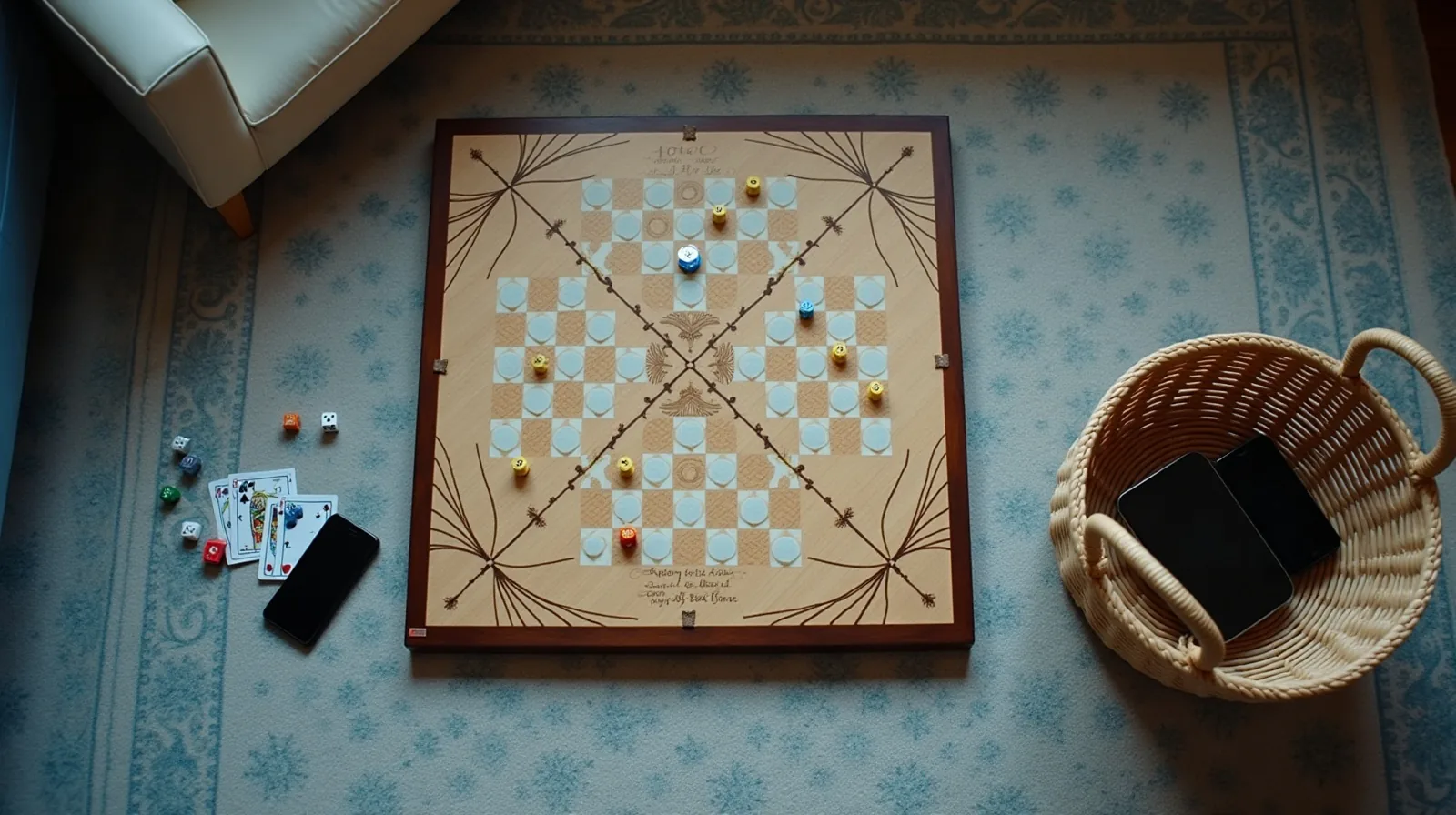
- A standing game night. One evening a week, same night, board games or cards on the rug. Protect it like an appointment; let the kids pick.
- The bedtime check-in. Five unhurried minutes at lights-out, no agenda. It’s reliably when kids say the real things.
- A walk after dinner. Ten minutes around the block. Side-by-side motion loosens conversation that face-to-face questioning never gets.
- One tiny weekend tradition. Saturday pancakes, a library run, a standing bakery stop — small enough to survive busy seasons.
Give Devices a Place, Not a Lecture
Phones deserve exactly one section here, because the fix is spatial, not moral. Arguing about screen time invites negotiation; device-free zones don’t. Pick one or two — the dinner table is the classic, game night a close second — and put a basket or a charging spot in another room so “away” means out of reach, not face-down and buzzing. The rule only works if it’s symmetrical: adults’ phones go in the basket too, work ping and all. One honest zone, kept consistently by everyone, does more for family presence than any elaborate schedule — and it spares you policing every other hour of the day.
Lower the Bar Until You Clear It Daily
Presence collapses when it’s defined as something you need energy for. On the tired days, shrink it: one round of a card game instead of a tournament, two songs’ worth of kitchen dancing, sitting on the floor for five minutes while someone shows you a drawing. It also helps to let yourself be interruptible on purpose for certain windows — the first fifteen minutes after school or after work, when the day’s stories are still fresh and offered freely. You can’t be fully available all the time, and pretending to be just breeds distraction. A few honest, protected windows a day — genuinely there, then genuinely back to your own things — is the whole game.