Every home has a place where things go to be forgotten: the back of a deep corner cabinet, the top shelf of the fridge, the cave under the sink. Getting to anything back there means unloading everything in front of it first, so most people quietly stop reaching, and end up buying a third bottle of vanilla. A turntable fixes that with geometry rather than willpower. It spins the back of the shelf around to the front, which turns a dig into a nudge, and it belongs in far more places than the spice cabinet.
It Solves a Reach Problem, Not a Space Problem
Most cabinets are deeper than an arm wants to go. The front eight inches get used daily, the middle gets used occasionally, and the back becomes an archive of duplicates and expired sauces. Adding another shelf or a stack of bins rarely helps, because the shortage is access, not square inches. A turntable changes the motion the storage requires. Instead of shifting six jars to reach the seventh, you rotate the whole shelf a quarter turn and take what you want. That is why the trick actually sticks: it survives a rushed weeknight, and any system that asks for extra steps on a rushed weeknight dies.
Where One Earns Its Keep First
Start where the reach is worst rather than where the clutter is most visible. These spots pay for themselves within a week:
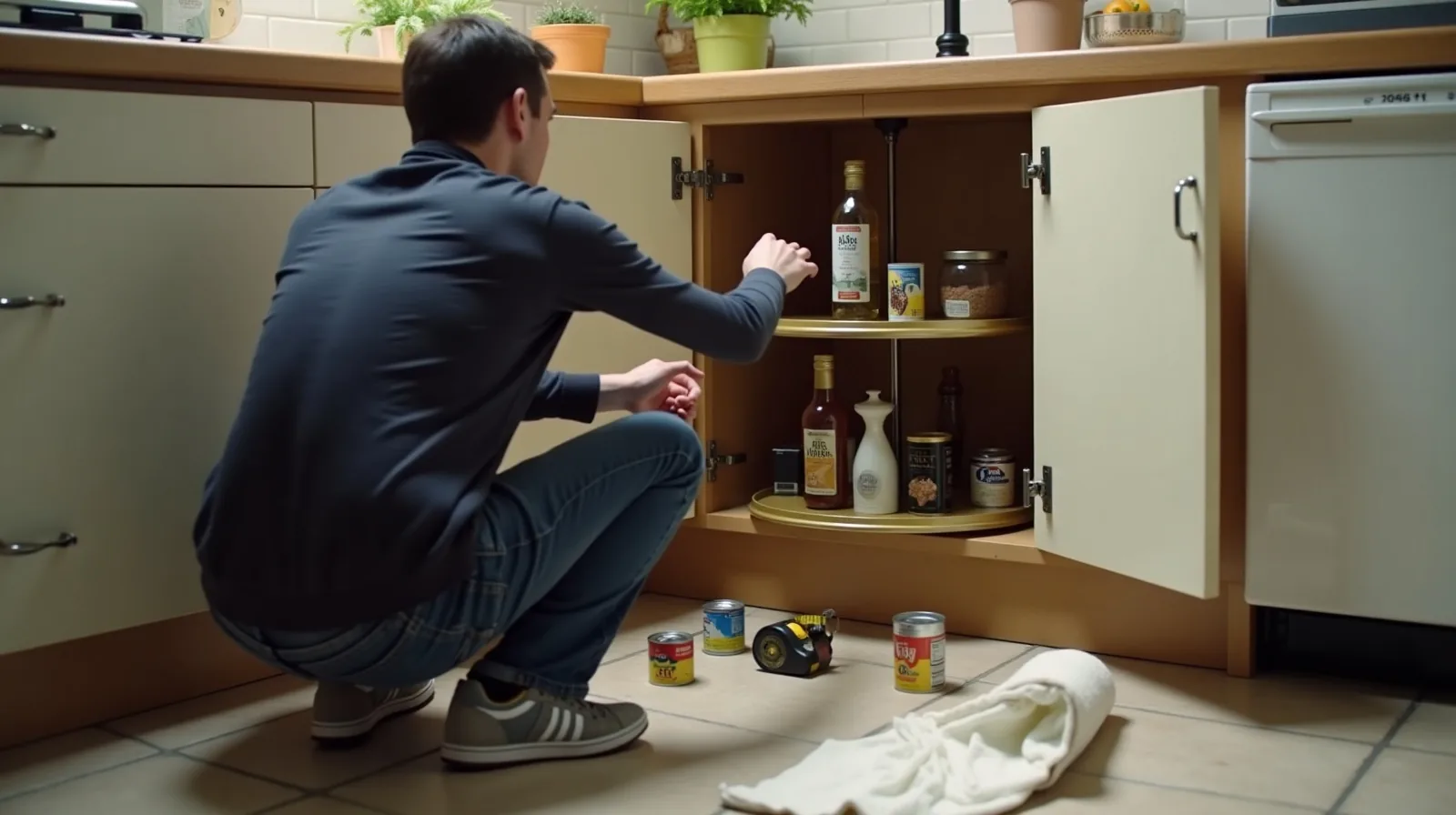
- The blind corner cabinet. The classic dead zone. A large single tier turns the whole cavern into a rotating shelf, and a two-tier version doubles it for cans and boxed goods.
- The top shelf of the fridge. Condiments migrate backward until something leaks or expires. A small turntable with a raised lip keeps jars upright, contained, and countable at a glance.
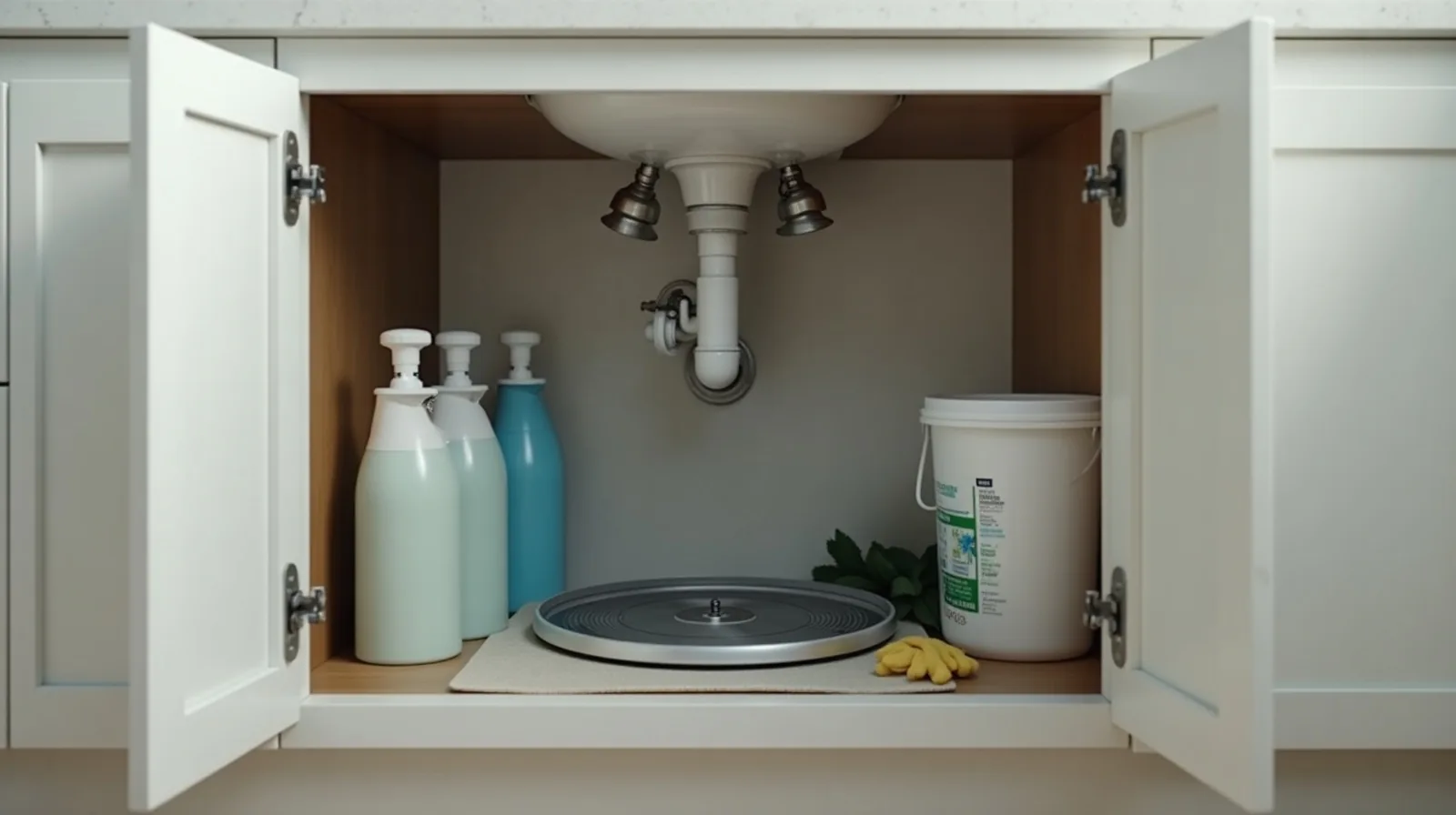
- Under the sink. Cleaning bottles fall over constantly and hide behind the plumbing. A short, narrow turntable set to one side of the trap keeps sprays reachable without dragging out the bucket.
- Spices, oils, and baking supplies. A two-tier turntable with the labels facing outward beats a drawer for anything you reach for mid-recipe with one hand busy.
- Craft, hobby, and garage bins. Glue, paint pens, small hardware jars, and brushes all work better in a circle than a row, especially on a work table you walk around.
- The bathroom cabinet. Sunscreen, first-aid supplies, and bottles of lotion stack badly and topple often; a lipped tray keeps the tall things from falling into the sink.
Sizing and Weight Before Buying
Measure the inside of the cabinet, not the door. Take the interior width and the depth, use the smaller number, and subtract roughly an inch so the tray clears the frame and the door hinges as it spins. Then measure height: a two-tier unit needs real clearance, and a shelf that fits the tray but not the bottles on it has solved nothing. Weight matters more than most listings suggest. Plastic hubs handle light jars fine, but a load of canned goods or paint wants a ball-bearing base and a rated capacity you are comfortably under. Look for a non-slip surface or a raised lip, keep the heaviest items on the bottom tier, and put nothing on it that would be a disaster if it slid.
Habits That Keep It Spinning
A turntable falls apart the same way every other system does: overloading. Give each quarter of the circle one job — oils here, vinegars there, sauces opposite — so returning something has an obvious destination. Let nothing hang over the edge, because one overhanging handle catches the cabinet frame and the whole thing jams. Wipe the base every month or so, since a sticky ring of spilled oil is what turns a smooth spin into a shove. And when a tray starts wobbling or grinding, replace it rather than living with it; the moment it stops being effortless, the back of the cabinet starts filling up again.