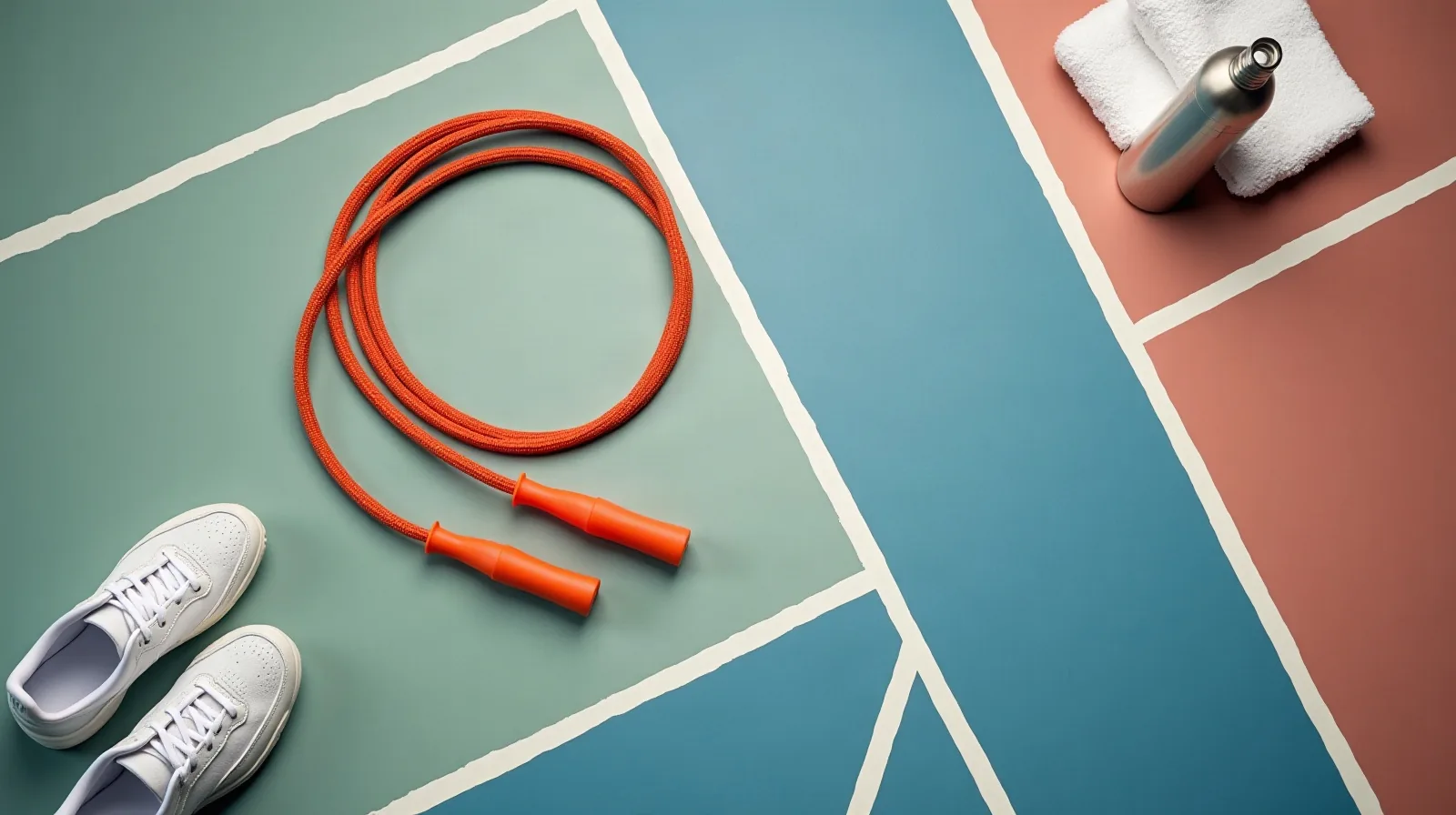
Almost everyone has jumped rope at some point, and almost everyone remembers it being easier. As an adult exercise, a rope asks for coordination, rhythm and tired calves, which is why a first attempt often ends in a tangle after ten seconds. The good news is that the skill comes quickly with a few small adjustments, and the equipment is one of the cheapest and most portable in fitness.
Why a Rope Is Worth Learning
Rope work raises the heart rate fast, so short sessions feel meaningful. It also uses the calves, feet and shoulders while the core keeps the body steady, and it needs only a patch of floor and a little ceiling clearance. Public health guidelines generally point toward regular activity that raises the heart rate across the week, and a few minutes of rope can contribute to that alongside walking or other movement. Because it is portable, it also fits hotel rooms, backyards and garages.
Set Up Before You Jump
Most early frustration comes from setup, not skill. Rope length matters most: stand on the middle of the rope and raise the handles toward your chest, where they should reach roughly armpit height. A rope that is too long slaps the floor late, and one that is too short catches the head and feet.
Surface and footwear count too. A slightly springy floor, such as a gym floor, rubber mat or wooden deck, is kinder to joints than concrete, and supportive athletic shoes help. Clear enough space around you for the rope to swing without hitting furniture.
Learn the Low Hop
Begin without the rope at all. Hop on the balls of both feet with the knees soft, lifting only an inch or so off the floor, and keep the elbows close to the ribs with hands at hip height. Once that rhythm feels natural, hold both handles in one hand and swing the rope in a circle beside you to get used to the timing. Then try full turns, one jump per turn, stopping to reset whenever the rope catches.
Two habits make the biggest difference. First, turn the rope with the wrists, not the whole arm. Second, stay low and relaxed rather than leaping high, which wastes energy and lands hard on the joints.
Build Up in Short Rounds
Beginners do best with brief, forgiving rounds. A simple pattern is twenty to thirty seconds of jumping followed by a minute of rest, repeated for five to ten minutes in total, two or three days a week. Failing and restarting is part of the process, so it helps to treat every miss as a normal beat in the routine rather than a setback.
People with joint problems, a history of foot, ankle or shin pain, pregnancy or heart or lung conditions, or anyone returning after a long break, should check with a doctor or a qualified professional before adding jumping to their week, since the impact is higher than walking. A few other tips keep progress smooth:
- Warm up first. A couple of minutes of marching and gentle ankle circles prepares the calves.
- Land softly. Quiet landings usually mean a lower, easier hop.
- Look ahead. Eyes on the horizon keep the posture tall.
- Add time gradually. Increase work rounds by about five seconds at a time across weeks.
- Stop for sharp pain. Tired calves are normal, but pain in the shins or joints deserves rest.
Given a little patience, the rope turns from a source of frustration into a compact, dependable workout that travels anywhere.