A potluck sounds like the easy way to host: everyone brings something, the table fills itself and the host just opens the door. Then the table holds four bags of chips, three pasta salads and no main course. Shared meals go wrong in predictable ways, and almost all of them trace back to logistics rather than cooking. A little structure up front keeps the gathering relaxed for everyone, including the person whose home it is.
Claim the Anchor Dish Yourself
The simplest fix for a lopsided table is for the host to cover the one thing that makes it a meal. That might be a big tray of roasted chicken thighs, a pot of chili, a baked pasta or a large grain bowl base that everything else can sit beside. When the main is settled, guests can relax into sides and desserts without worrying that dinner depends on them. It also gives the host a clear job and stops the urge to cook five things at once. Pick something that holds well at room temperature or in a low oven, because guests rarely arrive at the same minute.
Assign Lanes, Not Exact Dishes
Telling people exactly what to make can feel bossy, while saying “bring whatever” is how the table ends up all dessert. The middle ground is lanes. Split the guest list into broad groups — sides, salads or vegetables, bread or snacks, desserts — and give each person a lane based on how much they enjoy cooking. Keen cooks get a side; busy friends get bread, drinks or ice. A shared message or simple sign-up list lets everyone post what they plan to bring, so duplicates show up before the day instead of on the table.
It helps to ask about allergies and food needs in the same message. A guest who avoids gluten or meat can usually bring a dish that fits, and labeling dishes with a folded card on the table saves a lot of repeated questions.
Plan the Table Before the Food Arrives
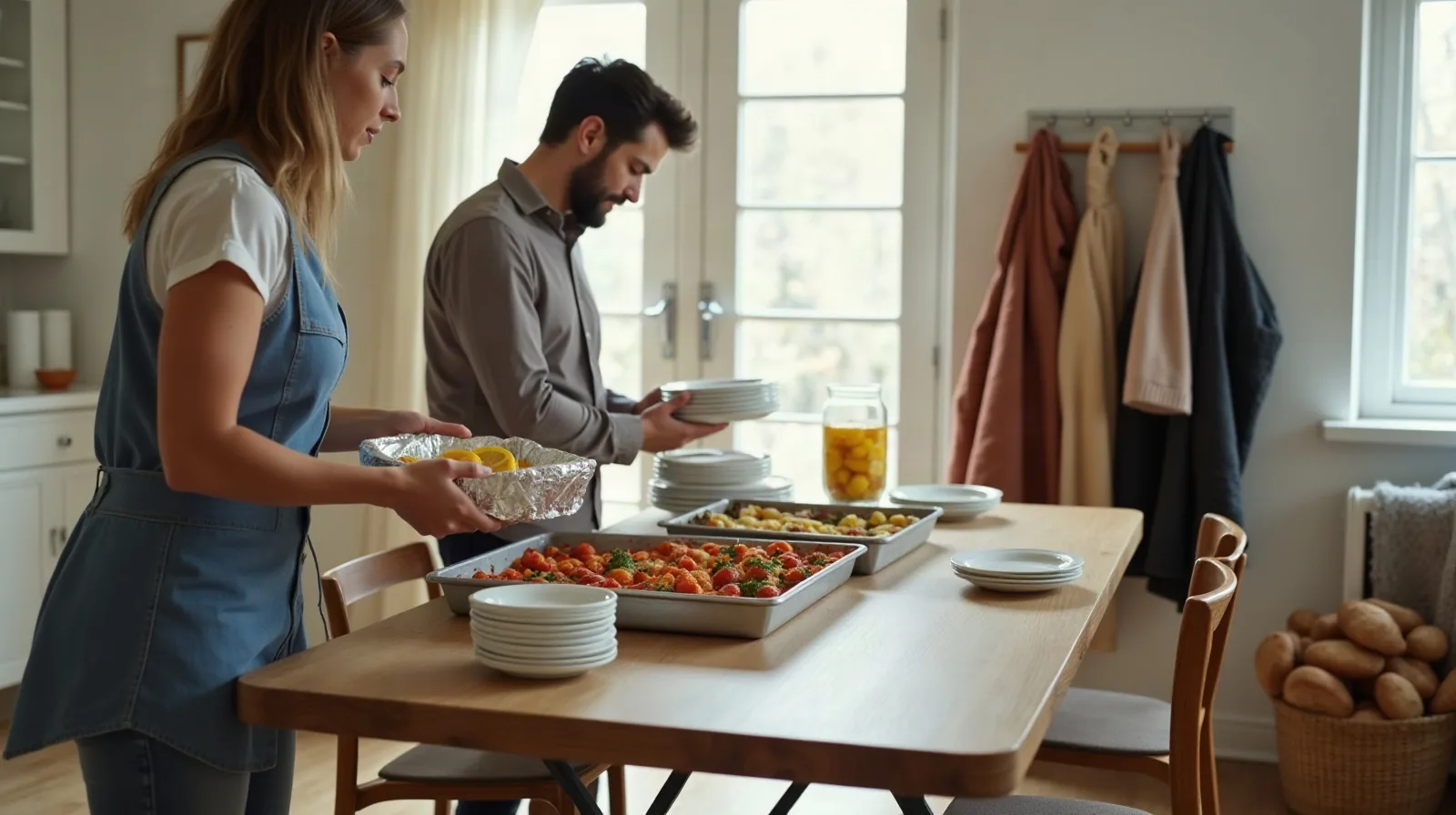
Most potluck stress happens in the first twenty minutes, when guests arrive holding hot dishes and there is nowhere to put them. Clear the counter and set the serving table early, leaving open spaces grouped by lane so each dish has an obvious home. A few practical details make the flow smoother:
- Trivets or folded towels along the table so hot dishes can go straight down
- Extra serving spoons, since many guests forget to bring one
- A clear spot in the fridge for salads and anything cold
- Oven space at a low setting to keep warm dishes warm without overcooking
- Plates, cups and napkins stacked at the start of the line so people serve themselves in order
Food safety deserves a quick thought too. Food safety guidance generally suggests not leaving perishable dishes out for more than about two hours, or less on a hot day, so move leftovers to the fridge once the main round of eating winds down.
Keep the Hosting Light
A potluck works because nobody carries the whole load, and that includes the host. Skip the elaborate centerpiece and the matching serveware; a clean table, enough chairs and some music are plenty. Put drinks in a separate spot away from the food so the line keeps moving. Ask one friend to help with coats and another to keep an eye on the ice, and most of the evening runs itself.
Plan the ending as well. Keep a stack of reusable containers or foil by the door so guests can take leftovers home, and remind people to collect their own dishes before they leave. Many hosts find it easier to wash borrowed dishes the next day and return them at the next get-together, which quietly sets up the following potluck.