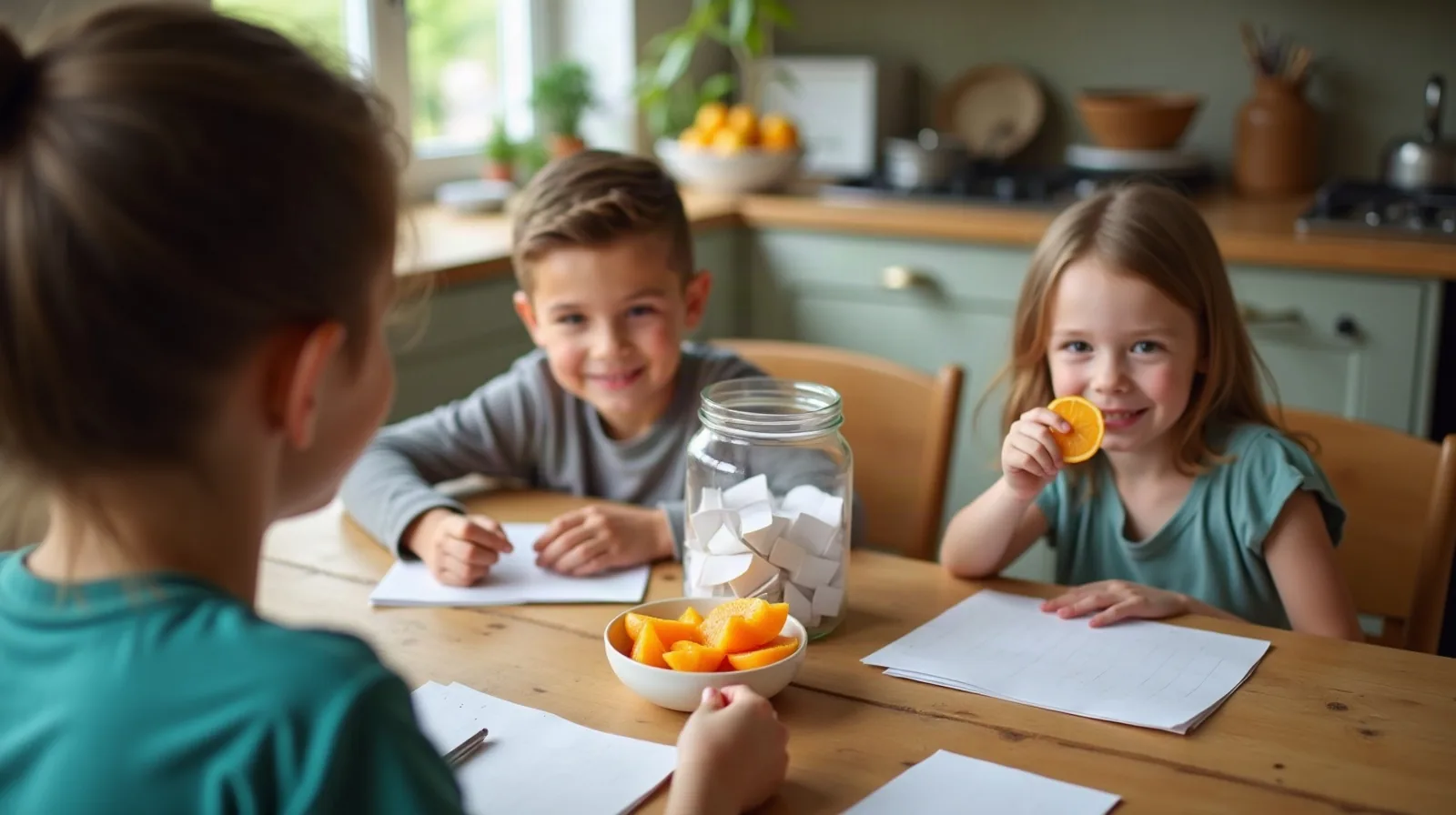
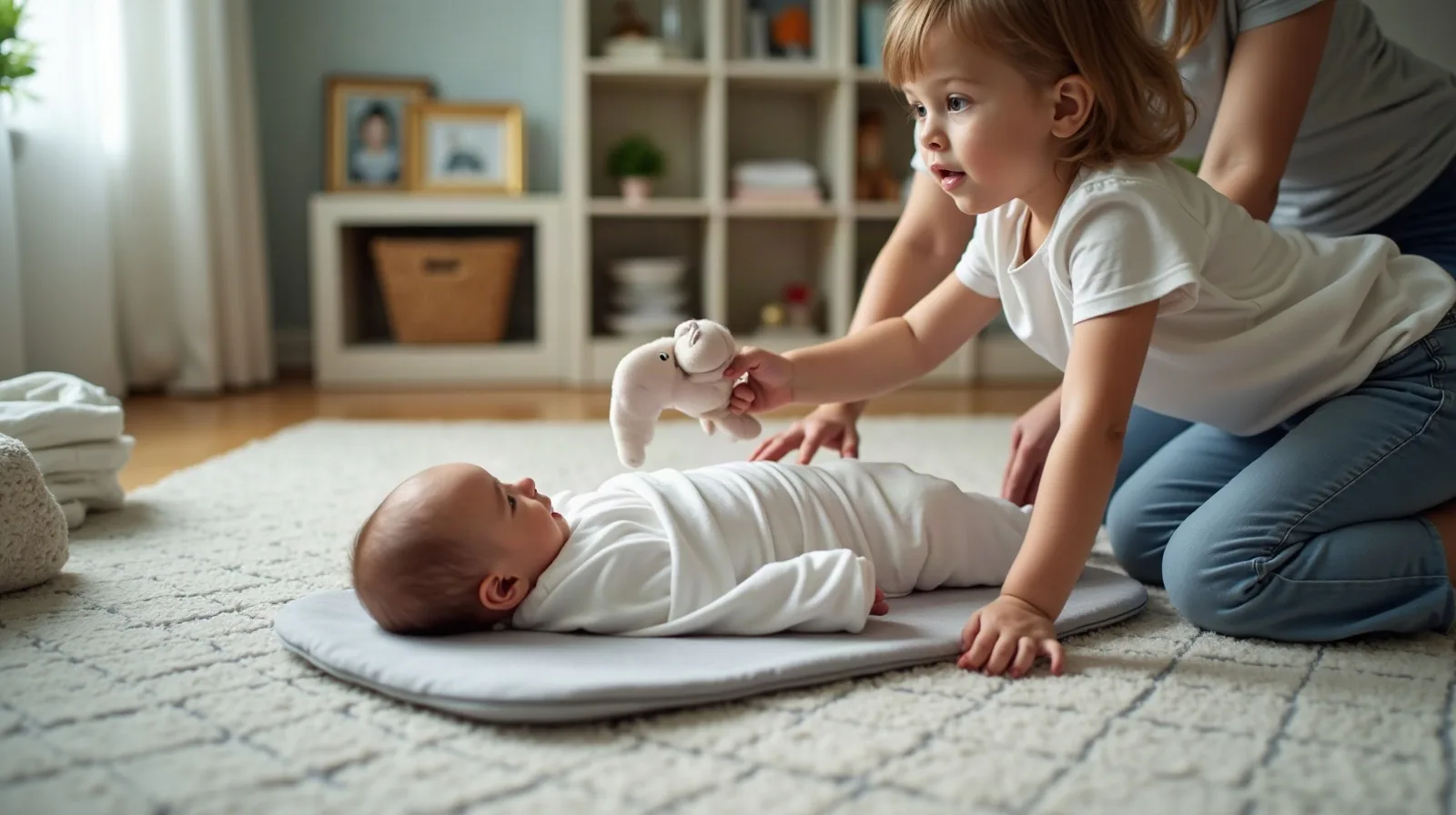
A new baby rearranges a household almost overnight, and the person most affected often gets the least attention for it: the child who used to be the only one, or the youngest, and now is neither. Big feelings about that change are not a discipline problem to correct — they are a normal response to a genuinely large life event, and they tend to ease fastest when an older child has a few concrete things to hold onto instead of just reassurance.
Why It Can Look Like Backsliding, Not Excitement
Plenty of families brace for jealousy and are caught off guard by something else: a fully potty-trained child starts having accidents again, or a school-age kid suddenly wants to be carried and fed like a toddler. This is not attention-seeking in a manipulative sense — it is a young brain reaching for the version of family life that felt most secure, right as the routine around them has changed the most. Naming it privately as adjustment, not misbehavior, changes how it gets handled day to day.
Common signs in this normal range:
- Temporary regressions in toileting, sleep, or speech that fade over weeks, not months.
- Increased clinginess toward the parent now also caring for the baby.
- Testing behavior around feeding or diaper-changing times, when attention is most divided.
- Sudden interest in baby things — wanting a bottle, a pacifier, or to be swaddled.
Give Them a Real Job Around the Baby
A role beats a reassurance every time. Vague comments about still being loved just as much are easy to dismiss, but a repeatable task tied to the baby gives proof they still matter in the new arrangement. The job should be small enough to succeed at unaided and specific enough that it is clearly theirs — not busywork, but something that visibly helps.
Pick one or two jobs and repeat them rather than assigning something new daily: choosing the baby’s outfit, picking the story-time book, fetching a fresh diaper, or singing the same bath-time song. Praise the specific act, not the general behavior — naming exactly what they did well lands better than generic praise.
Protect a Few Minutes That Are Only Theirs
The newborn stage consumes attention in ways hard to see coming, even for parents who braced for it. What matters most to an older child is not the total minutes but whether some stretch of time is reliably, predictably theirs alone — a story before bed with no baby in the room, or a walk to check the mail while someone else watches the baby. Ten protected minutes a day, held consistently, beats an occasional hour that only happens when the schedule allows it.
Let the older child pick what happens during that window when possible. Control over even a small piece of the day counts for a lot when everything else changed without asking them.
Let the Hard Feelings Get Said Out Loud
Children old enough to talk are often still too young to name what they feel, and an unnamed feeling tends to come out sideways — as a tantrum, a sulk, or a comment sharper than intended. Naming the feeling for them, calmly and without judgment, defuses it faster than correcting the behavior it produced. A flash of resentment toward a sibling is common and does not predict how the relationship will look in a year.
Resist the instinct to talk a child out of the feeling by listing reasons the baby is wonderful — that tends to teach a child to hide the feeling instead of working through it. Acknowledging it first, then moving toward something practical, works better than logic alone.
When the Adjustment Needs More Support
Most of this settles within a few weeks as the new routine becomes familiar. If regressions intensify rather than fade, or a child seems persistently withdrawn or unusually aggressive well past the newborn stage, a pediatrician or family therapist can help sort out what is going on.