
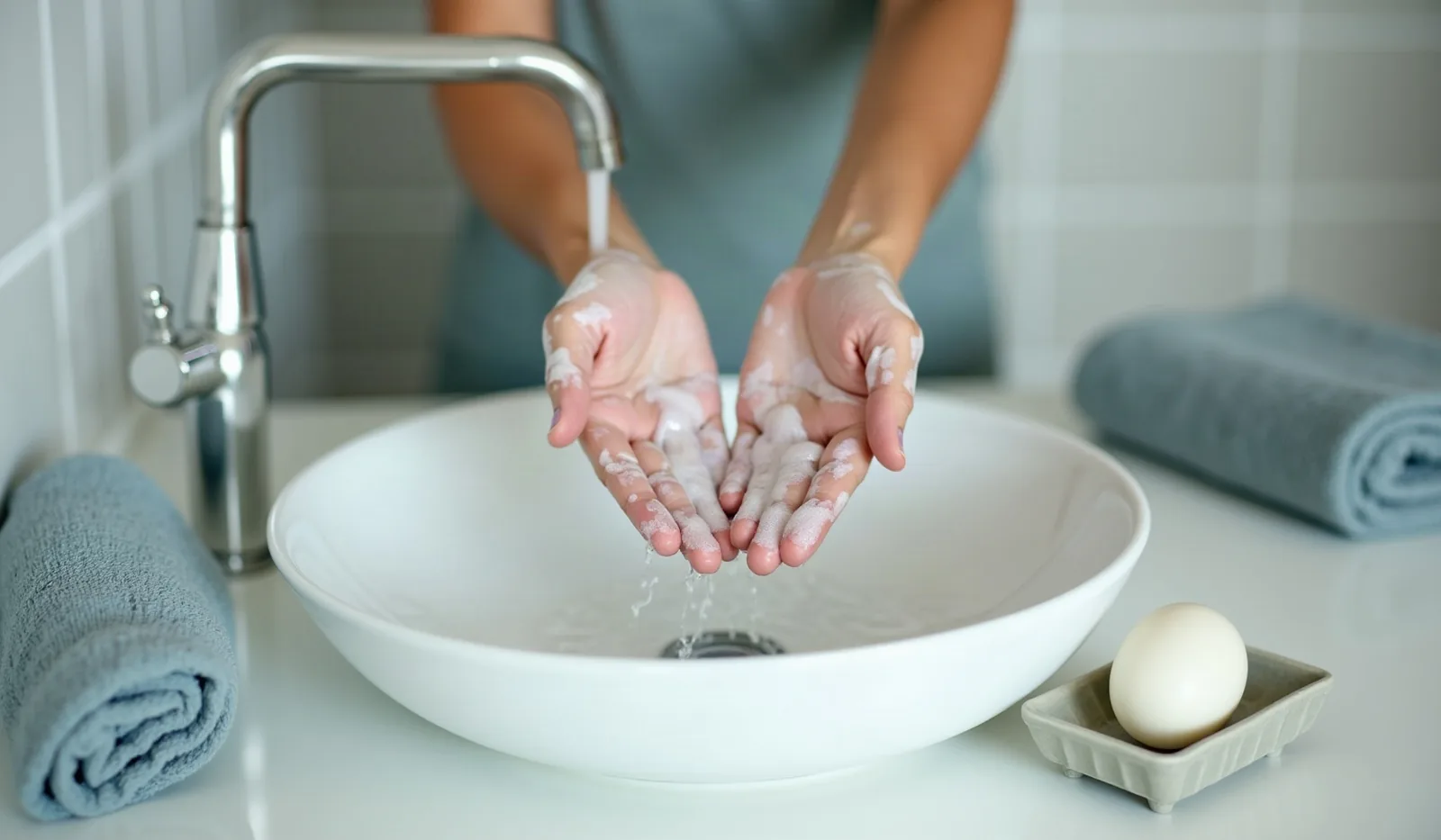
Hand washing is the oldest public health habit most people have, and also one of the most casually done. A quick rinse, a pump of soap, a wipe on a pant leg. The gap between that and what guidance describes is small, usually about fifteen seconds, and it is the gap where germs tend to survive. The fix is not a new product. It is a short, repeatable sequence that takes less time than reading this paragraph.
Why Technique Beats Speed
Soap does its work by lifting dirt and germs off the skin so that water can carry them away, and that lifting takes friction and time. Rinsing alone moves some of it, but soap with a good scrub moves far more. Public health agencies generally point toward about twenty seconds of scrubbing, roughly the time it takes to hum a familiar song twice through. Water temperature matters less than people expect, so comfortably warm or cool both work, and hot water mostly dries the skin out. What counts is that every surface of the hands gets rubbed, not just the palms.
The Sequence, Step by Step
Wet the hands, add soap, and then work through the same order each time so nothing gets forgotten. Turning it into a pattern is what makes it automatic.
- Palms together and rub in circles to build a lather.
- Backs of the hands next, with the fingers laced over the top.
- Between the fingers, interlacing them and sliding back and forth.
- Thumbs, wrapping each one in the opposite palm and twisting.
- Fingertips and nails, scrubbing them in small circles against the opposite palm.
- Wrists last, then rinse well and dry with a clean towel.
Drying matters more than it seems, since damp skin picks up and spreads germs more easily than dry skin. A clean towel, a fresh paper towel or an air dryer all do the job.
The Moments That Matter Most
Washing every few minutes is neither necessary nor kind to the skin, so it helps to save the full routine for the moments where it counts. Public health guidance generally highlights a familiar list: before preparing or eating food, after using the bathroom, after changing a diaper, after blowing the nose, coughing or sneezing, after handling raw meat or eggs, after touching garbage, and after caring for someone who is unwell. Coming home from a busy outing and washing before touching the face or the kitchen is another easy anchor. Keeping soap visible beside every sink, including the kitchen one, makes the right choice the easy one, and a small step stool at a child’s height does the same for them.
When Sanitizer Is a Fair Backup
When no sink is nearby, an alcohol-based hand sanitizer is a reasonable stand-in for most everyday situations. It works best on hands that are not visibly dirty or greasy, and it should be rubbed over every surface until completely dry, using the same sequence as a wash. It does not replace soap and water after bathroom visits, around food prep or when hands look soiled, and some germs are not removed by it as reliably as by a proper wash.
Frequent washing can leave hands dry or cracked, especially as the air cools. Choosing a gentle soap, patting dry instead of rubbing and using a plain moisturizer afterward all help. Skin that stays red, painful, split or itchy despite these steps is worth showing to a doctor, pharmacist or dermatologist, since persistent dryness can be a sign of a skin condition that needs its own care, and the right fix depends on the person.