
Somewhere between the blood pressure cuff and the cholesterol panel, an oddly low-tech test has worked its way into research labs and geriatric clinics: squeeze a handle as hard as possible, hold for a few seconds, and read the number. That figure, usually recorded in kilograms of force, keeps appearing in large studies as a quiet companion to all sorts of health outcomes. It has made grip strength one of the most discussed measurements in aging research — and one of the most frequently overstated.
What a Squeeze Test Actually Measures
Grip strength has surprisingly little to do with hands. Closing a fist hard draws on forearm muscle, but the force produced depends on how much muscle a body carries overall, how efficiently the nervous system recruits it, and how much wear illness, poor nutrition, and long stretches of inactivity have left behind. Researchers like the test for exactly that reason. It is cheap, fast, and non-invasive, and it stands in for something far harder to measure directly: the general condition of a person’s muscle and the nervous system driving it.
That is also why the number moves with age. Peak values tend to arrive in early adulthood and drift downward from mid-life onward, faster in people who have stopped loading their muscles at all. A reading well below the typical range for someone’s age and sex is treated less as a diagnosis than as a flag worth following up.
What the Research Can and Cannot Say
Most of the headline findings come from observational studies, which follow large groups for years and look for patterns. In those datasets, lower grip strength has been associated with slower recovery after surgery, higher rates of falls, and reduced independence later in life. The associations turn up often enough that grip has been folded into clinical screening for frailty and age-related muscle loss.
The distinction worth holding on to is between association and cause. A stronger squeeze does not, by itself, protect a heart or a hip. Grip is better understood as a readout: it reflects things that genuinely matter, including total muscle mass, activity level, and the burden of chronic disease. Training only the hands to raise the number would be a bit like polishing a thermometer to bring down a fever.
How the Measurement Is Done
In a clinic the tool is a hand dynamometer, a handle attached to a gauge. The setup is standardized because posture changes the result: seated, upper arm resting against the side, elbow bent to a right angle, wrist neutral. Most protocols take two or three attempts per hand, record the best effort, and compare it against reference values for age and sex rather than one universal cutoff. A reading taken at home can be interesting, but the comparison that means something is the same person on the same device over time.
Building Strength That Happens to Show Up in a Grip
Because grip tracks whole-body strength, the useful work is mostly ordinary resistance training, plus a few habits that keep the hands in the loop instead of letting straps and machines do the holding.
- Carry things. Walking a set distance with a heavy bag in each hand loads the hands, forearms, shoulders, and trunk at once, and it needs almost no technique coaching.
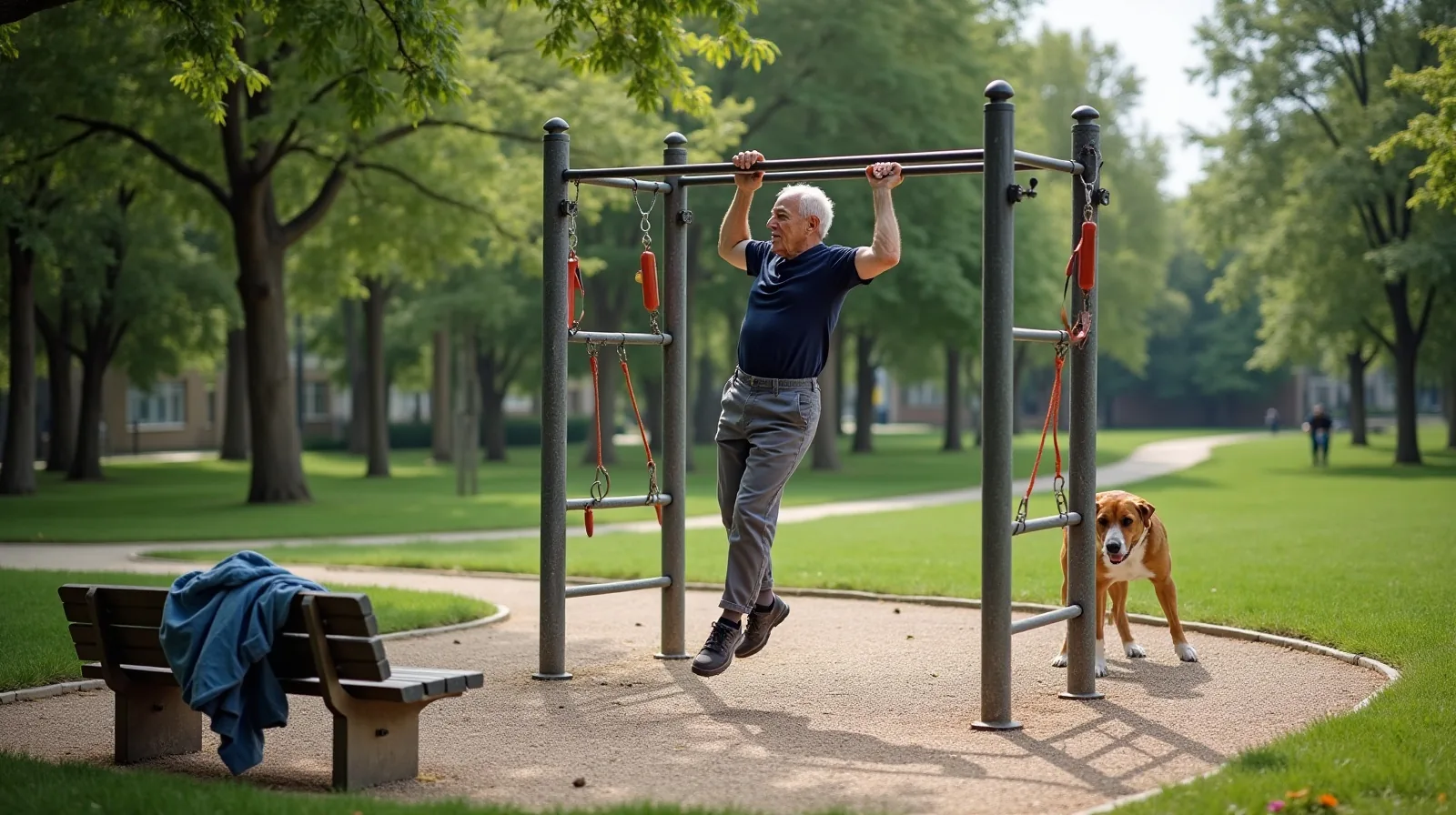
- Hang from a bar. Holding a bar for as long as feels controlled builds grip endurance and opens up the shoulders. A bar low enough to keep the feet on the ground makes the effort adjustable.
- Pull without straps. Rows and similar pulling movements build the back and the hands together when the handle is held rather than strapped in place.
- Widen the handle. Wrapping a folded towel around a bar or dumbbell handle makes the same weight much harder to hold, which is a free way to progress.
- Use daily life. Groceries carried in hands instead of a cart, jars opened rather than handed off, a firm hold on a railing: small repeated demands add up.
Anyone with arthritis, a recent injury, nerve symptoms, or a heart condition should check with a doctor or a physical therapist before adding loaded carries or hangs. Starting points vary enormously, and pain inside a joint is a signal to change the movement rather than push through it.